The trolling line runs from the stern cleat on every offshore passage where the conditions allow it: the 80-metre monofilament with the lure that the Pacific and the Atlantic and the Indian Ocean have been producing yellowfin for since we set it. When the reel screams, the passage pauses. Everything else can wait. The fish cannot.
The yellowfin tuna is among the finest eating fish available from the open ocean, and the version of it that the offshore sailor eats is a version that no restaurant has ever served and never will: the fish that was alive in the Pacific forty minutes ago, filleted on the afterdeck in the trade wind, prepared in a galley that is still moving through the same ocean the fish came from.
The freshness is not a quality that the fish has. It is a condition that the forty minutes between the line and the cutting board produces and that every additional hour away from the line reduces in a way that no storage or preservation technique fully compensates for.
The Preparation
The yellowfin comes aboard at the stern, dispatched quickly and cleanly, and moves immediately to the cutting board on the afterdeck table. The fillet technique on a rolling boat is the technique of the secure board and the confident knife: long strokes following the lateral line, the blade staying close to the spine, the two fillets that come free carrying the specific red that the yellowfin’s muscle produces and that distinguishes the offshore-caught fish from the supermarket version that has been sitting in refrigerated transport long enough for the red to fade toward the pink that storage produces.
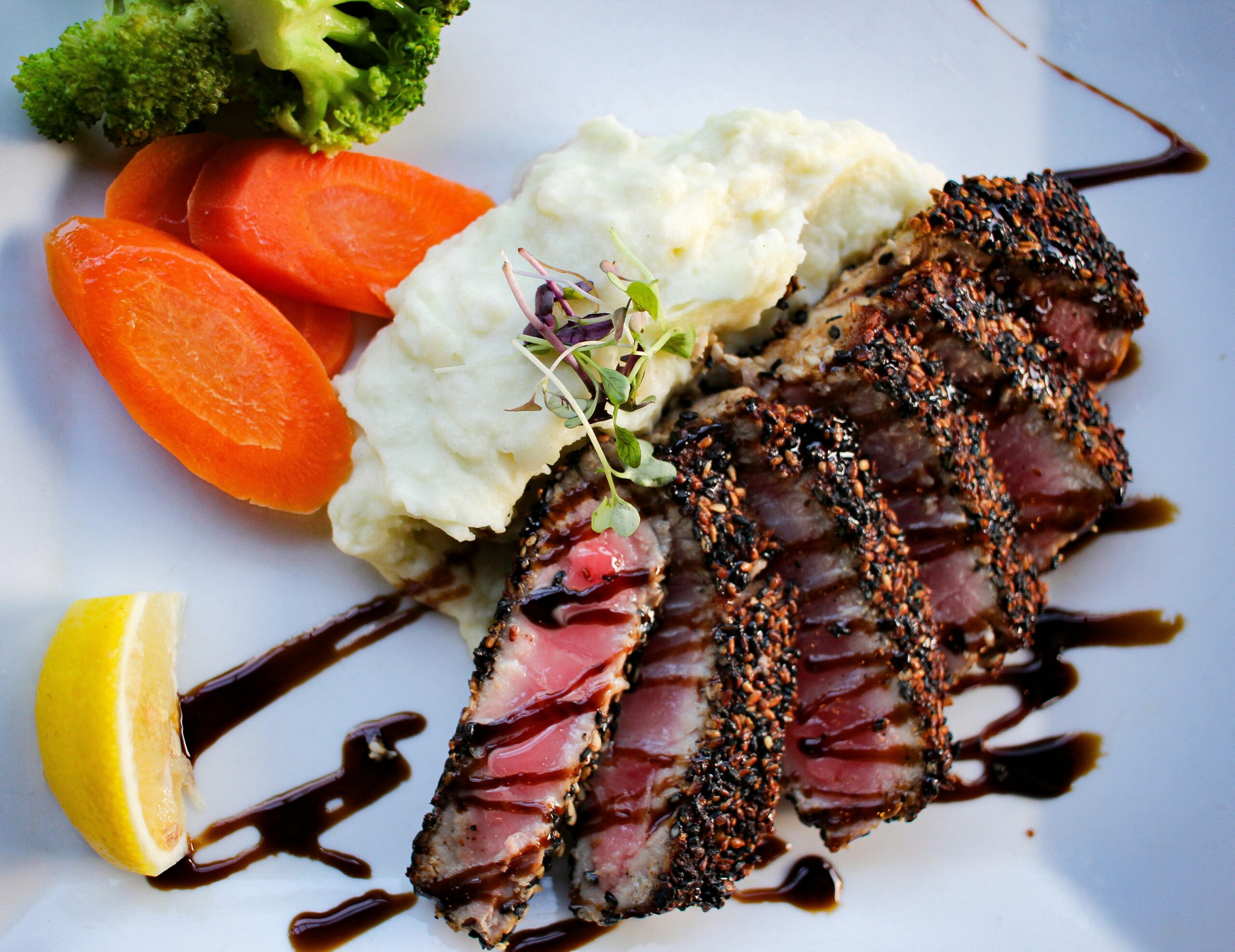
The tataki is the preparation that the quality of the fresh yellowfin deserves and that the offshore galley can produce in fifteen minutes. The fillet is sliced against the grain into pieces of two centimetres. The cast iron pan gets as hot as the burner can make it.
Thirty seconds per side, no more: the exterior sears to the specific caramel that the heat produces on the tuna’s surface while the interior stays the temperature of the ocean the fish came from. The soy sauce from the provisioning stop in the last Pacific port, the fresh ginger that the Polynesian market had this morning, the sesame oil and the spring onion and the sesame seeds from the dry stores. The tataki is on the afterdeck table eighteen minutes after the reel screamed.
The Taste
The taste of the yellowfin tataki from the line is the taste of the specific combination of the sear and the rawness: the exterior carrying the caramel and the salt of the soy and the warmth of the ginger, the interior at the temperature that the forty-minute journey from the ocean to the plate has produced, which is the temperature of a fish that has not yet had the time to cool from the warmth of the tropical water it was swimming in.
The texture is the texture of the very fresh tuna: the resistance that the still-springy muscle provides before it yields, the clean separation of the fibres that the grain-cut technique produces, the specific melt that the tuna’s fat content delivers in the last moment before the bite is complete. There is no equivalent in any restaurant. The equivalent requires the line and the ocean and the forty minutes and the specific knowledge that the fish you are eating was something else entirely less than an hour ago.