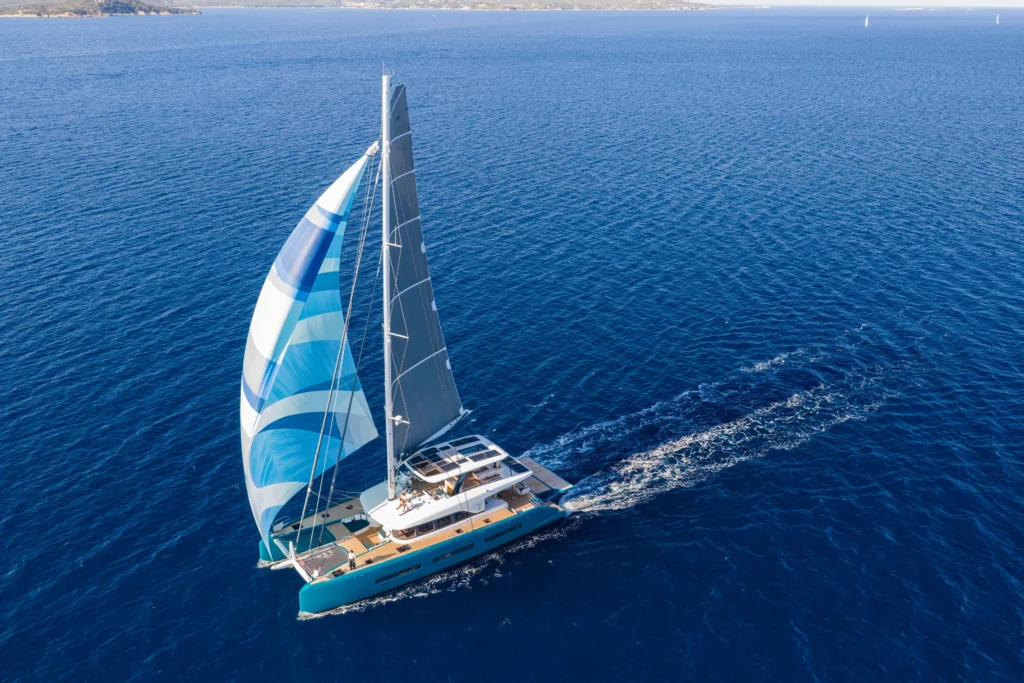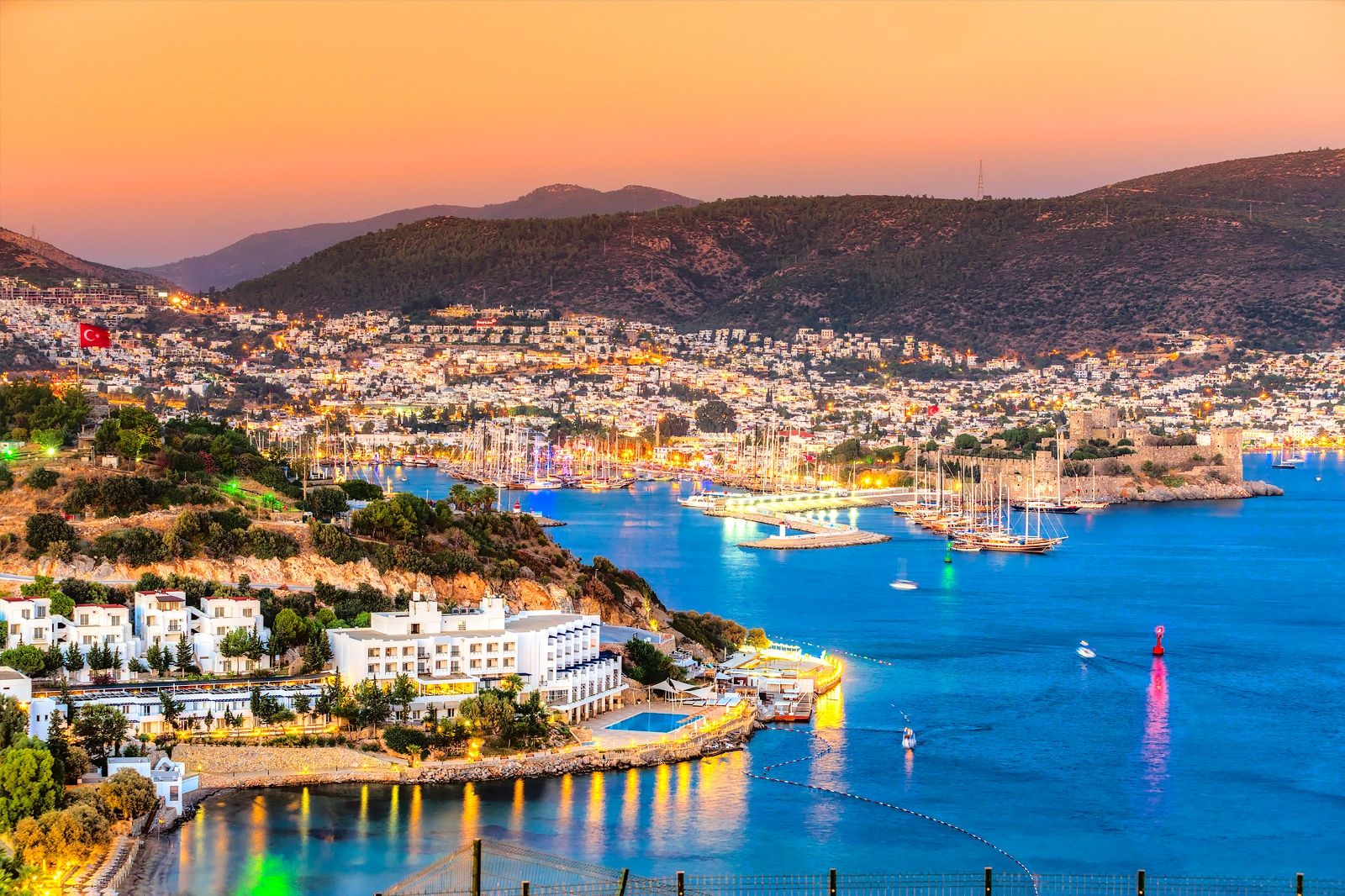
Every season we sail the Mediterranean, we start in Bodrum. Not out of habit, and not because it is the most famous sailing destination on the sea. We start there because of what it makes possible for everything that comes after. It is the easternmost logical starting point for a continuous westward passage through the full length of the Mediterranean, and if you want to cover the whole sea in a single season, the only way to do it properly is to start at the right end at the right time.
This article is about the logic of that decision. Why Bodrum. Why early. Why the direction matters more than most people realise. And what gets lost when you start from the middle, or too late, or in the wrong direction.
The Mediterranean Is Not One Sea. It Is Several.
The Mediterranean looks uniform on a map. Blue, enclosed, relatively compact compared to the oceans on either side of it. But as a sailing ground it is deeply heterogeneous. The eastern Mediterranean and the western Mediterranean have different wind systems, different seasons, different crowd profiles, and different windows of optimal sailing. Understanding that difference is the first step to understanding why the route from east to west, in the right sequence, is the only way to actually see all of it.
The eastern Mediterranean, and Turkey in particular, has a longer and more forgiving shoulder season than the west. The water is warmer earlier. The anchorages fill later. The conditions in May and early June in Turkish waters are genuinely excellent, with stable northerly winds, temperatures in the mid-twenties, and bays that will not be crowded until July. The same months in the western Mediterranean, in the Balearics or along the French Riviera, are pleasant but the season has not fully opened. The water is cooler. The marinas are quieter, but so are the villages and the tavernas and the small restaurants that make stopping somewhere worth the effort.
By the height of summer, this flips. July and August in the eastern Aegean are dominated by the Meltemi, a northwesterly wind that blows hard most afternoons and turns some anchorages into uncomfortable rolly stops best vacated by midday. The same months in Croatia, Italy, Sardinia, and the Balearics are spectacular: warm evenings, reliable afternoon breezes, and the kind of sailing conditions that make the western Mediterranean its reputation.
The conclusion writes itself. If you want to sail all of it, you sail east first, in the early season, and you move west as summer builds. Bodrum in April and May. Greece through June. Croatia in late June and July. Italy and Sardinia in July and August. France and Spain through September. The season follows you westward, and you are always in the right place at the right time.
Why Bodrum Specifically
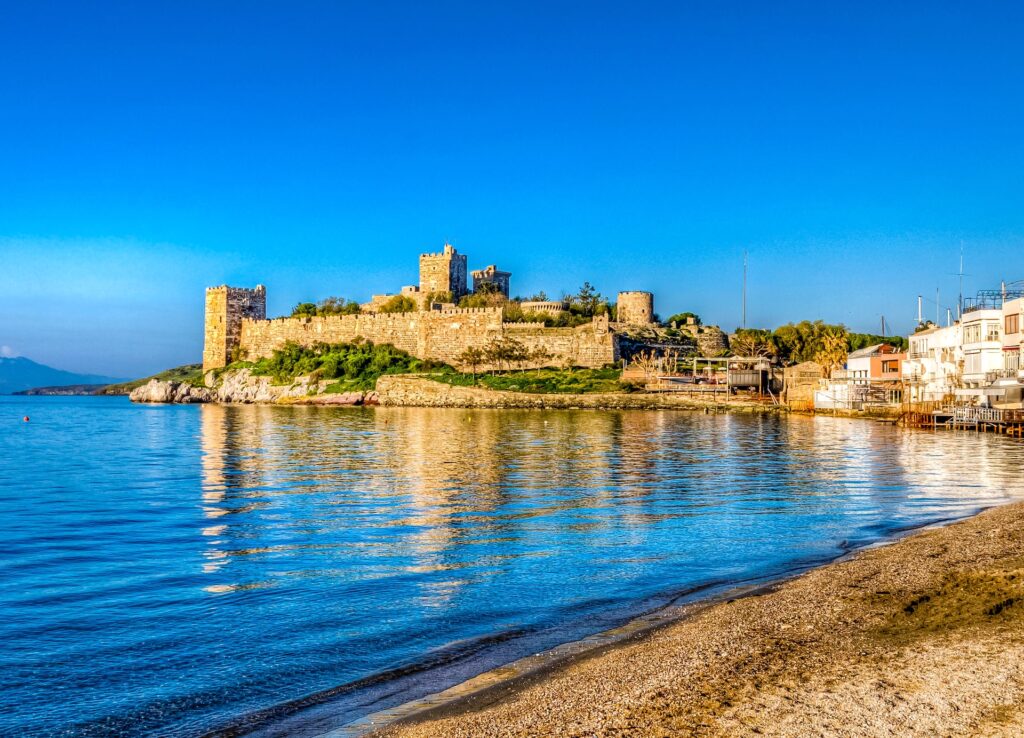
Bodrum sits at the junction of the Aegean and the Mediterranean, at the end of a peninsula that juts out into the sea between the two. It is, geographically, one of the most interesting sailing positions in the entire region: directly north of the Greek Dodecanese, within easy reach of the Gokova and Hisaronu gulfs to the east and south, and positioned to cross into Greek waters toward Rhodes and the Dodecanese with a single day’s sailing.
The town itself is worth the stop on its own terms. The Castle of St. Peter, built by the Knights of Rhodes in the fifteenth century, houses one of the finest underwater archaeology museums in the world. The old town behind it, whitewashed stone alleyways and Ottoman architecture, is one of the few parts of the Turkish coast where the tourist industry has not entirely replaced what was there before. The light in the evenings is extraordinary. The food is good without being performative. The harbour has a specific quality of life that we have not found in many other places of comparable size.
But the practical reason for Bodrum as a starting point is simple: from here, we can sail the gulfs of Gokova and Hisaronu in the early season without competing with anyone, anchor in bays that will be crowded by August while they are still quiet, and take our time in Turkish waters before crossing into Greece as the season opens properly.
The Gulfs: What Most Sailors Miss
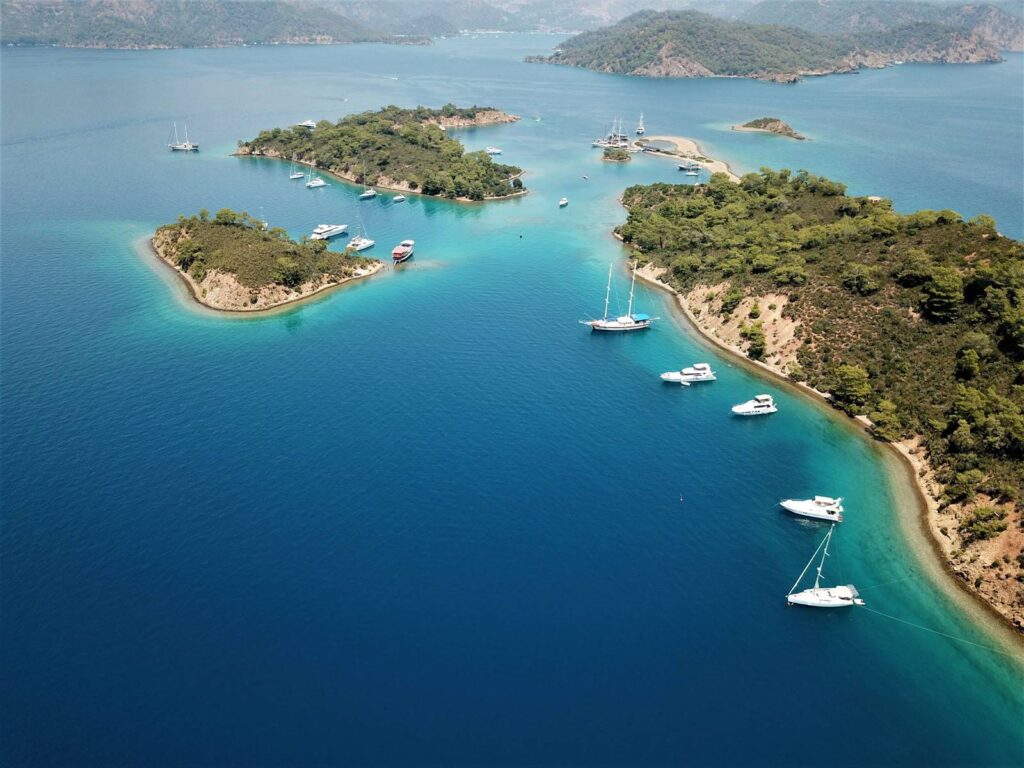
The Gulf of Gokova, immediately east of Bodrum, is one of the most beautiful enclosed bodies of water in the Mediterranean. Pine-covered mountains dropping into the sea, medieval ruins accessible only by boat, water of the kind of clarity that makes you want to stop swimming and just look at it. In May and early June we have entire anchorages to ourselves here. By late July, the same bays have twenty boats in them. Starting from Bodrum gives us these waters at their best, before the season catches up with us and pushes us westward.
The Hisaronu Gulf to the south is quieter still. Less known, less visited, with anchorages that feel genuinely remote despite being within a few hours’ sail of one of the busiest charter bases in the Mediterranean. We spend time here on every Naora season. It never disappoints, and the members who join us in Bodrum and sail into these waters in the first days tend to arrive at their first anchorage and immediately understand why we start here rather than somewhere more famous.
The Route West: A Season in Sequence
From Bodrum, the Naora route moves westward through the season. The sequence is not arbitrary. Each leg is timed to arrive in each region at its moment of optimal conditions, before the crowds arrive or after they have thinned.
| Region | When we are there | Why the timing works |
|---|---|---|
| Turkish Aegean, Bodrum and the gulfs | Late April through May | Long season, warm early, bays empty before charter traffic arrives. The best of Turkish waters at their most accessible. |
| Greek Dodecanese, Symi, Rhodes, Kos | Late May through June | Season opening, pre-Meltemi conditions, northwesterly breezes of 10 to 15 knots, warm but not hot. Best anchorages with space. |
| Greek Ionian, Corfu south to Lefkada and Paxos | June | Calm, protected waters, the classic Ionian maestro wind. Lush green islands, uncrowded in early June. |
| Croatia, Dalmatian coast and outer islands | Late June through July | Adriatic at its finest. Lastovo and the outer islands quiet until mid-July. Consistent breezes, long evenings. |
| Italy, Sardinia and the Aeolian Islands | July through August | Western Mediterranean high season. La Maddalena, the Aeolian chain, the Amalfi anchorages. Best in the shoulder of August. |
| France, Hyeres Islands and Corsica | August through September | Porquerolles and Port Cros in late season. The crowds thinning, the light changing. Corsica’s 400 anchorages mostly to ourselves. |
| Spain, Balearics and Costa Brava | September through October | Formentera and the quieter Balearics at their best. October in Menorca is extraordinary. The season closing gently around us. |
The table above is a simplification. The actual route is more fluid, shaped by conditions, by what we find in each place, and by how long a particular anchorage deserves. But the direction and the rough timing are consistent across every Naora Mediterranean season. East to west, with the season. Always moving, never rushing.
What You Lose If You Start Somewhere Else
Most sailors who do a Mediterranean season start from a charter base in Greece, Croatia, or the Balearics. That is entirely reasonable for a two-week holiday. But it means they see one region, at one moment in the season, and miss everything else. The logic of the full Mediterranean only reveals itself when you sail the whole length of it, from the east, and let the season carry you westward.
Starting in the middle, say Corfu or Split, means you either miss Turkey entirely or you sail against the prevailing conditions to get there. Starting in the west, in Barcelona or the Balearics, means you arrive in the eastern Mediterranean in the height of the Meltemi season, fighting the wind and sharing the best anchorages with the entire charter fleet at once. The east-to-west direction, starting early, is not just a preference. It is the only routing that allows you to actually see the Mediterranean as a whole, on its own terms, at its best.
Bodrum is where that logic begins. It is the right starting point because of what it opens up, not just as a destination in itself, but as the first step of a sequence that covers nearly four thousand miles of coastline across seven countries in a single season. We have done it many times, in different years, with different members aboard. The structure holds. The timing works. And it always begins the same way: early in the season, anchored in the bay at Bodrum, watching the light change on the castle walls, with everything still ahead of us.
- Bodrum gives us the Turkish coast at its quietest and most beautiful, before the season crowds it
- The east-to-west direction puts us in each region at its seasonal peak, never fighting the wind or the fleet
- Starting early in the east means finishing late in the west, extending the season on both ends
- The Gulf of Gokova and Hisaronu in May are among the finest waters we sail anywhere in the Mediterranean
- No other starting point allows the full Mediterranean in a single continuous season without compromise
If you want to understand what joining Naora looks like in practice, from Bodrum or at any other point along the route, the first step is a conversation.