The Naora day is structured around three meals. Not in the sense that the meals are the point of the day, but in the sense that they provide the anchors around which everything else organises itself: the morning dive before the eleven o’clock, the afternoon swim before the aperitif, the sunset before the dinner. Remove the meals and the day loses its shape. Keep them and the day has a rhythm that accommodates everything else without effort.
The timing is not arbitrary. It reflects the specific logic of life on a boat in warm water: the first meal late enough to allow a proper morning in the water, the aperitif timed for the hour when the light changes and the boat naturally gathers, the dinner at sunset because the sunset deserves to be watched from the table and the table deserves to be worth watching the sunset from. Three meals, three moments of community, three anchors in a day that is otherwise entirely free.
Eleven O’Clock: The First Meal
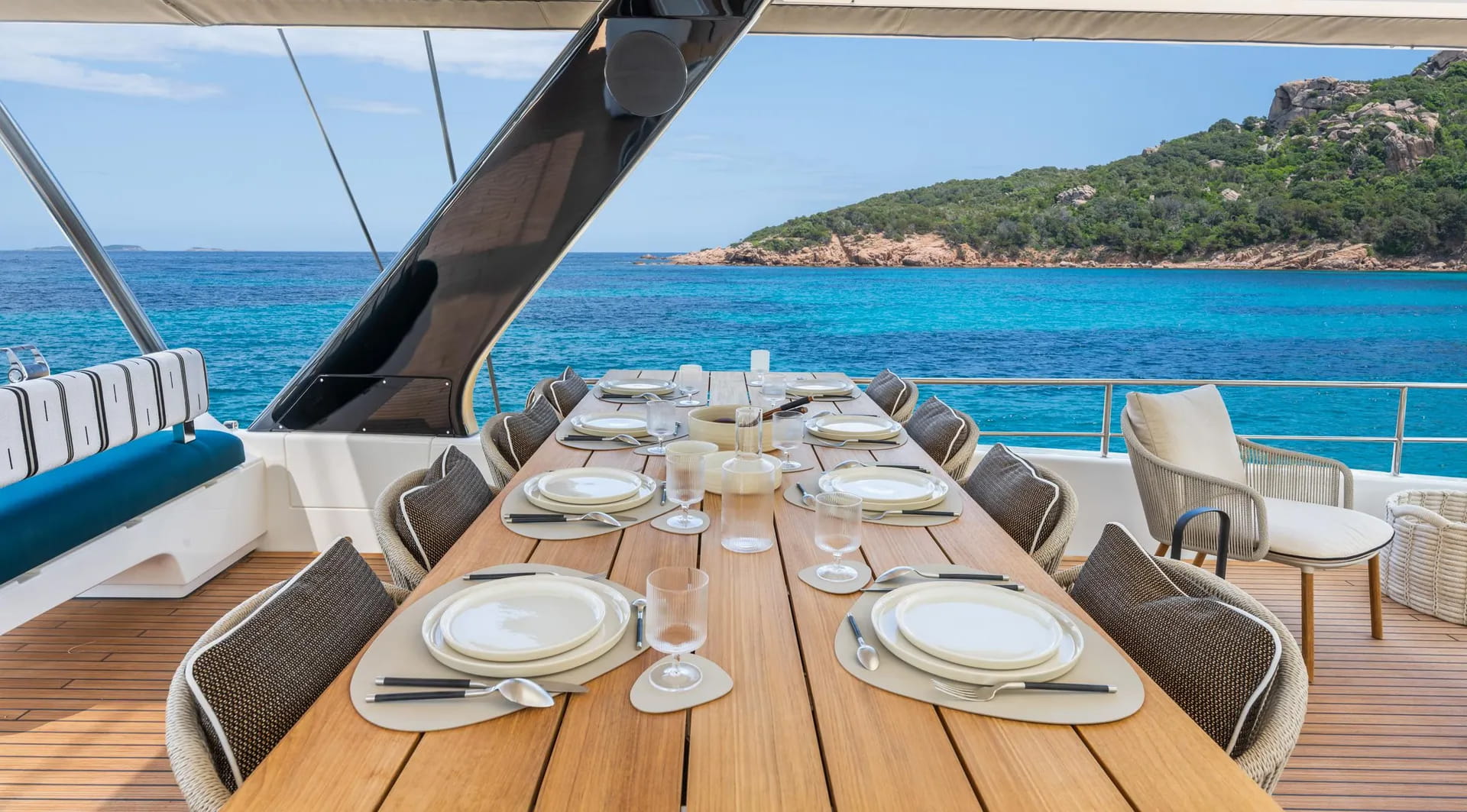
The eleven o’clock meal is what most boats would call lunch, but on the Naora schedule it functions as the first substantial meal of the day: a full preparation, multiple elements, served at the afterdeck table at the time when the morning’s activities have concluded and the appetite is genuine rather than habitual. The chef has been working since before seven: the market visit if one was possible, the fishing line from the morning passage if one was made, the provisions from the last port combined with whatever the day and the place produced.
What appears on the table at eleven is specific to the day and the place. In the Gokova Gulf in May it might be grilled octopus with wild herbs and the tomatoes from the farmer who came alongside in his dinghy that morning. In the Tuamotu it might be fresh parrotfish from the morning spearfishing with coconut cream from the atoll and the coriander from the deck garden. In the Caribbean it might be the mahi-mahi from the Atlantic crossing line, jerked with the Grenadian spices from the St. George’s market and served with breadfruit from the island above the anchorage. The eleven o’clock meal is the daily evidence that the provenance of the ingredient is the primary flavour, and that the chef’s job is to honour it rather than to complicate it.
Four O’Clock: The Aperitif
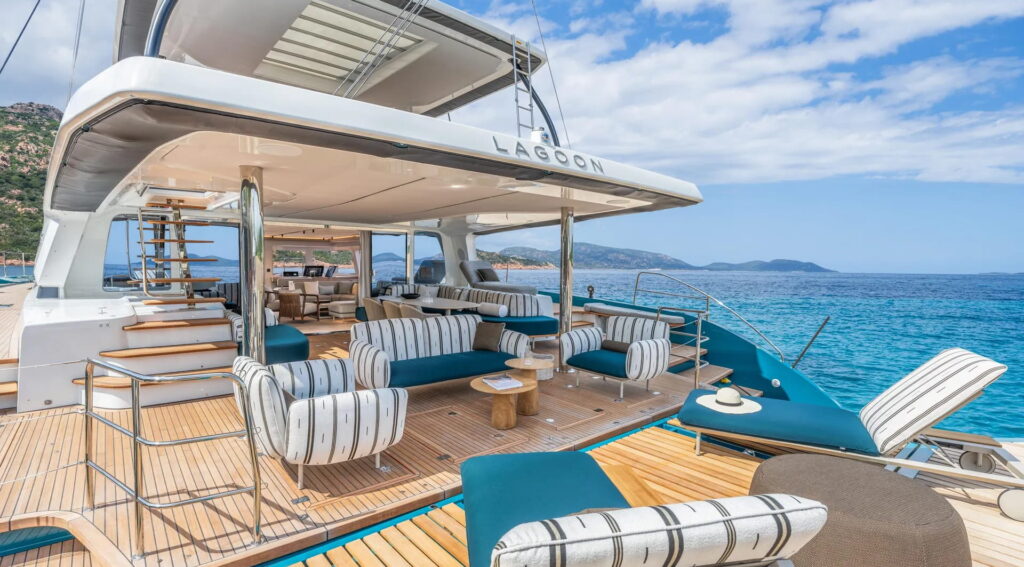
The aperitif is not a meal. It is a transition: the moment when the afternoon shifts into the evening, when the people who have been distributed across the boat’s different spaces during the unstructured hours of the day reconvene around the afterdeck table. Something cold. Something to eat with it, typically small and specific: a dish of olives or some of the local cheese from the morning market or the small plates that the chef has put together from whatever the day produced. The fishing catch if there was one, served raw or marinated if the quality allows. The roe from the sea urchins gathered at low tide. Whatever belongs to the specific hour in the specific place.
The aperitif hour at four is when the best conversations of the day happen on the Naora route. Not the deepest ones, which tend to happen at the eleven o’clock table or on the night watch, but the warmest: the accumulated observations of the afternoon, the report from the shore excursion, the story from the dive that morning that there was not quite time to tell at eleven. The light is already shifting toward gold. The day has been full. The evening has not yet started. The aperitif holds the space between them.
Sunset: The Dinner
The dinner is the main event. The chef has been building toward it since the afternoon: the mise en place that happens in the hours after the eleven o’clock, the specific preparation that the evening’s ingredients require, the timing that brings everything to the table at the moment when the light outside is doing what the light outside does at sunset on the Mediterranean or the Pacific or wherever the boat is anchored this evening.
Dinner on the Eighty2 is a proper meal. Multiple courses, properly prepared, the product of a professional chef working with fresh ingredients sourced as close to the boat as the day allowed. It is not a production. It does not need to be a production because the ingredients are already doing most of the work, and the chef’s intelligence is directed at getting out of their way rather than at demonstrating technique for its own sake.
The tuna from this afternoon’s catch, sliced simply and served with the lime from the last atoll and the herbs from the deck six feet away. The local lamb from the village above the bay, slow-cooked with the wild oregano that grows on the hillside above the path the afternoon walkers took. The fish soup from what the market offered, with the bread that was baked aboard this morning.
The dinner ends when it ends. Not at a fixed time, not because the restaurant is closing, not because the next reservation needs the table. When the conversation has run its natural course and the evening has given what it has to give and the specific sleepiness that the offshore day produces begins to arrive in the people around the table. Then the table clears and the boat settles and the night watch begins and the day is done in the most complete sense of the word.
| Meal | Time | Character | What it follows |
|---|---|---|---|
| First meal | 09:00 | Full preparation, multiple elements, afterdeck table. The day’s best ingredients at their freshest | Morning dive, swim, fishing, shore visit or passage arrival |
| Aperitif | 16:00 | Small plates, something cold. The transition from afternoon to evening, the boat gathering | The unstructured afternoon: reading, swimming, kayaking, sleeping |
| Dinner | Sunset | Multiple courses, properly prepared. The main event. Ends when it ends | The aperitif, the sunset, the day completed |