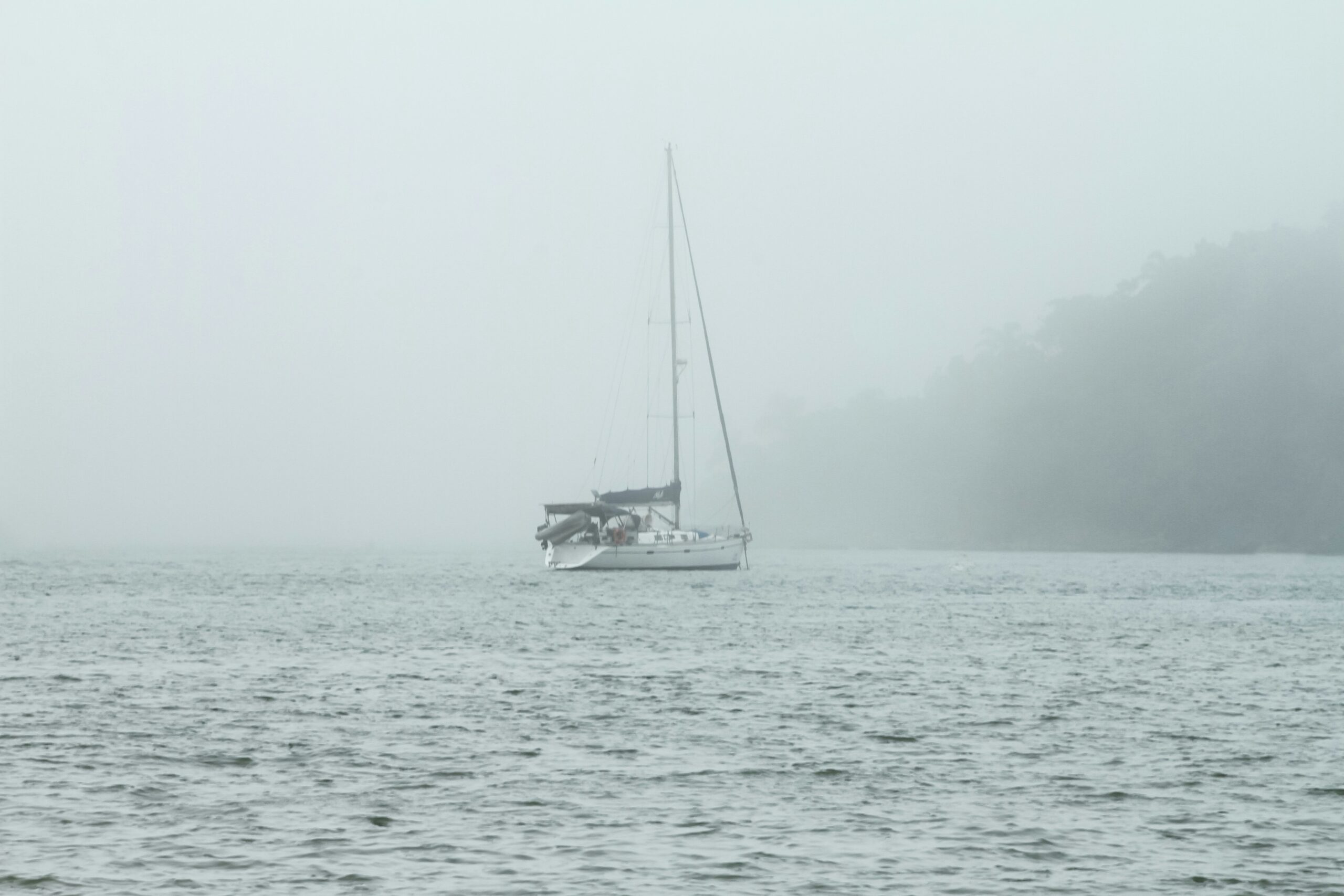
It rains on the Naora route. Less than most people expect, because the route is designed around the seasons that favour good sailing weather, but it rains. The Mediterranean has its autumn and spring rains. The Caribbean has its brief afternoon squalls. The Pacific has the doldrums with their grey, windless, occasionally very wet days. Pretending otherwise would be less honest than describing what actually happens when it does, and what actually happens is more interesting than the concern it tends to generate before the first rainy day aboard.
The Squall
The most common form of rain on the Naora route is the tropical squall: a dark column of cloud that moves across the water with visible speed, drops intense rain for fifteen to twenty minutes, and departs leaving the sky clean and the sea surface washed and the air smelling of the specific freshness that rain on warm seawater produces. The squall is visible from a distance of several miles. An experienced eye tracks its direction and estimates its arrival time. The sails are adjusted if needed. The hatches are closed. And then the squall arrives, dramatic and brief, and then it is gone.
Most members, after their first tropical squall at sea, describe it as one of the more spectacular experiences of the passage: the wall of rain arriving across the flat water, the temperature dropping by five degrees in two minutes, the boat disappearing into the grey curtain of it, and then the clearing, which is sudden and complete and followed by the most crystalline visibility the passage has offered. The squall is not a problem. It is a weather event with a specific character and a specific aesthetic that the open ocean provides and that land never quite matches.
The Rainy Anchor Day
A full rainy day at anchor, the Mediterranean kind in October or the Caribbean overcast that occasionally lasts all day rather than clearing by noon, is a different kind of day to the sunny anchor days that surround it and that are documented in every sailing photograph ever taken. It is slower. The diving is usually possible because rain does not affect underwater visibility and the water is the same temperature. The shore excursion is less appealing. The afterdeck table moves inside.
What the rainy day produces is the interior life of the boat: the salon, which on a sunny day is passed through rather than inhabited, becomes the centre of the day’s social activity. The books that have been put aside for the water are read. The conversations that the sunny day’s activities interrupted find the space they needed. The chef produces something that uses the galley’s full capability rather than the grill on the afterdeck, typically something slow-cooked and rich that suits the grey light outside and that the sunny days don’t call for in the same way. A rainy day aboard tends to produce the best meals of any week.
There is a specific quality to the social warmth of a rainy day on a boat that the sunny days don’t produce in the same way. The rain outside makes the inside more itself: the warm light, the smell of food cooking, the conversation without the competing call of the water and the shore and the afternoon activity. Members who have experienced a rainy day aboard often describe it as one of the more memorable days of their time aboard, despite or because of its difference from the days that the planning imagined.
The Rain on Passage
Rain on a passage is a different experience to rain at anchor because the boat is moving and the watch must continue. The watch crew wears foul-weather gear: proper offshore waterproofs that keep the rain out, not the urban fashion version. The instruments continue to be read, the horizon continues to be scanned, the course continues to be maintained. Rain on passage, once the gear is on and the cabin hatches are closed, is a passing condition that the watch crew manages as a matter of routine.
Below decks on a passage in rain, the experience barely changes. The ports are dogged if the rain is driving, the ventilation is adjusted, and the boat’s interior continues to be the warm, lit, moving space it is in all conditions. The meals are at the same times. The off-watch crew sleeps. The passage continues.
The most significant thing rain does to the passage, beyond the immediate management of wet conditions, is wash the boat. Salt accumulation on a sailing catamaran in constant use is significant: the sails, the deck, the rigging, the solar panels, all become progressively coated with the fine salt residue that seawater splashes and spray deposit. A good rain cleans all of it. The boat after a night of rain in a trade wind squall looks and functions better than it did before: the deck is clean, the solar panels are efficient again, and the salt in the air has been washed out leaving the specific freshness that only rain on open water produces.