The provisioning morning is the morning when the Naora table is built. Not planned, not ordered from a supplier: built, from what the market has in it on that specific morning in that specific place in that specific season. The difference between these two approaches to feeding a boat is the difference between the table that arrives from a supply chain and the table that arrives from a place, and it is the difference that the people who eat at the Naora table can taste even when they cannot articulate why what they are eating is different from what they have eaten in excellent restaurants that were supplied rather than provisioned.
The provisioning morning begins before the boat has properly woken up. The chef is off the boat by seven, which in most of the markets on the Naora route is the hour when the best produce is still available and the hour after which the selection begins to represent what the market could not sell earlier rather than what it was proud to show.
The tender takes the chef to the town dock and the chef goes to the market and what happens in the market is the specific intelligence of someone who knows what they are looking for but is flexible enough to change the plan entirely when the market shows them something better than what they were planning to find.
The Market Conversation
The provisioning market in a small harbour town is not a supermarket with a local aesthetic. It is a conversation: the vendor who knows what came in this morning and what will be worth buying tomorrow, the fisherman who has been up since midnight and who can tell the chef what the sea produced last night, the farmer from the hillside above the bay who brings down whatever is ready and sells out by eight.
The chef who knows how to have this conversation extracts information from the market that the chef who simply shops does not have access to, and the information determines the quality of the table that evening in a way that no amount of technique applied to inferior ingredients can replicate.
The language is usually not the chef’s language, which is part of the charm and part of the challenge. In the Turkish markets the transaction happens in Turkish with occasional Italian. In the Pacific island markets the transaction happens in French and in whatever the specific island language is, which may be related to French in ways that the chef can follow and may not be. In the Indonesian markets the transaction happens in Bahasa and hand gestures and the specific universal language of indicating a quantity by holding up fingers while pointing at the object of interest.
The information that comes through this process is less complete than the information available in a conversation between two fluent speakers. It is more complete than the information available from a supply catalogue, and it is attached to a person who grew what they are selling or caught it this morning, which is a form of provenance that no certification scheme replicates.
When the Members Come Along
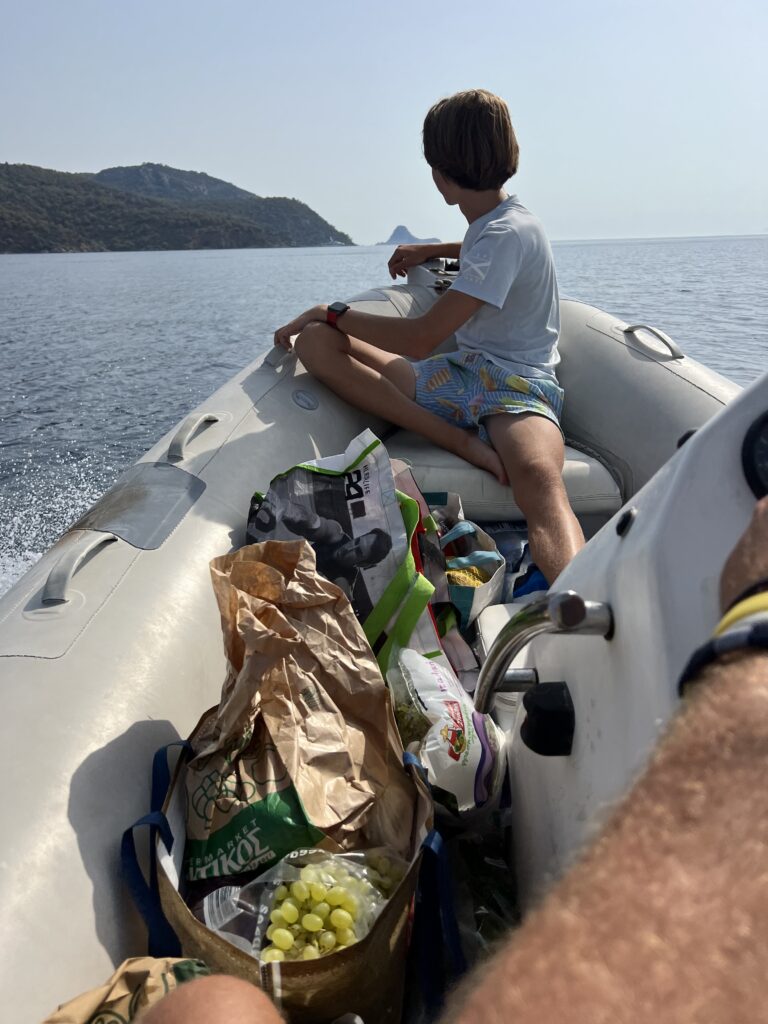
Members who join the provisioning morning receive the specific education that the market provides about where food comes from and what the relationship between the place and the table actually is. The member who was at the market when the chef bought the octopus from the fisherman who pulled it from the trap an hour earlier eats the octopus that evening with a knowledge of its provenance that transforms the meal from food into story.
Not a curated story that someone told them about food provenance. The actual story: the specific fisherman, the specific trap, the specific morning, the specific bay that the trap was in and that is visible from the anchorage where they are eating the result.
This is what the provisioning morning gives to the people who are present for it: the complete arc from origin to table that the supply chain agriculture systematically breaks. The connection between what the place produces and what the people in it eat is one of the most specifically Mediterranean and Pacific and Indian Ocean truths available on the Naora route, and it is available most completely in the market at seven in the morning when the produce is still carrying the morning’s cold and the fisherman is still carrying the smell of the night’s work.