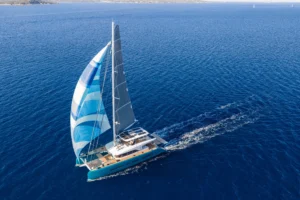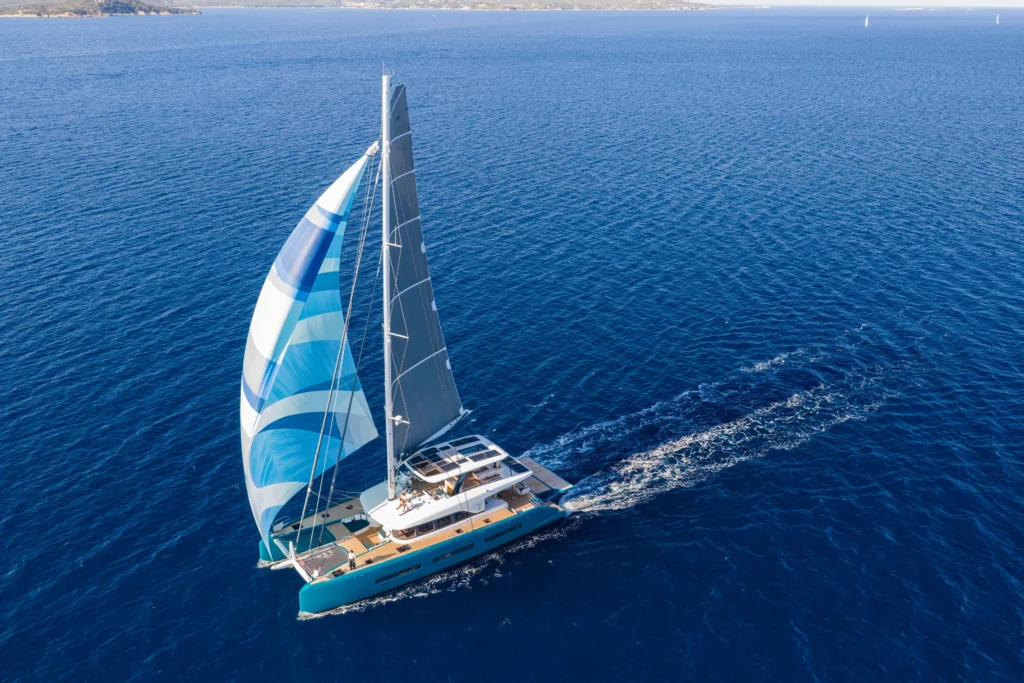
The Pacific crossing from the Galapagos to the Marquesas covers approximately 2,800 nautical miles in the southeast trade wind belt. At seven knots average speed over ground, it takes between seventeen and twenty-two days depending on the specific wind conditions encountered.
It is the longest single passage of the Naora circumnavigation and the one that members most specifically describe as having changed something in them. Not the most dramatic passage, not the most difficult, not the one with the most weather. The one that is simply the longest, and therefore the one in which the specific process that extended offshore time produces runs its full course rather than being interrupted by arrival.
This article is an attempt to describe that process as honestly and as specifically as possible: not what the crossing looks like from outside but what it does to a person from inside, day by day, as the distance from land accumulates and the internal landscape changes in response to the external one.
Days One to Three: The Letting Go
The first three days of any offshore passage are the transition days, and the Pacific crossing is no exception. The body adjusts to the motion. The seasickness that was possible is either present and being managed or absent and no longer a concern. The phone loses its habitual pull not because the connection is gone, Starlink provides it, but because the context that gave the phone its urgency has changed: the inbox that drove the morning on land no longer drives the morning on the boat because the morning on the boat has its own structure that has nothing to do with the inbox.
The land life recedes across these first three days in a way that is gradual rather than dramatic. Not forgotten, not abandoned, not resolved: simply placed at a distance that makes it manageable rather than immediate. The business decision that was urgent two days ago is still pending but it is pending in a context that is no longer the context you are in, and the distance between you and it is physical as well as psychological. The Pacific Ocean is between you and your office. This is a fact with specific consequences for the quality of the thinking you are able to do about the decision, which is better at this distance than it was in proximity.
Days Four to Seven: The Settling
By day four the watch rotation has become the structure of the day rather than an imposition on it. The three hours on and six hours off that felt arbitrary in the first days has become the rhythm that the body expects: the watch alarm is anticipated rather than resented, and the quality of attention available during the watch has increased as the body has learned that the watch is the time for the specific alertness of being responsible for the boat and that the off-watch time is genuinely available for rest rather than management of the concerns that land did not resolve.
The meals have become anchors in the day rather than interruptions to it. The eleven o’clock is the first substantial meal and the organiser of the morning: the dive or the fishing or the reading or the conversation that happened before eleven gives way to the meal and then to the afternoon that the meal opens into.
By day five or six, members who arrived at the crossing with a full agenda of things to think about have begun to notice that the agenda is thinning: not because the things on it have been resolved but because the things on it have been sorted by the passage into what actually requires thinking about now and what can wait for the context that land provides.
Days Eight to Fourteen: The Opening
The second week of the Pacific crossing is where the process becomes most specific and most difficult to describe to people who have not experienced it. The social layer, the version of each person that their habitual social environment has produced and that the first week at sea has been gradually thinning, is by now sufficiently thin that the actual person underneath it is the person who is present at the table and on the watch and in the conversation.
The conversations in the second week of the crossing are different from the conversations in the first week. Not in subject necessarily, though the subjects change: in quality, in honesty, in the willingness to stay in a difficult or ambiguous topic rather than finding the social exit that land always provides. The person who has been carrying a question they have not been able to ask in any context available on land finds that the second week of the Pacific crossing provides the context: the time, the community, the specific quality of a place where there is nowhere else to be and nothing else to manage and the question can be asked and sat with rather than resolved on schedule.
Days Fifteen to Twenty-One: The Arrival of Something
The third week is the week that members most often struggle to describe when they are asked what the crossing did to them. Not because nothing happened but because what happened was internal and the internal does not easily submit to description. The clearest language most people find is: something arrived. Not a decision necessarily, not a revelation, not a transformation in the dramatic sense.
A quality of clarity that was not present before the crossing and that is present now, applied to something specific: a relationship they needed to understand differently, a professional decision they had been approaching from the wrong angle, a value they had been treating as secondary that the crossing has shown them is actually primary.
The arrival of this clarity is connected to the specific conditions of the third week: the body fully adapted to the passage rhythm, the social layer fully thinned, the land concerns at their maximum distance, the community around the table at its most honestly itself. In these conditions, the thinking that the land prevented has the space and the time it requires, and the conclusions it reaches arrive not as inspiration but as the natural consequence of having been given enough of both.
The Marquesas appear on the horizon on day nineteen or twenty or twenty-one. The birds arrive first, then the smell of the island on the wind, then the volcanic peaks rising from the pre-dawn grey. The crossing is ending. The person arriving at the Marquesas is not the same person who departed the Galapagos, in specific and traceable ways.
The crossing did what twenty-one days of open ocean in the trade wind with the right community and the right conditions always does: it gave the time and the space and the specific quality of presence that the land cannot provide, and it allowed the person in that time and space to arrive at something that was waiting for them to be still long enough to find it.