The captain’s day off is a specific and unusual thing because the captain’s work is always present at the place where the captain sleeps. The boat does not stop being the boat when the watch is off or when the passage is complete. The systems are always running, the anchor is always set or the lines are always on the dock, the weather is always the current weather rather than the forecasted weather that was accurate yesterday.
The captain who has a day off is the captain who has handed the boat’s continuous management to the crew and who has decided, for a defined period, to be somewhere on the boat or near the boat or away from the boat that is not the helm or the chart table or the dock where a problem might require their attention.
My days off are rare because the five-year circumnavigation does not have scheduled days off in the way that a shore-based job does. But they happen, most reliably in the refit weeks when Antony and the maintenance crew are managing the vessel and my specific expertise is not the expertise that the day’s work requires. Here is what I do with them.
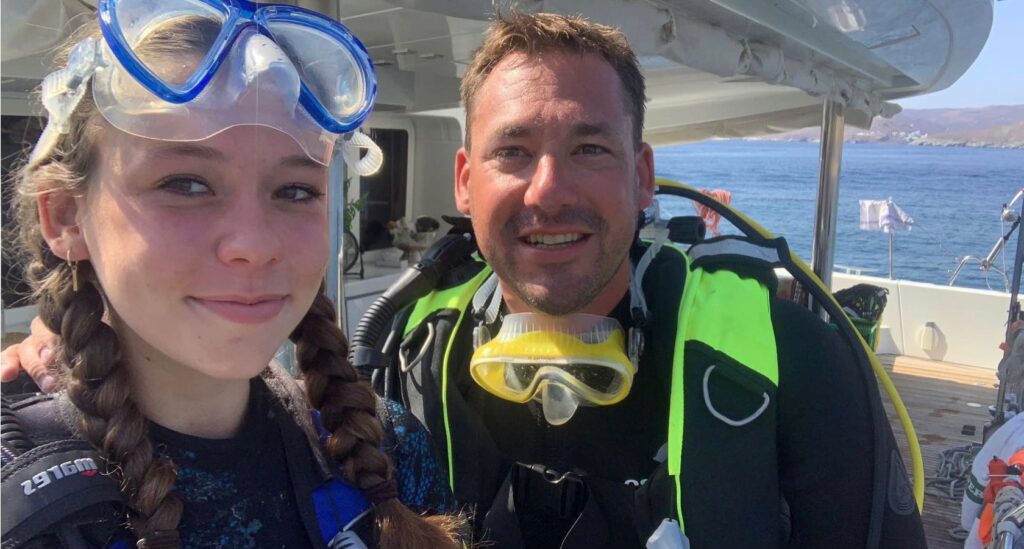
Diving Without A Brief
When I dive as a dive lead, the dive has a purpose beyond the dive itself: the briefing to prepare, the specific site to assess, the group to manage, the debrief afterward. These purposes are legitimate and the diving that contains them is excellent diving. But they are not the same as diving without a purpose beyond being in the water.
On a day off, I dive alone or with one other person and without a plan beyond the general direction. No briefing to deliver, no group to manage, no debrief to structure. The specific quality of attention that the purposeless dive produces is different from the purposeful one: the eye goes where it goes rather than where the brief directed it, the time at depth is the time that the air and the conditions allow rather than the time that the group’s comfort and the site’s constraints determine, and the specific encounters that the dive produces are the encounters that were there rather than the encounters that the site’s reputation promised.
The finest dives of my career have not been on the famous sites. They have been on the unmarked sites, the dive that started because there was a reef visible from the boat and the day was free and there was no reason not to go and look. The day off dive is the dive with the highest probability of producing this kind of encounter, because it is the only dive that does not have a destination and is therefore the only dive that can arrive somewhere unexpected.
Walking Alone
My standard walk is the walk to the highest point above the anchorage that the terrain allows in approximately two hours of walking. Not because the view is the point, though the view from above an anchorage is always one of the finest perspectives on the world the route provides: the boat visible below, the bay it is anchored in visible in its entirety, the sea beyond the bay visible to the horizon. The walk is the point. The specific quality of thinking that a steep uphill walk alone produces is the thinking that the boat, where I am always the captain rather than a person walking, does not provide.
I make decisions on these walks that I could not make at the chart table. Not navigational decisions or safety decisions, which require the specific information that the instruments provide and that the hilltop does not. The longer decisions: the question about the route’s second year that has been circling in the background of the daily management for three weeks and that the walk provides enough uninterrupted attention to actually resolve.
The observation about a crew member that has not yet been addressed and that the walk allows to be fully thought through rather than responded to reactively in the context that produced it. The specific quality of the captain who walks alone regularly is, I think, the quality of the captain who is doing the thinking that the boat’s continuous management prevents but that the boat’s management continuously requires.