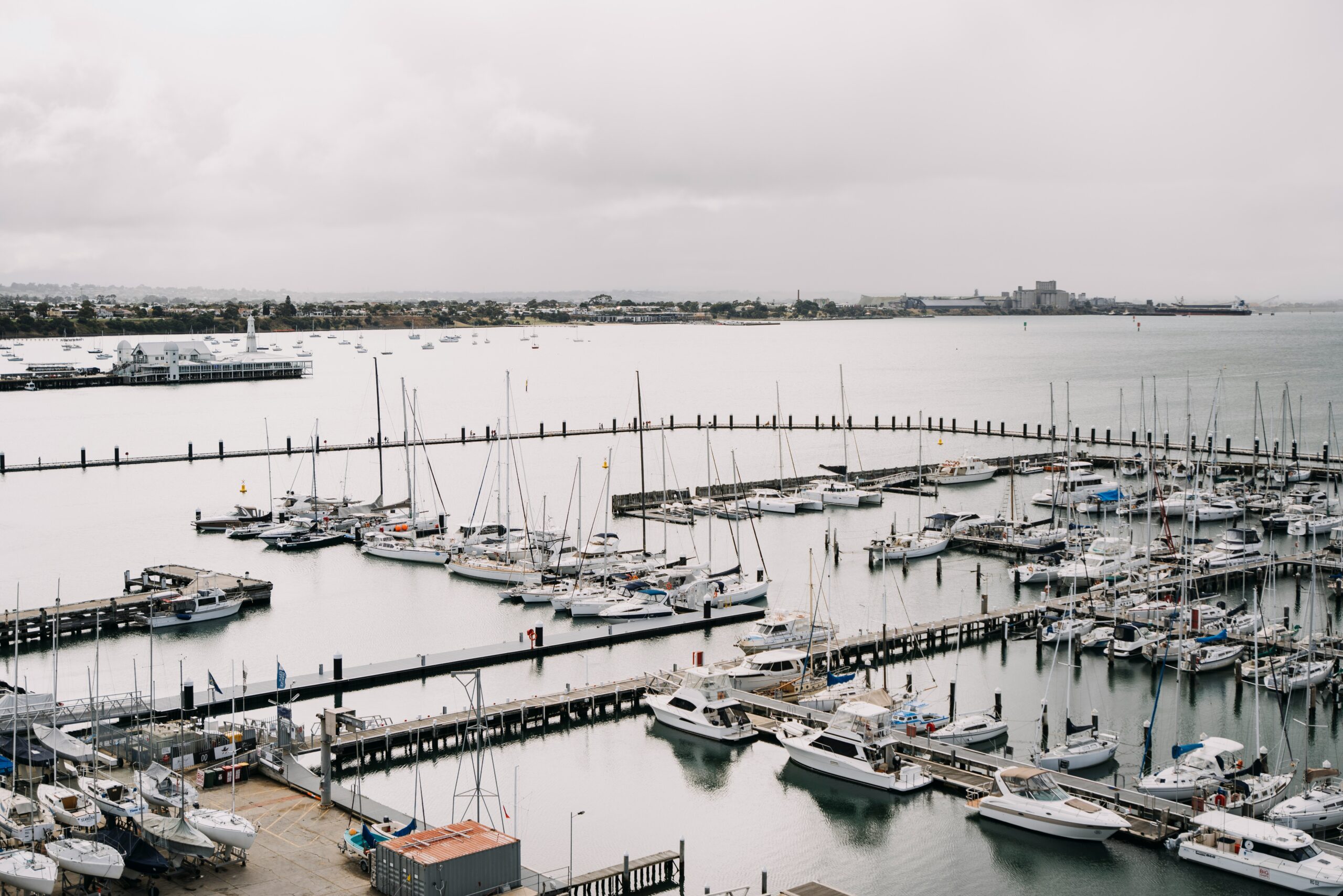
Marina entry is the most watched moment in sailing and the one that generates the most anxiety in proportion to its actual technical difficulty. The reason for both is the same: there is an audience. The people on the pontoons and in the nearby boats are watching, and the knowledge that they are watching produces a quality of self-consciousness that interferes with the calm, methodical approach that the manoeuvre actually requires. I have watched excellent sailors make poor marina entries because they were managing their appearance rather than the boat.
The solution to the audience problem is the same solution that works for every performance anxiety: preparation so thorough that the execution is automatic rather than effortful, leaving the mental bandwidth free for the real-time adjustments that the specific conditions of each berth require. A marina entry is a planning exercise completed before the bow crosses the marina entrance, not a spontaneous performance executed under pressure.
The Plan Before the Entrance
Before the Eighty2 enters a marina, the following is known and communicated to the crew: the berth number or position, the orientation of the berth (whether we are berthing bow-in or stern-to, which side the pontoon is on), the wind direction and strength and how it will affect the approach and the final positioning, the current if any in the marina basin, the dock lines that will be needed and which crew member manages each of them, and the abort plan if the approach does not develop as expected.
The abort plan is the most important element of the briefing and the most commonly omitted in marina entry planning. Every approach should have a clear abort: the point at which, if the boat is not in the correct position with the correct speed and the correct angle, the approach is terminated, the engine is applied to stop the boat clear of any obstruction, and the approach is begun again from outside the marina. A committed approach to a berth that is going wrong produces the dramatic contact that the audience remembers. An aborted approach produces mild embarrassment that everyone forgets. The abort is always cheaper.
The Catamaran Specific
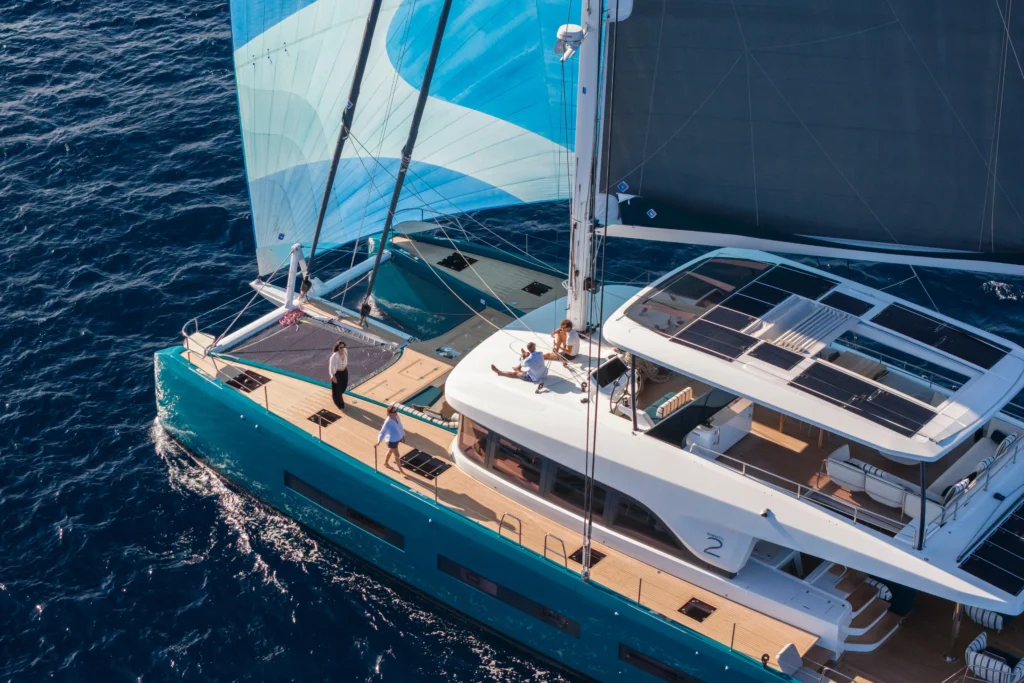
The Eighty2 is a catamaran, which means it manoeuvres at low speed differently to a monohull. The wide beam and the twin engines are the key characteristics: the boat has minimal rudder effectiveness below about two knots, and steering at low speed is achieved primarily through differential throttle between the two engines rather than through the rudder.
Port engine forward and starboard engine astern spins the boat to starboard on its own axis. Starboard engine forward and port astern spins it to port. This is not the intuitive steering that most sailors learned on monohulls and it requires specific practice to become automatic.
The bow thruster on the Eighty2 provides lateral movement of the bow without requiring engine power, which is useful in the final positioning phase of a berth approach but is not a substitute for the differential throttle technique for major direction changes. The experienced catamaran handler uses the bow thruster for fine adjustment and the engines for the primary manoeuvring: the two together provide a level of positional control in a marina that a monohull cannot match in crosswind conditions.
The Wind
A catamaran’s wide beam and high freeboard make it significantly affected by crosswind in a way that a low, narrow monohull is not. A fifteen-knot beam wind in a marina is a different challenge for the Eighty2 than it is for a thirty-five foot monohull: the windage area is larger, the beam provides more leverage for the wind to work on, and the effective wind force pushing the boat sideways is proportionally greater. Every marina entry in crosswind conditions is assessed for the wind’s effect on the approach trajectory and the final position, and the approach speed is adjusted to provide the directional control that the crosswind is working to remove.
The simplest rule for crosswind marina entry: approach with the wind aft of the beam if possible, because the crosswind is then pushing the boat into the berth or into the pontoon rather than away from it. An approach with the wind forward of the beam requires significantly more engine power to maintain the approach angle, and an approach directly into a strong crosswind is the approach most likely to require the abort plan. If the marina orientation does not allow a favourable wind approach, the briefing for the approach takes longer and the abort plan is described more carefully.