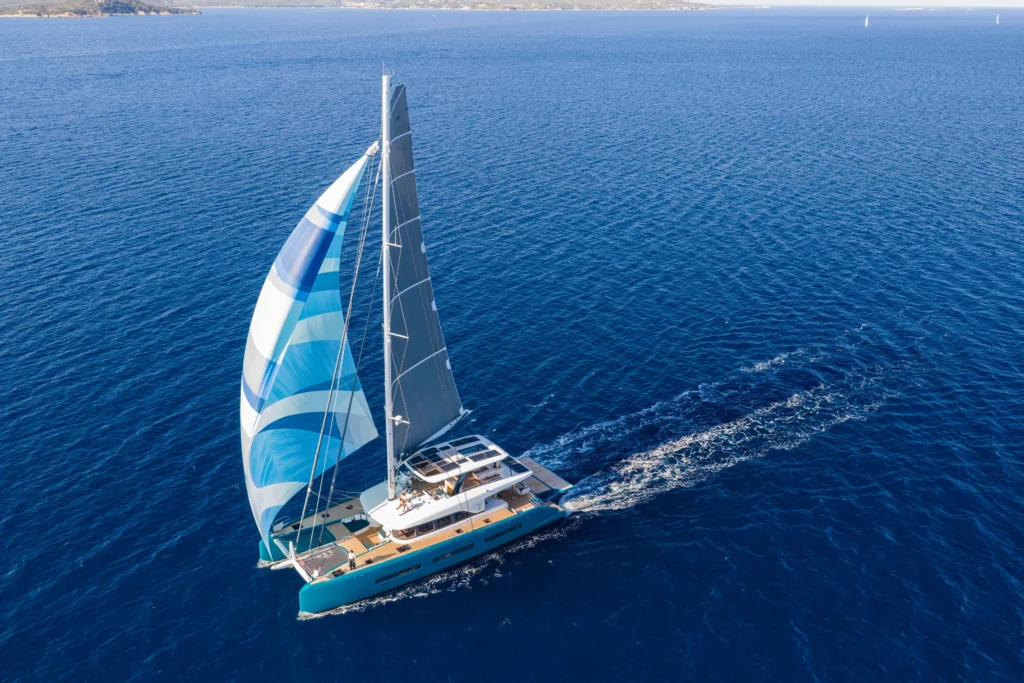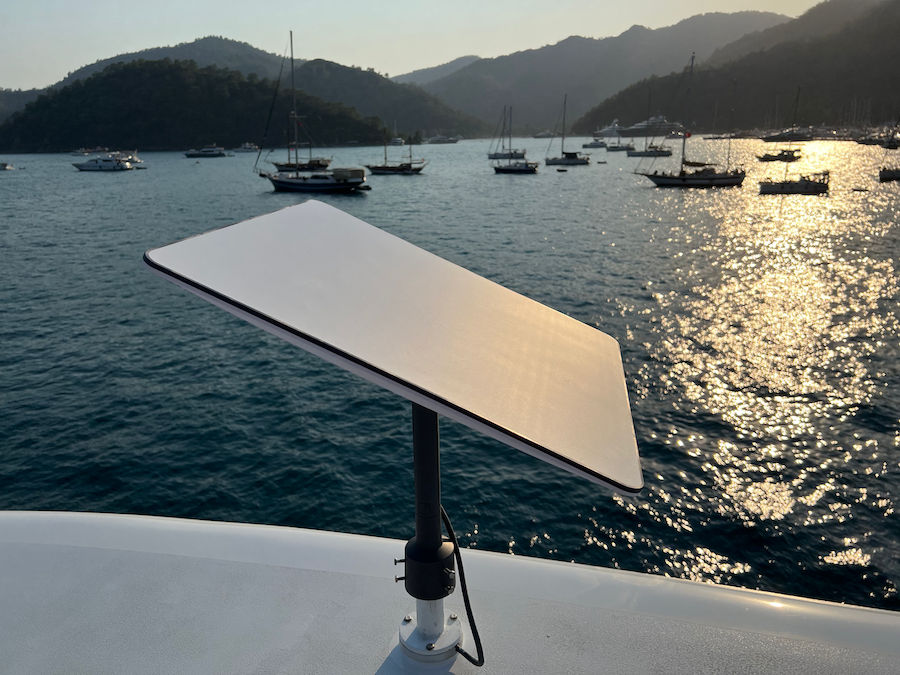
The Eighty2 carries a Starlink terminal. This is the honest answer to the connectivity question, and it changes the calculus of offshore sailing in ways that were not available five years ago. Starlink provides satellite broadband from almost anywhere on the ocean surface: not the narrow-band, high-latency satellite connection of previous generations that was adequate for weather data and emergency communication and little else. Actual broadband, capable of video calls and email and the normal functions of a connected life, available at sea.
We want to be honest about what this means and what it does not mean, because the connectivity question is one of the most important ones for people considering the voyage and it deserves a complete answer rather than a simple one.
What You Have
In port and in coastal anchorages: full Starlink connectivity supplemented by local 4G where signal is available. Video calls, streaming, normal email, everything a connected life requires. This covers the Mediterranean legs, the Caribbean anchorages, the port stops throughout the route. If you need to stay in contact with your business or your family during these weeks, the connection is there.
On offshore passages: Starlink continues to function on the ocean surface. The connection is there. Weather routing data arrives. Navigation updates are received. The safety and operational systems of the boat that depend on satellite communication work as they are designed to work. Members who need to send or receive essential communications during a passage can do so.
What the offshore environment does to connectivity is not technical. The connection exists. What changes is the relationship with it. On the third day of a passage, with the nearest land several days in any direction and the watch rotation structuring the day and the meals providing the other structural anchors, the phone stops feeling like the urgent thing it felt like in harbour. Not because the connection is gone but because the context that gave the connection its urgency has changed. The inbox does not drive the day. The wind drives the day. Most members stop checking after 48 hours not because they cannot but because the alternative is more interesting.

What We Ask
We do not ask for digital detox. We do not impose phone-free zones or technology restrictions or any policy that treats adults as though they cannot manage their own relationship with a device. We ask only for the presence that the boat deserves and that the passage makes possible: the attention to the watch when it is your watch, the presence at the table during meals, the availability for the conversations that offshore sailing produces and that are worth having rather than missed because the inbox needed attention.
In practice, the Starlink changes the anxiety architecture of the offshore passage for people who need to know it is there. The specific fear of being genuinely unreachable, which is a real concern for founders and executives and anyone who carries significant professional responsibility, is addressed by the existence of the connection rather than by its constant use. Knowing the line is there is enough. Using it continuously would defeat the purpose of being here, and most members understand this within the first day without it needing to be said.
The Specific Offshore Quality
The most valuable thing the Starlink era has changed about offshore sailing is not the connectivity itself. It is the removal of the anxiety about connectivity. The previous generation of offshore sailors had to genuinely accept being unreachable as the condition of the voyage. Most of them found this liberating. Some found it difficult. What the Starlink does is separate those two experiences: the liberation is still available, for the people who choose it, without the anxiety being the price of entry. You can be offshore and present and largely disconnected not because you have to be but because you choose to be, with the knowledge that the connection exists if you genuinely need it.
That choice, made freely from a position of security rather than necessity, produces a different and arguably richer version of the offshore freedom that sailing has always offered. We are glad the technology exists. We are equally glad that most of the people who come aboard put the phone down after two days because the ocean is more interesting. Both things are true. The connectivity makes the second one possible without the first one being required.