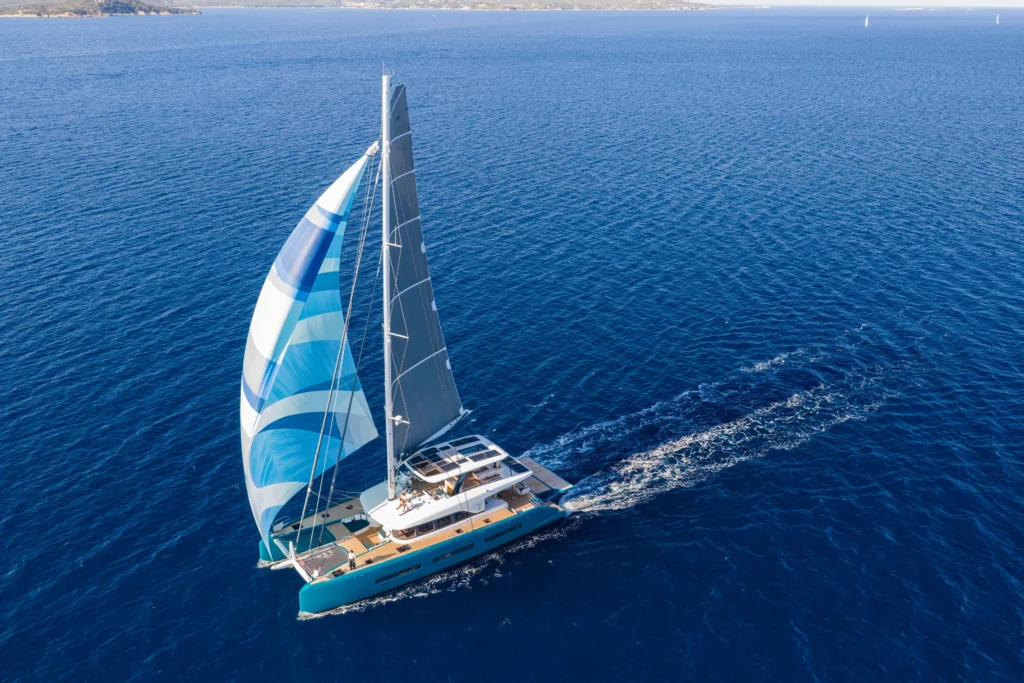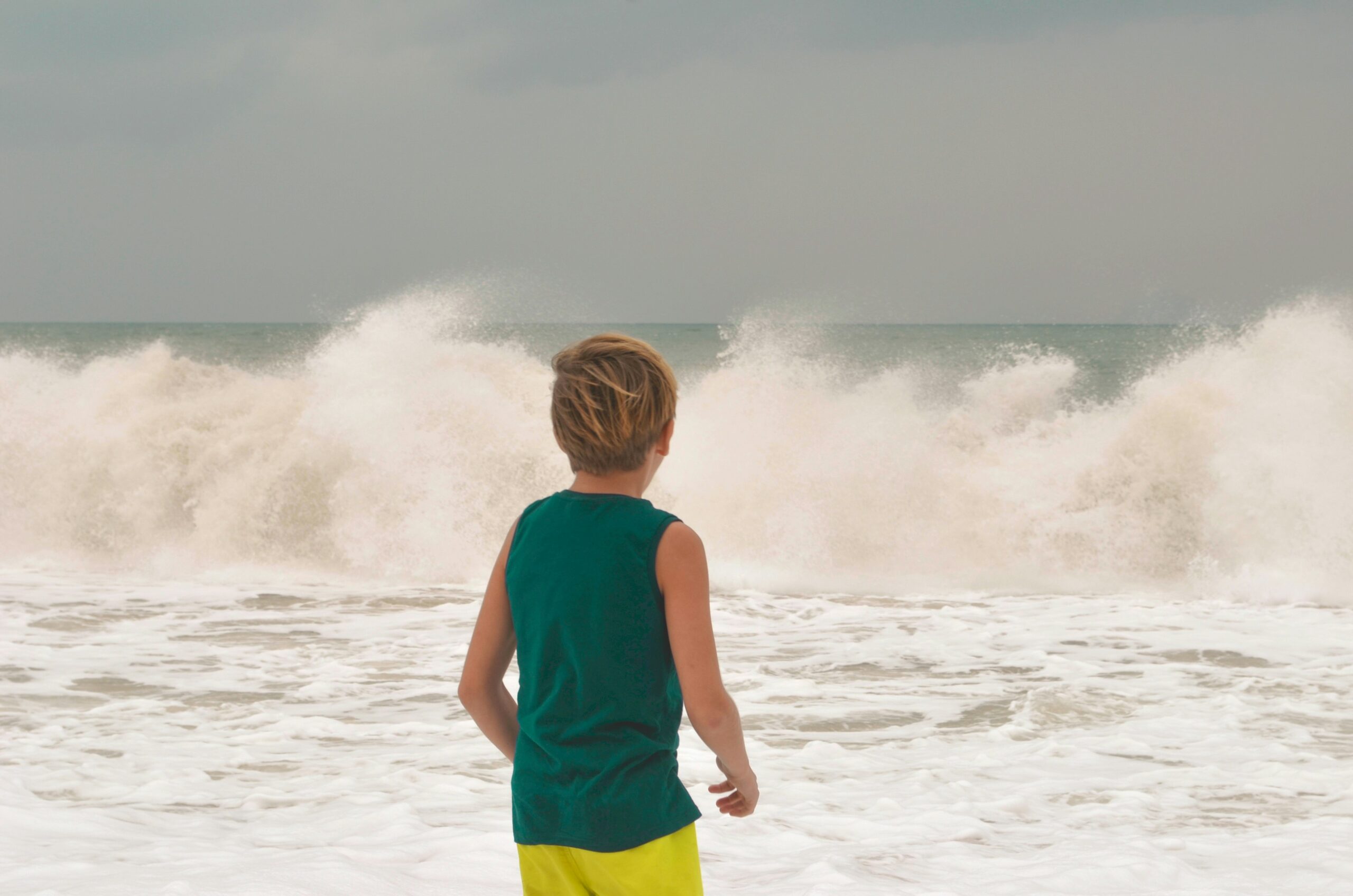
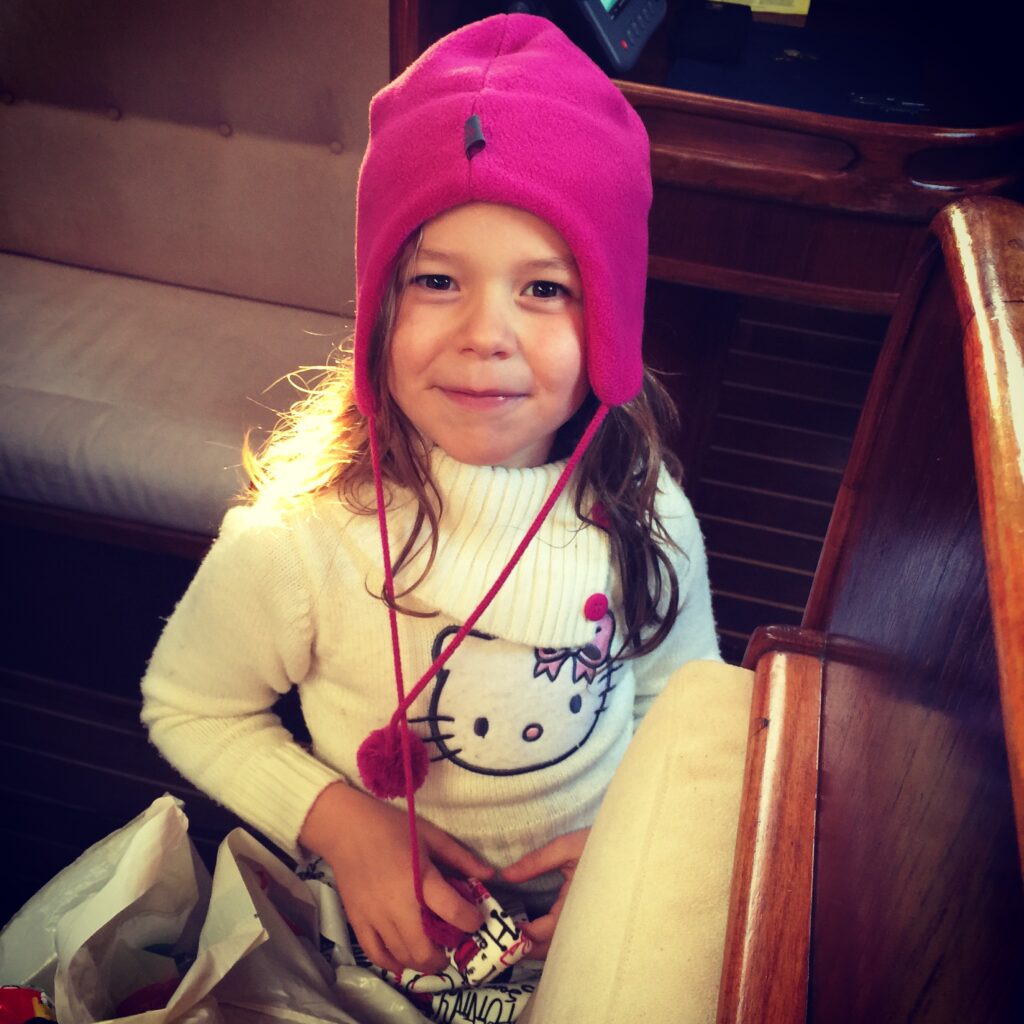
Sven’s daughter has been part of this life from her first days. She was on board before she could walk, in a maxi-cosi wedged into the salon while the boat moved through the Mediterranean. She is 19 now and chasing her own version of the same horizon. The trajectory between those two points, infant on a boat to young adult who chooses adventure as a default, is not a coincidence. It is what growing up with the ocean as part of your context produces.
This is not an article about homeschooling programmes or educational curricula at sea, though both of those things exist and work well for families who choose them. It is about what children absorb from extended time on a vessel, in real conditions, encountering real people in real places, that cannot be replicated by any institution regardless of how well-resourced or well-intentioned it is.
Competence in Real Conditions
A child who grows up spending time at sea learns what actual competence feels like: not the competence of getting the right answer on a test, but the competence of doing something that has real consequences and getting it right. Helping to set the anchor and checking that it has held. Reading the depth sounder during a shallow approach. Managing the fishing line and landing a fish that will be dinner. These are not simulations. The anchor either holds or it does not. The fish either comes in or it does not.
This kind of competence builds differently to academic competence. It is embodied, immediate, and verifiable. A child who has successfully handled the bow lines on a dozen marina berths in six different countries has a specific confidence in their physical capability and their ability to function under mild pressure that is difficult to produce any other way. They have also been trusted with something real, which is one of the most powerful things that can happen to a young person’s sense of themselves.
The World as a Variable Rather Than a Constant
A child raised in one place, in one culture, eating one cuisine, speaking one language, surrounded by people who mostly share the same assumptions about how the world works, grows up understanding those assumptions as facts rather than choices. That understanding is not wrong, exactly. But it is incomplete in a way that has consequences.
A child who has spent time in the Marquesas, in Fiji, in the Solomon Islands, in Indonesia, in Turkey and Greece and Croatia and Morocco, has a different understanding. They have met people who organise their lives around entirely different values and have seen that those lives work: that there are multiple answers to the question of how to live, not one answer that their own culture has correctly identified. This is not relativism. It is observation. And it produces, in most children who experience it, a combination of genuine curiosity about other ways of being and a much clearer sense of what they themselves actually value rather than what they have inherited.
Patience, Presence, and Boredom
A passage day at sea is, for a child accustomed to constant stimulation, initially boring. There is nothing to do in the conventional sense. No screen, no activity, no peer group, no structured entertainment. There is the water, the wind, the boat, the adults, and time.
This boredom, which parents sometimes worry about and which the children themselves often complain about initially, resolves within a day or two into something more interesting. The child who has exhausted their usual options begins to look at the actual environment: the water, the birds, the way the boat moves, the shape of clouds. They begin to ask questions. They begin to notice things. They begin to be present in the specific place they are in rather than in the generalised space of a device or a screen.
This capacity for presence, for genuine attention to the immediate environment, is one of the most valuable cognitive skills a person can develop and one of the most systematically undermined by the architecture of modern childhood. The passage teaches it without instruction, simply by removing the alternatives.
Responsibility and Community
On a boat, everyone’s safety depends on everyone behaving responsibly. This is not a lesson that needs to be taught explicitly. It is apparent. A child who understands that leaving a hatch open in a rain squall has consequences, that handling lines carelessly near the anchor chain has consequences, that the adults’ attention during a passage approach is not available for unrelated demands, develops an understanding of the relationship between individual behaviour and collective wellbeing that is genuinely difficult to teach in any other context.
The social dimension of a small vessel community is also specific. Children on boats grow up accustomed to the company of adults, which produces a particular ease in cross-generational conversation that is unusual in children raised primarily in age-segregated environments. The conversations at the table, the watch discussions, the shore excursions: all of these involve children as participants rather than observers, and the adults on a well-run vessel treat children with the same genuine interest they extend to adult members of the community.