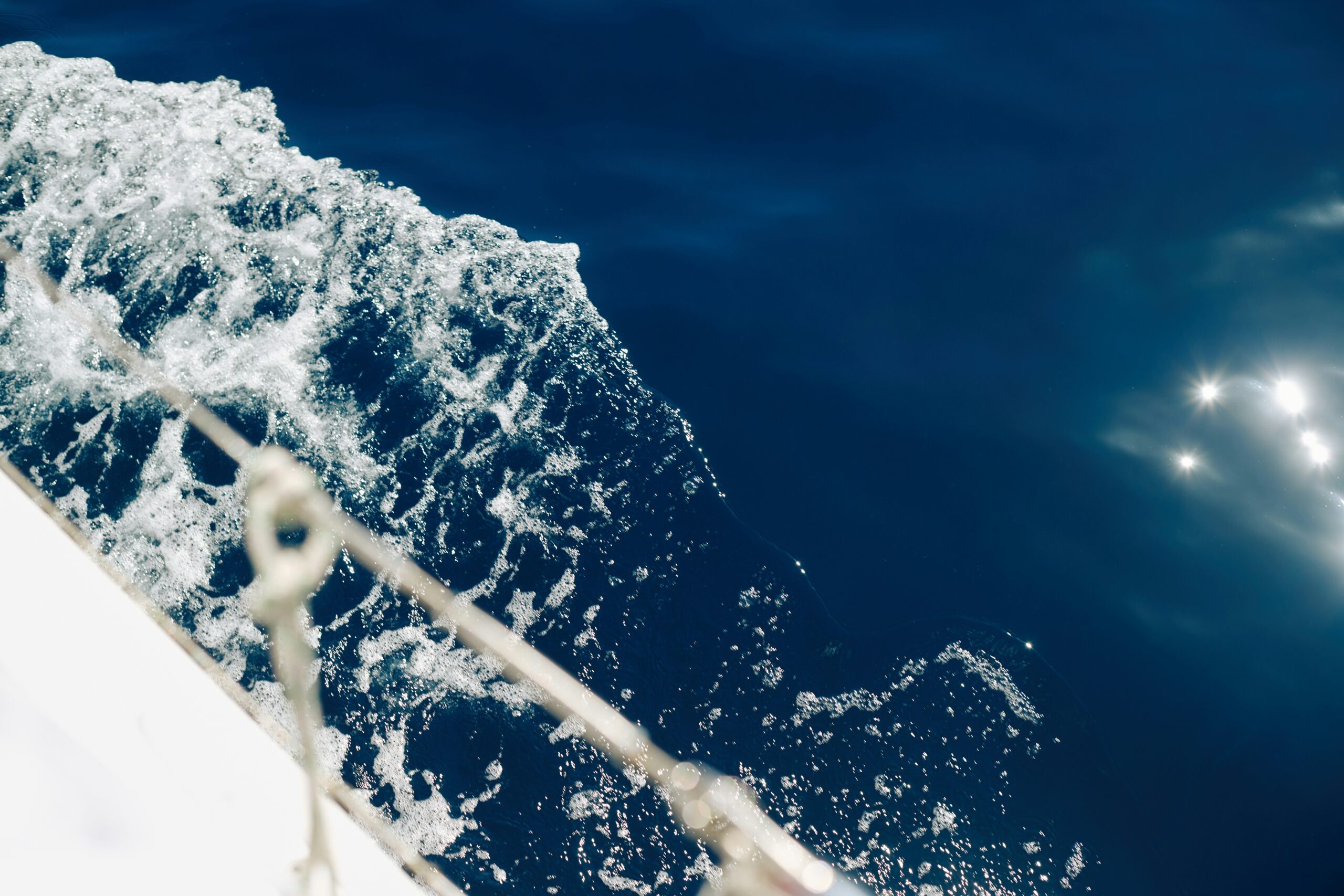
There is a version of offshore sailing in the imagination that involves dramatic weather, constant vigilance, and the crew permanently braced against something. The reality of a trade wind passage is quieter, stranger, and in many ways more interesting than that.
This article is a concrete account of what a day at sea on the Naora route actually looks like. Not a highlight reel. Not the dramatic night or the spectacular landfall. An ordinary day, three days into a long crossing, when the boat has found its rhythm and the routines have settled and the passage is simply happening the way it was always going to happen.
04:00 to 08:00: The Morning Watch
The morning watch begins in full darkness. The outgoing watch gives a brief account of the night: wind speed and direction, course, anything seen on AIS, how the boat has felt. Then they go below and the morning watch is alone with the boat and the dark.
For the first hour, nothing changes. The stars are out if the sky is clear, and on a trade wind passage it is usually clear. The Eighty2 moves through the water with a steady, rhythmic motion that the body has learned by now and no longer needs to consciously manage. The watch checks the compass, checks the horizon for lights, checks the sails for trim. Every twenty minutes or so. In between, there is the dark and the wind and the sound of the boat moving.
At some point between five and six, depending on the latitude and the season, the eastern horizon changes colour. The stars nearest it fade first. Then the sky goes through its full range, indigo to purple to pink to gold, and the ocean comes back into view around the boat. The morning watch writes in the deck log: position, course, speed, wind, barometric pressure. The entry is dated and timed. The night is officially over.
08:00 to 11:00: The Boat Wakes Up
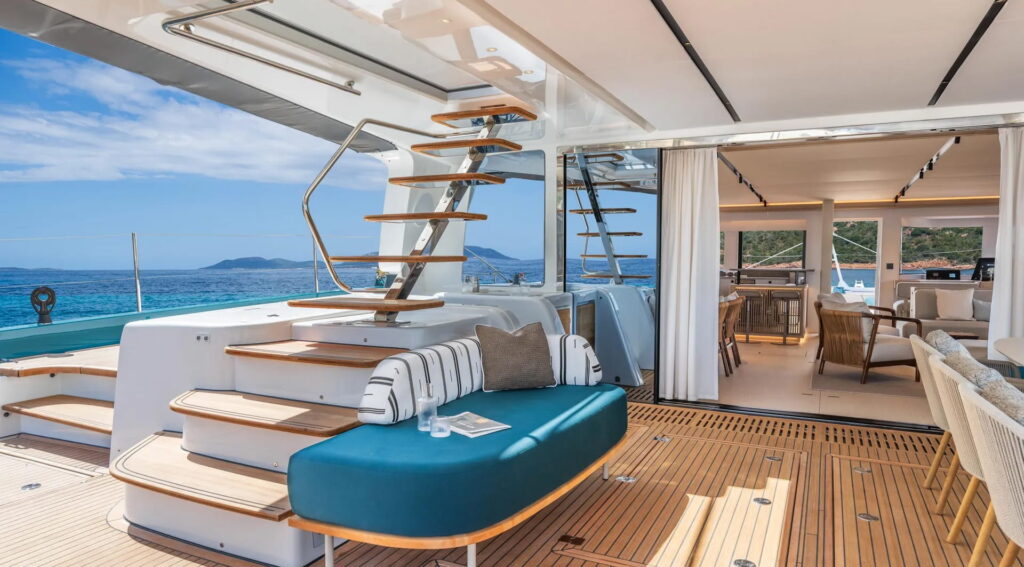
The watch changes at eight. People emerge from below in the order that suits them. The chef has been up since before seven and the galley has been producing something. Coffee appears on the afterdeck. The fishing line goes out from the stern. Someone takes the helm for a while, not because they need to, but because steering a boat running before a trade wind on a sunny morning is one of the more pleasant physical experiences available.
The morning is unstructured. There is no agenda. Members read, write, sleep more if they need it, sit on the flybridge and watch the water, talk or don’t talk. The boat handles itself on the autopilot unless someone chooses to steer. The miles accumulate at roughly seven or eight knots, which means that by the time the eleven o’clock meal appears, the boat has moved perhaps twenty miles since the watch change and the horizon looks exactly the same in every direction.
11:00: The First Meal
The eleven o’clock meal is one of the structure points of the passage day. Whatever the chef has produced, and it is always something proper, appears at the table and the boat’s population gathers around it. On a passage day in the trades, this meal often happens in the salon rather than the afterdeck because the wind and spray make eating outside less comfortable. The table is set. The food is served. The conversation is whatever it happens to be.
These meals are, consistently, where the best conversations of the passage happen. Something about the context, the removal from everything else, the specific intimacy of a small group of people who have been at sea together for days, produces exchanges that members describe afterwards as among the most memorable of the voyage. Not planned, not facilitated, not themed. Just people talking honestly at a table that happens to be moving through the Atlantic.
11:00 to 16:00: The Long Middle of the Day
The afternoon on a passage day is the most unstructured part of the day and, for many members, the most valuable. There is genuinely nothing required. The watch rotation continues. The boat moves. The sun tracks across the sky. The fishing line occasionally produces something. Everything else is optional.
Some members read for three or four hours without interruption. Some sleep in the shadow of the mainsail on a cushion on the afterdeck. Some sit on the flybridge and watch the water for a couple of hours and find that they have been thinking about something specific without exactly deciding to. Some write. Some do nothing at all in a way that becomes, over the course of several days, progressively less uncomfortable and progressively more restorative.
16:00: Aperitif
At four, the afterdeck produces small dishes and something cold. This is the aperitif hour, and on a passage day it marks the transition from afternoon to evening: the light has changed, the day is beginning to tip toward dusk, and the mood on the boat shifts toward the social. The watch rotation continues around it, but the afterdeck fills. People compare what they have been doing since eleven. Someone mentions what the fishing line caught. The deck log is updated.
16:00 to Sunset: The Best Hours
The late afternoon on a passage day in the trades is the finest sailing weather available anywhere. The wind is up from its midday strength, the swell is regular, the boat is moving well, and the light on the water is extraordinary. Members who have been below or asleep through the middle of the day tend to appear at this hour.
The sunset on a trade wind passage, from a boat with nothing between you and the horizon, is a specific event. Not spectacular in the dramatic sense, but complete: the full range from gold through orange to red to purple to the first stars, unobstructed, unhurried, with nothing else competing for attention. Most members watch it every evening. Some watch it every evening for twenty days and still find it worth watching.
Evening: Dinner and the Night Watch Begins
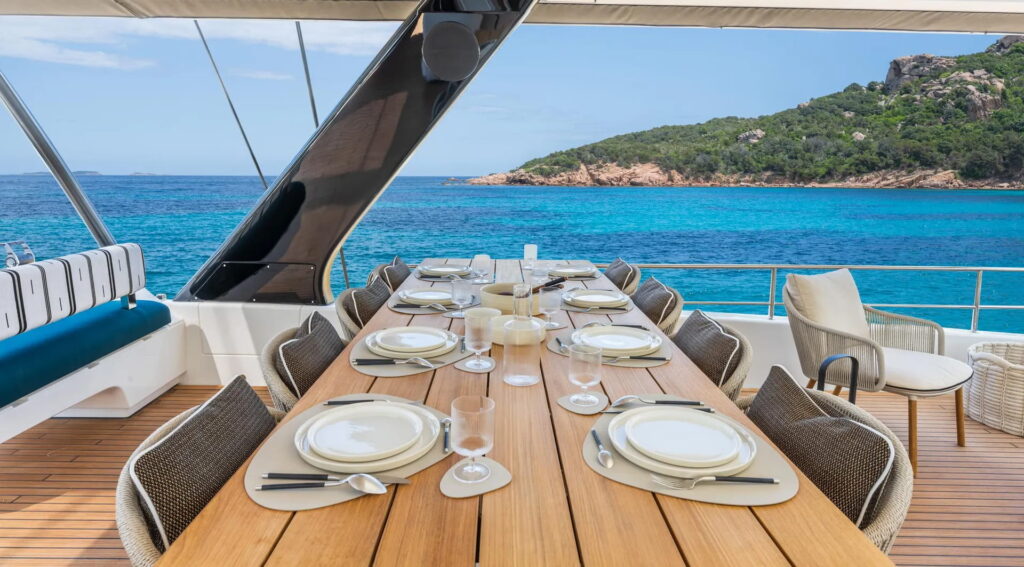
Dinner on a passage day is the main event. The chef has been building toward it since the afternoon, and it is a full meal: multiple courses, proper preparation, the best of what is available. On a trade wind passage this typically means the fish from the line, prepared in whatever way the ingredients from the last provisioning port allow.
After dinner, the evening watch begins. The night settles over the boat. The stars come out. The person on watch sits in the dark with a thermos, and the day that began at four in the morning completes itself in the same quiet that it started in.
| Time | What happens |
|---|---|
| 04:00 to 08:00 | Morning watch: dark, stars, dawn arrives. Deck log written. Watch hands over. |
| 08:00 to 11:00 | Boat wakes up: coffee, fishing line out, unstructured morning. Reading, writing, steering if wanted. |
| 11:00 | First meal: proper food at the table. Best conversations of the passage. |
| 11:00 to 16:00 | The long middle: reading, sleeping, sitting, writing, nothing. The most valuable hours. |
| 16:00 | Aperitif: small dishes, something cold, the boat gathers. Transition to evening. |
| 16:00 to sunset | Best sailing of the day: wind up, light extraordinary, everyone on deck. |
| Sunset to 20:00 | Dinner: full meal, multiple courses, fresh fish from the line. |
| 20:00 onwards | Evening watch: the night begins again. Stars out. The cycle continues. |