Every conversation we have with someone who is genuinely considering Naora follows a similar pattern. There is an initial exchange about what the voyage is, which is already documented elsewhere on this site. And then the questions start. Not the polite questions of someone who is deciding whether to be interested, but the specific questions of someone who is already interested and is trying to understand whether the thing they are interested in is actually right for them.
These are the ten questions we hear most often. We answer them honestly here, in writing, because the conversation deserves honesty rather than salesmanship, and because the people who ask them deserve the real answer rather than the comfortable one.
1. Do I need to know how to sail?
No. The Eighty2 is fully crewed by professional sailors. Our captain holds a Master Mariner licence and has more than 25 years of offshore experience. The vessel is operated, navigated, and maintained by professionals whose job is exactly that.
You are not expected to stand a watch, handle lines, or understand the mechanics of tacking, though all of these things are available to you if you want to learn them. What you are expected to bring is a willingness to be present and a tolerance for conditions that are occasionally outside your control. Neither of these requires a sailing qualification.
2. Will I get seasick?
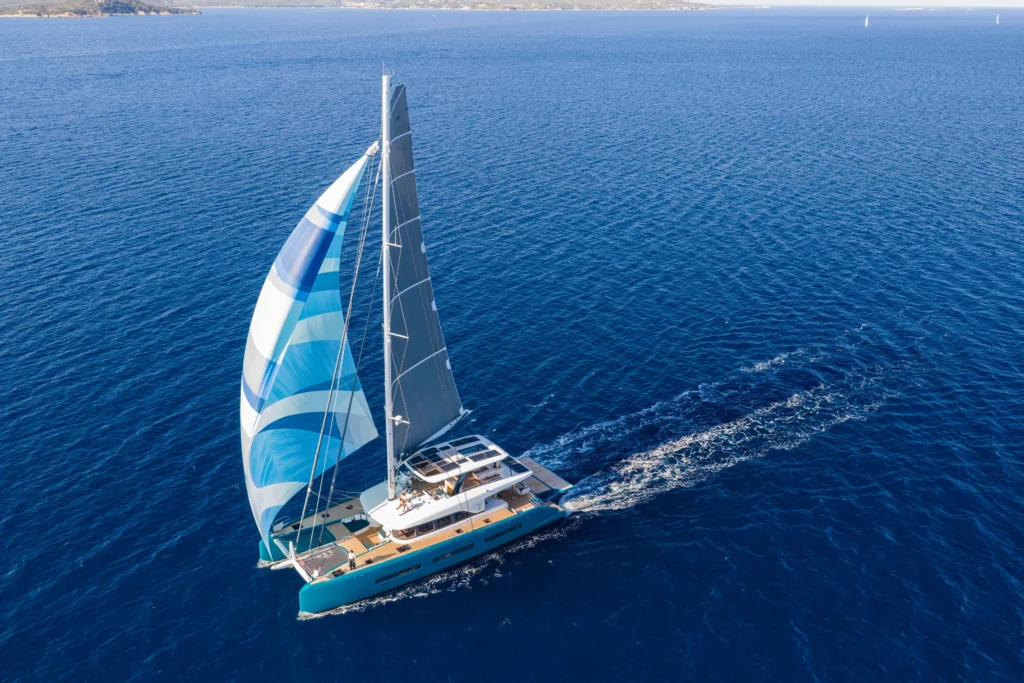
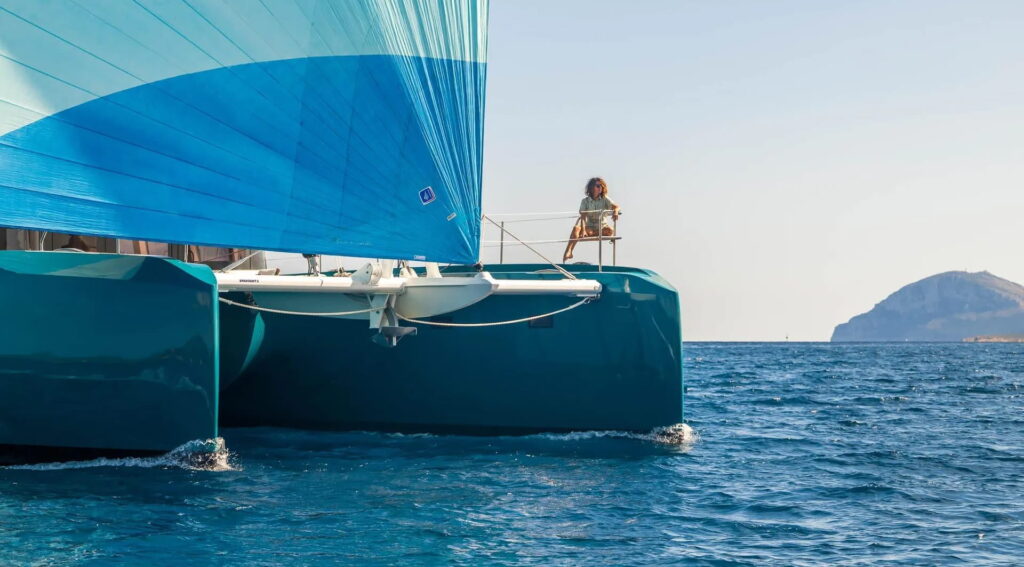
Possibly, in the first day or two. Probably not after that. The Eighty2 is a Lagoon catamaran with an 11-metre beam, which makes it significantly more stable than a monohull of equivalent or larger length. Most members find their sea legs within 24 to 48 hours.
We carry seasickness remedies aboard as standard. If you have a history of significant motion sickness, tell us before you board so we can prepare appropriately. The catamaran’s stability and the quality of the remedies available mean that seasickness has not prevented any member from continuing a voyage. It has made a few people’s first 48 hours more challenging than they hoped. It always passed.
3. What if I can only join for two weeks?
Two weeks is a valid joining period and we accommodate it. The Naora route has natural breakpoints at major ports throughout the five years, and members join and leave at these points based on their own availability. Two weeks in the Mediterranean between Bodrum and Croatia is a complete experience in itself. Two weeks in the Maldives during the Indian Ocean chapter is extraordinary on its own terms. The five-year voyage is continuous; your participation in it does not need to be.
The honest caveat: the 48-hour adjustment period, during which the body and mind are recalibrating to the boat’s rhythm, consumes a meaningful fraction of a two-week visit. A month gives you the adjustment period and three weeks of what comes after. A two-week stay gives you the adjustment period and twelve days of what comes after. Both are valuable. The longer one is better value per day, if you can arrange it.
4. What if I get sick offshore?
We carry a comprehensive offshore medical kit assembled with the advice of a travel medicine specialist, including prescription analgesics, antibiotics, a dental kit, wound care supplies, and an automated external defibrillator. Our crew holds STCW medical first aid certification at the level required for commercial offshore vessels.
We have access to remote medical consultation via satellite communication from any position on the route. In a genuine medical emergency that exceeds what the onboard kit and training can manage, we have the communication equipment and the protocols to coordinate evacuation and professional care. This has never been required. The preparation is there so that it never is.
5. What is the food like?
Three meals a day: late morning at eleven, aperitif at four, full dinner from sunset. A professional chef dedicated entirely to the food aboard, provisioning fresh at every market and local producer we encounter. Fish from the fishing line on offshore passages: mahi-mahi, yellowfin tuna, wahoo. Vegetables and fruit from local growers rather than supermarkets. Fresh herbs grown on deck.
The standard we cook to is what a Michelin-level kitchen produces when it has access to the finest possible ingredients, which we consistently do because we buy from the source rather than the supply chain. All dietary requirements, including vegan, halal, kosher, and all allergies and intolerances, are accommodated. Tell us in advance and the menu is built around you.
6. Will I have privacy?
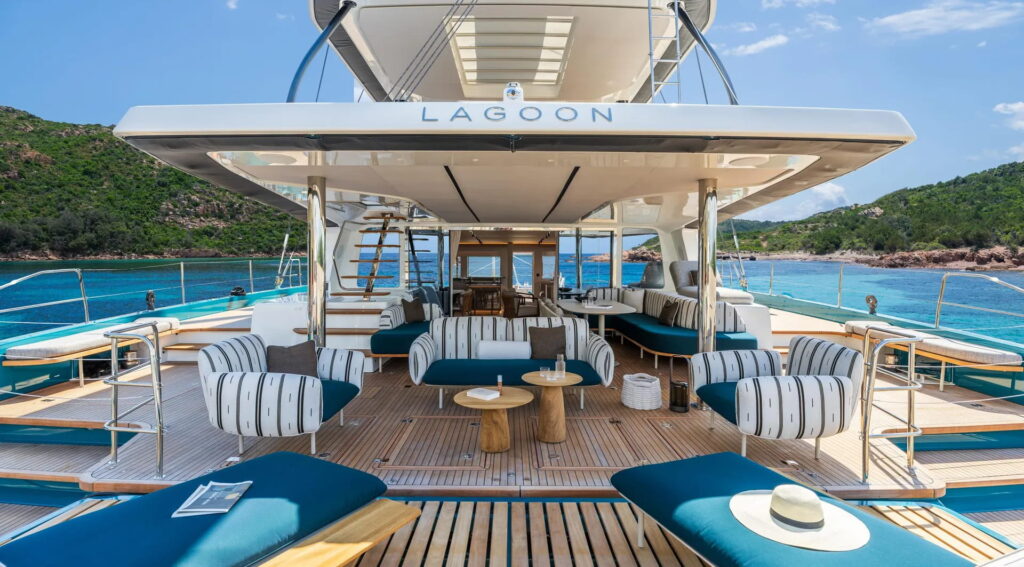
Yes, in the specific sense that matters. Every member has a private double cabin with an en-suite bathroom. Your cabin is your space and the crew respects it as such. The social spaces of the boat, the salon, the afterdeck, the flybridge, are shared, but the boat is large enough and the culture of the community is such that solitude is available when you want it.
On passage days, the afterdeck and the bow are places where people are present but not intrusive. On anchor days, the tender can take you to a beach where you are genuinely alone. We never share member photographs online without explicit specific permission. What happens aboard stays between the crew and the members.
7. Can I keep working while I am aboard?
In port and in anchorages close to shore: yes, connectivity is available. On offshore passages: no, or very limited. The satellite communicator allows essential communication but not the continuous connectivity that working normally requires.
We think this is a feature rather than a limitation, for the reasons described in the article about what happens to your business when you step away. If your work genuinely requires daily real-time availability for the full duration of your stay, we would rather have that conversation before you board than during the passage.
8. What happens if I do not get on with the other members?
The invitation-only model exists partly to address this question before it becomes a problem. The selection process is designed to produce a group of people who share a specific orientation toward the world: curious, present, respectful, honest. These qualities do not guarantee that everyone will become close friends, but they do guarantee that everyone will be able to share the boat with dignity and mutual respect.
In practice, the community dynamics of offshore sailing, the specific intimacy of shared passage and shared experience, tend to produce connections rather than conflicts. We have not had a significant interpersonal conflict aboard a Naora passage. We do not expect to, given the care we take in the selection process.
9. What do I actually need to bring?
Less than you think. One soft duffel bag is the practical standard. Clothing: swimwear, light layers for the day, one or two slightly more intentional pieces for evenings, a good merino layer for night watches, soft-soled deck shoes and one pair for going ashore.
Books: at least one per week of your stay, and then one more. A physical notebook and a pen that works in humidity. Downloaded music and podcasts for offshore passages. Prescription medications in original packaging, sufficient for your full stay plus a few days buffer. Everything else the boat provides. The most common packing mistake is bringing too much clothing and not enough books.
10. How do I know if Naora is right for me?
The honest answer is that you cannot know from reading about it. You can know from a conversation, which is why we always start there rather than with a booking form. In the conversation, we try to understand who you are and whether the experience we offer is genuinely right for you. You try to understand whether Naora is genuinely right for you. If the answer on both sides is yes, we move forward. If the answer is no, we tell you that honestly rather than taking your money and hoping the fit emerges after departure.
The people who get the most from Naora tend to be the ones who were slightly afraid to ask for the conversation and did anyway. The question is the beginning. Everything else follows from it.