The Red Sea is one of the oldest sailing routes on earth. Pharaonic Egyptians traded through it four thousand years ago. Arab dhows have worked its length for centuries. The Portuguese entered it in the 16th century searching for a route to the spice trade. And today, most sailing circumnavigations that use the Suez Canal sail it from south to north, entering at Bab-el-Mandeb and exiting into the Mediterranean via Port Said.
The Naora route goes the other way.
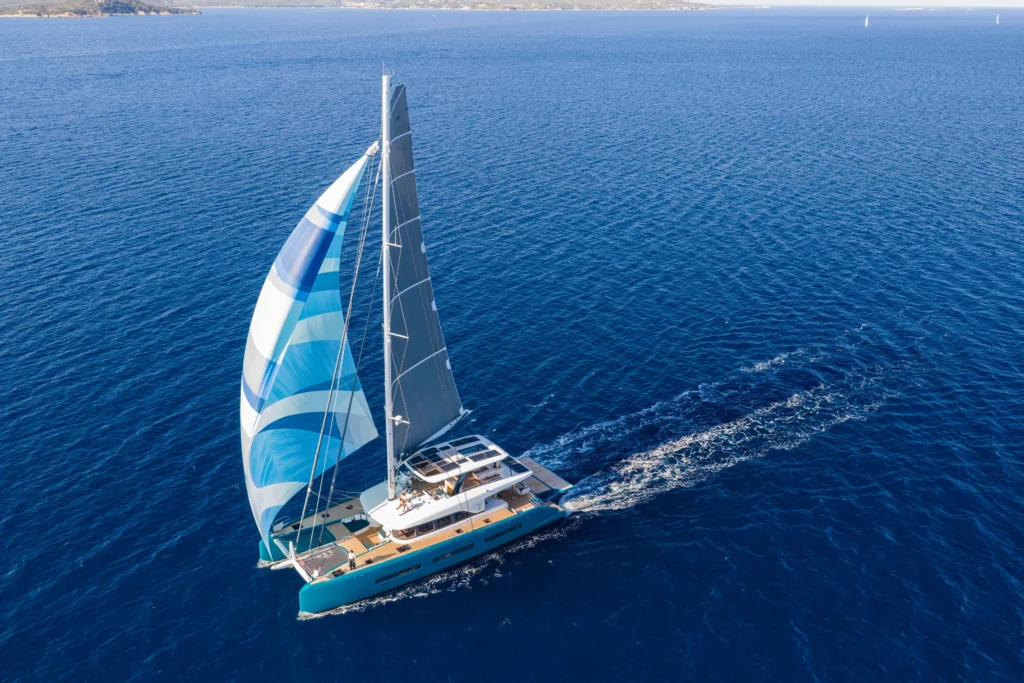
We sail south. We begin in Cyprus or Turkey after the Mediterranean season, and we move through the eastern Mediterranean and down through the Suez Canal before entering the Red Sea from the north and sailing its full length southward to Marsa Alam on the Egyptian coast. This is not the standard direction, and the reasons for it are specific to the Naora route and the character of the journey we want to make.
Why We Go South
The prevailing wind in the Red Sea blows from the north for most of the year. Sailing north through the Red Sea, which is the standard direction for circumnavigations heading home through Suez, means sailing into that wind for the full length of the sea: upwind, slow, and in conditions that experienced sailors describe as among the most demanding on any circumnavigation route.
Sailing south, with the wind, is a different passage entirely. The northerly wind fills the sails from behind, the boat moves efficiently and comfortably, and the extraordinary coastline of Egypt and the Gulf of Suez unfolds at a pace that allows it to be seen properly rather than battled through.
The other reason is what lies at the end of the southward passage. Marsa Alam, on the Egyptian Red Sea coast, is the gateway to some of the finest diving in the world. The reefs along this stretch of coast, the Brothers Islands, Daedalus Reef, Elphinstone Reef, are among the most renowned dive sites on earth, accessible primarily from live-aboard vessels. We are a live-aboard vessel. We arrive with our compressor, our equipment, our CMAS instructor, and the time to spend several days on each site with local dive guides.
The Suez Canal: Connecting Two Seas
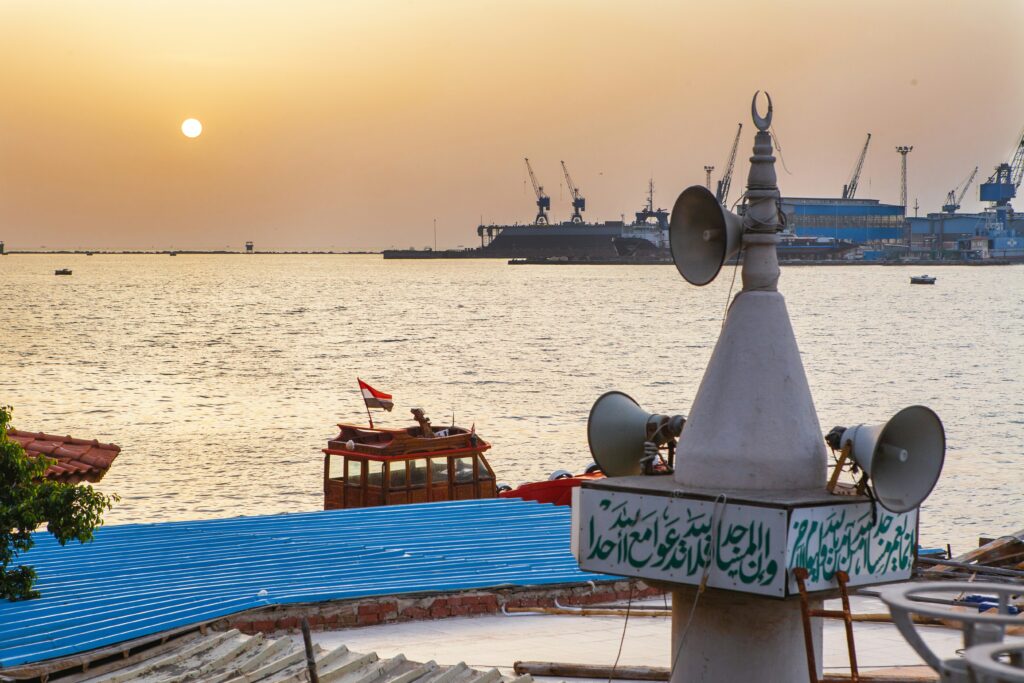
The Suez Canal transit is managed by the Suez Canal Authority and requires an agent, a canal pilot, and careful scheduling. We handle all of this. The transit takes roughly 12 to 16 hours and moves the vessel from the Mediterranean at Port Said to the Red Sea at Port Suez, passing through the Great Bitter Lake and the single-lane sections where northbound and southbound convoys pass each other in the wider sections.
For members aboard for the transit, it is one of those passages that is unremarkable in sailing terms and remarkable in every other sense. The canal is 193 kilometres long. The desert is on both sides. Enormous container ships and tankers queue ahead and behind. And the connection between the Mediterranean that Naora has just spent a season sailing, and the Red Sea that lies ahead, becomes physical and immediate in a way that no map quite conveys.
The Red Sea Itself
The Red Sea is narrow, hot, and extraordinary. At its widest it is only 355 kilometres across. The mountains of Egypt and Saudi Arabia are visible from the centre of the sea in many places. The water is warm year-round and the coral reefs along both coasts are among the healthiest in the world, partly because the sea’s high salinity and relatively low human population density have protected them from the bleaching and damage that has affected reefs in more accessible locations.
The wind character is specific and worth understanding. The northerly that makes the standard northbound passage difficult also creates specific sailing conditions on the southbound route: consistent, moderate, and in the same general direction as the route, which means day after day of comfortable downwind sailing with the desert mountains of Africa and Arabia alternating on either side and the ancient trade route below the keel.
The anchorages in the Egyptian Red Sea are largely undeveloped. The coastal town of Hurghada has resort development, but outside it the coastline is desert reaching to the water’s edge, with isolated coral gardens in sheltered bays that see almost no recreational traffic. We anchor in these bays in the evenings, dive in the morning before the wind builds, and continue south when the day allows.
The Dive Sites of the Egyptian Red Sea
The Brothers Islands, two small rocky outcrops 60 kilometres offshore in the Egyptian Red Sea, are consistently listed among the top ten dive sites in the world. The sheer walls dropping to several hundred metres, the oceanic whitetip sharks that patrol the outer walls, the hammerheads at depth, and the extraordinary soft coral cover that makes every depth look like a garden: this is not a site that can be visited on a day trip from Hurghada. It requires a liveaboard vessel or an offshore capability that most recreational sailing boats do not have. We have both.
Daedalus Reef, further south, is a similar character: offshore, exposed, and home to pelagic life that rewards the effort of reaching it. Elphinstone Reef, closer to Marsa Alam, is more accessible but no less extraordinary: a long reef platform with walls that begin in the shallows and drop away into deep water, with regular sightings of oceanic whitetips, thresher sharks, and the occasional dugong grazing the seagrass at the southern end.
| Stage | From | To | Character |
|---|---|---|---|
| Mediterranean end of season | Turkey or Cyprus | Port Said, Egypt | Eastern Mediterranean passage; standard autumn timing |
| Suez Canal transit | Port Said | Port Suez | 12 to 16 hours; agent and canal pilot managed by Naora crew |
| Red Sea southbound | Port Suez | Marsa Alam | Downwind on the northerly; desert coastline; isolated anchorages |
| Red Sea diving | Brothers Islands, Daedalus, Elphinstone | Marsa Alam | World-class offshore reef diving; pelagic sharks; best accessed from a liveaboard |