There are people you encounter on the path who are simply better than you. Not better in a comparative or competitive sense, not better at the things that most contexts measure. Better in the sense of having already become something that you are only beginning to understand exists: a specific quality of being fully at home in the world, fully present in the work, fully without the need to perform any of it. These people are rare. When you encounter one, you know it immediately, in the specific way that you know a true heading from a compass that has been properly swung.
I have encountered several across the years of building this sailing life. Three of them I want to name specifically, because they are the people whose influence I can trace most directly in how I sail, how I teach, how I lead, and how I think about what all of this is actually for. I was, in each case, the young one. The eager one. The one who did not yet know what he did not know. They were patient with that, in the specific way that people who have nothing to prove are patient with people who are still trying to prove things. I owe them more than I can precisely account for, and I want to try to account for it here, inadequately but honestly.
Marc
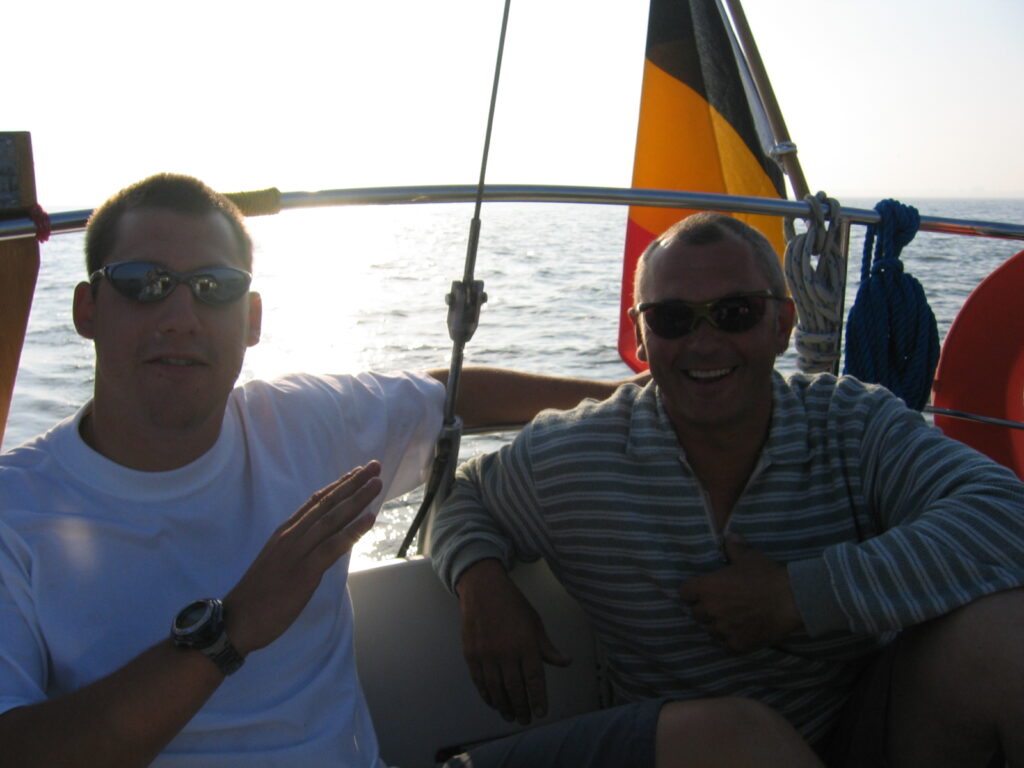
Marc was a diving instructor who lived on the Canary Islands. Not temporarily, not while he figured out the next thing. Permanently, deliberately, completely. He had made a full peace with the life he was living: not the peace of resignation or reduced expectation, but the specific and rare peace of someone who had understood, earlier than most, that the life he wanted was available and had simply chosen it without spending years in the negotiation that most people conduct with themselves about whether they are allowed to.
He came to Belgium occasionally. Not often, but regularly enough that our paths crossed in the specific way that matters: at moments when I was at a stage in my development where what he had to say landed differently than it would have landed a year before or a year later. The Canary Islands had formed him in the way that a life spent at altitude in warm water and constant sun forms a person: unhurried, certain, entirely at home in the physical world of the sea. When he arrived in Belgium, he brought all of that with him. You could feel it in a room. The specific quality of someone who has nowhere else to be.
He lived on his boat. A small boat, simply equipped, carrying everything required and nothing that was not. He had been diving and sailing for longer than I had been alive when I met him, and the knowledge he carried was the kind that has no shortcut: the accumulated specific intelligence of someone who has been paying attention to the same thing for decades in every condition it can produce. The Atlantic waters around the Canaries, the specific thermoclines and current patterns and marine life of those islands, were his home ocean in the truest sense. He knew them the way I would later come to know the Belgian coast: not as a place you navigate but as a place you inhabit.
I want to be clear about this. I was young and enthusiastic and I knew enough to know I was interested and not yet enough to know how much I did not know. Marc received this with the equanimity that the truly experienced bring to the truly inexperienced: without condescension, without performance of patience, simply with the calm attention of someone who has seen many beginners and who understands that the beginning is not a deficiency but a stage. When he was in Belgium and we found ourselves in the same place, I made sure we talked. He never seemed to find this tedious. He answered with the same specificity and the same honesty whether we had an hour or an evening, and every conversation left me with something I had not had before it.
The diving he taught me was not only the physical mechanics of the sport, which he taught with the clarity and economy of someone for whom the physical mechanics have long since become automatic. He taught me what diving is for: the attention it requires, the respect it demands, the specific quality of presence that being underwater in a living environment produces in the person who is paying the right kind of attention. I took my first serious dives under his instruction. I took the CMAS qualification that I now hold as an instructor under the framework of what he taught me. And the 2,800 dives that I have completed since that beginning are each, in some small and traceable way, the continuation of the first ones he supervised.
Marc lived the life without apology and without explanation, which is the only honest way to live any life. The Canary Islands, the boat, the sea, the diving, the specific Zen quality of a man who has decided what matters and is doing it: I have tried to carry some of that in everything I have built since. When I think about why Naora is designed the way it is, about why the pace matters and why the place matters and why the quality of attention to the water is non-negotiable, I can trace a line back to the man who came from the islands a few times a year and always had something worth listening to. Whether I have succeeded in any measure is not for me to say. But the attempt is specifically his inheritance.
Bik
The name is what I remember. The authority is what I felt. The navigation lessons are what I carry every day of every passage.
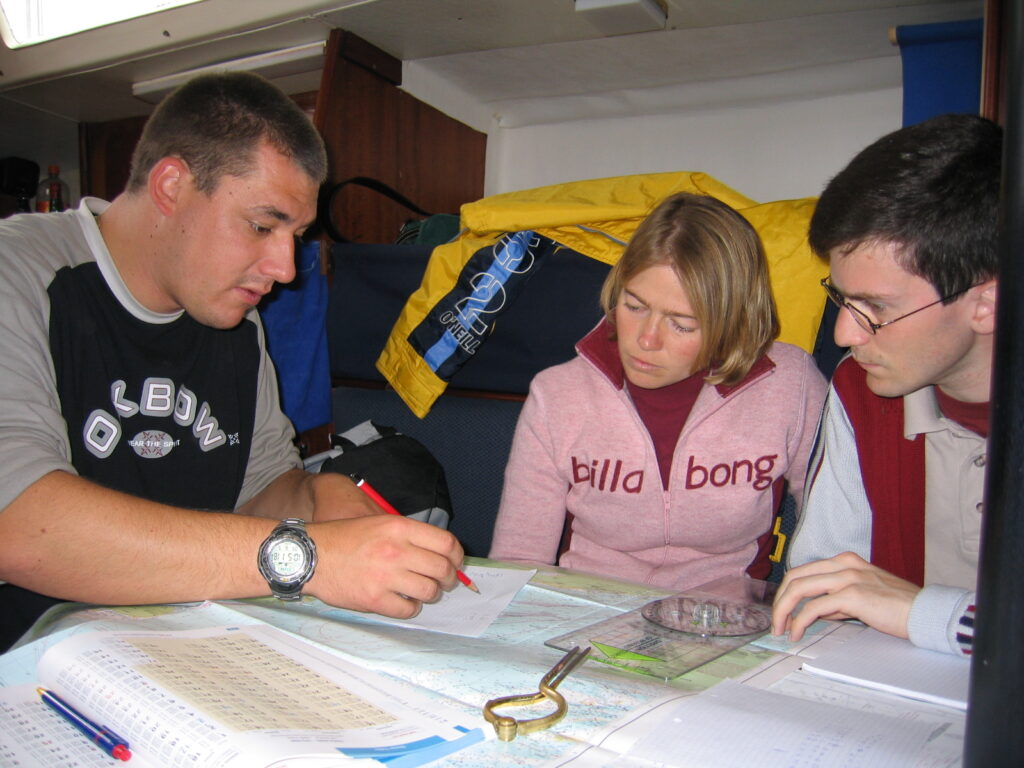
I came to Bik in the preparation for the Yachtmaster examination, which is the qualification that sets the standard for offshore skipper competence in the European sailing world, and later for the commercial endorsement that allowed me to operate professionally. These examinations are serious. They test not only knowledge but judgment: the ability to make correct decisions under pressure with incomplete information in conditions that do not cooperate with the plan. The preparation for them requires an instructor who can transmit not only the content of the syllabus but the quality of thinking that the examination is actually measuring.
Bik was that instructor. He was an authority in the specific sense that the word should mean and so rarely does: not someone who demands deference, but someone who has earned attention. His navigation teaching was the kind that restructures how you think rather than simply adding information to how you already think. The difference between those two things is the difference between a student who passes an examination and a skipper who navigates safely for the next forty years. I wanted to be the second kind, and Bik understood that distinction and taught accordingly.
What I remember most specifically from his teaching is the emphasis on verification. Not trust in a single source, not confidence in a single instrument, but the habit of checking one thing against another and trusting the result only when multiple independent sources agree. The chart against the GPS. The GPS against the depth sounder. The depth sounder against the visual bearing from the bow. The triangle of position from three separate sources that reduces the area of uncertainty to something manageable. This is not paranoia. It is the correct epistemology of offshore navigation, and Bik instilled it in me so completely that it is now simply how I navigate rather than a set of procedures I consciously apply.
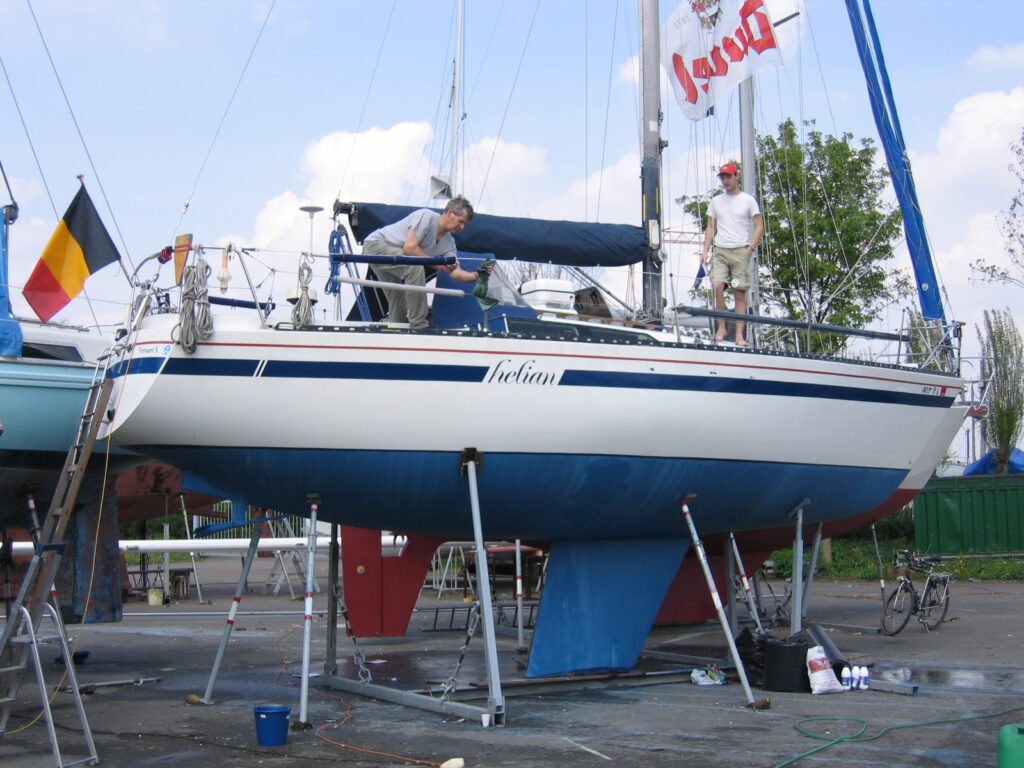
I bought my first serious offshore boat, Helian, during this period. A boat of my own, for the first time: not a borrowed boat or a delivery or a shared charter, but mine. The responsibility of that ownership, and the specific demands it made on the competence I was building, were part of what made the navigation training with Bik so immediately applicable. I was not learning in the abstract. I was learning in the specific context of a boat I was responsible for, a coast I was going to navigate, a qualification I needed to hold. Bik knew this and pitched the teaching accordingly. The first 500 miles on Helian were safer because of him, and the hundreds of thousands of miles since have continued to benefit from what those lessons built.
Wim
Wim trained Liesl. That sentence requires some context for anyone who was not there.
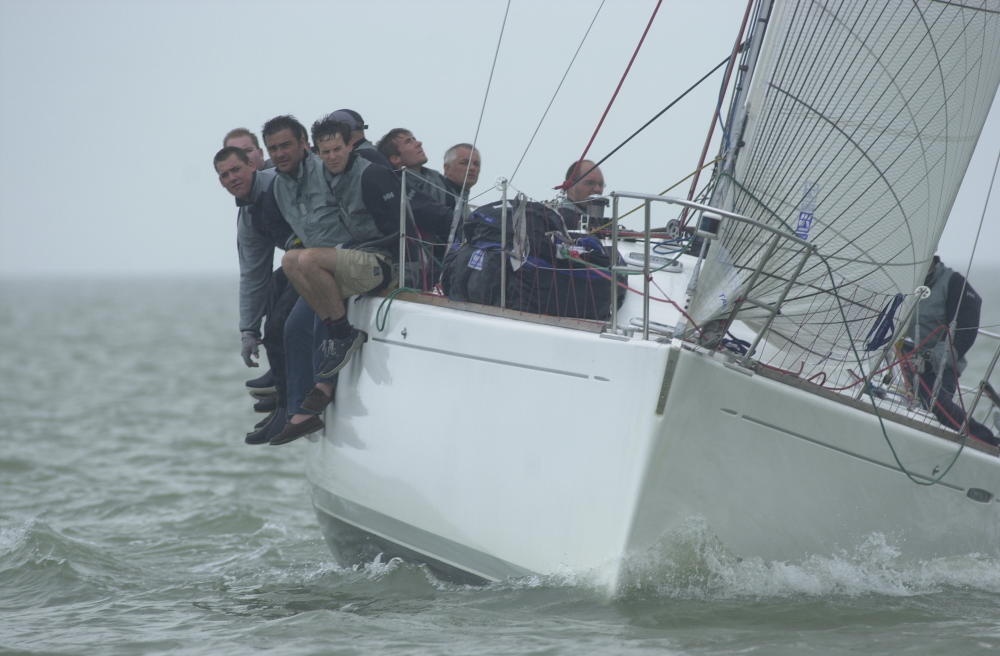
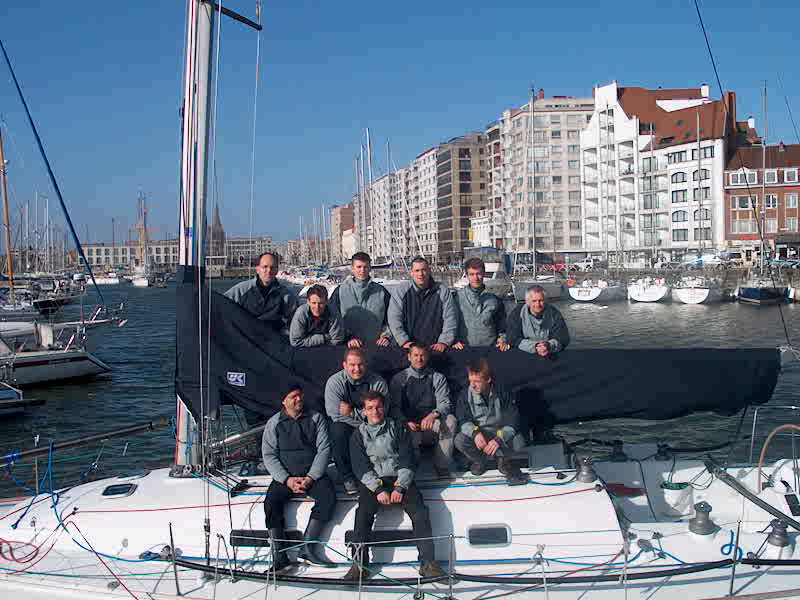
Liesl was our racing boat. Not a serious offshore racer in the sense that the professionals use the word serious, but serious for us: serious in the sense that we wanted to get faster and better and we were willing to put in the work and accept the instruction that the improvement required. Wim was the trainer who provided that instruction, and he was the third kind of mentor that the sailing life produces and that I want to describe specifically because his contribution is different in kind from Marc’s and from Bik’s.
Marc taught me presence. Bik taught me method. Wim taught me precision.
Sailing a racing boat well is one of the most demanding physical and cognitive tasks available in the sport. It requires the simultaneous management of boat speed, tactical position, wind shifts, fleet dynamics, and crew performance, each of which alone is a complex problem and together form a problem of a complexity that most people who have not sailed races competitively have not encountered in any other context. Wim understood all of these dimensions at a level that was, to the crew of Liesl at the time, simply beyond our current capability to fully appreciate. He knew things we did not know we needed to know.
His training method was direct and specific. He watched us sail and he told us precisely what we were doing incorrectly, in the specific terminology of racing sailing that has been developed over generations to describe exactly the phenomenon being observed. He did not generalise. He did not reassure. He identified the specific thing that was limiting our speed or our position and he explained what the correct thing was and why it was correct, and then he watched us attempt the correction and told us specifically whether the attempt was successful or not.
This kind of teaching is harder to receive than the kind that softens its feedback, and more valuable by exactly the same proportion. I became a better sailor on Liesl under Wim’s training than I had been before it, in specific and measurable ways: the boat went faster, the manoeuvres became cleaner, the tactical decisions became more grounded in the actual conditions rather than in the conditions I hoped we were in. The precision he demanded of us in the racing context produced a habit of precision that crossed over into everything else: the delivery passages, the offshore navigation, the coaching work that eventually became Antwerp Sailing & Adventures.
Barry
Not every person who shapes you is a teacher. Some of them are simply there, consistently, on the same boat, in the same conditions, making the same mistakes at approximately the same rate and laughing about it with the same good humour. Barry was on Liesl. He was not the trainer and he was not the authority. He was the crew member you want alongside you when things are going wrong because his response to things going wrong is to find the version of the situation that is funny, which it usually is once you have found the right angle on it.
We laughed a lot on that boat. Not in spite of the serious sailing but alongside it, in the specific way that genuine friendship on a race boat produces: the specific shared jokes that only make sense if you were there for the sequence of events that generated them, the commentary on the weather and the competition and the occasional spectacular mistake that made the racing what it was. Barry had a line for everything, delivered at the exact moment it was needed, that reset the atmosphere of the boat in two seconds flat. The ability to do that, to hold the lightness without losing the focus, is one of the specific skills of good sailing companionship and Barry had it completely.
What I took from those years on Liesl with Barry was not a technique or a method. It was an understanding about what the sailing life is actually for at its most daily level. Not only the achievement, not only the improvement, not only the qualification and the skill and the passage made and the distance covered. Also the laugh in the cockpit when the spinnaker wrap sorts itself out in the most improbable way. Also the specific pleasure of being in a boat with someone who makes the difficult days easier simply by being the person they are. I have tried to build this quality into every crew since, and when I find it, I know it because it feels like those years on Liesl with a good friend who happened to also be excellent crew.
Hans
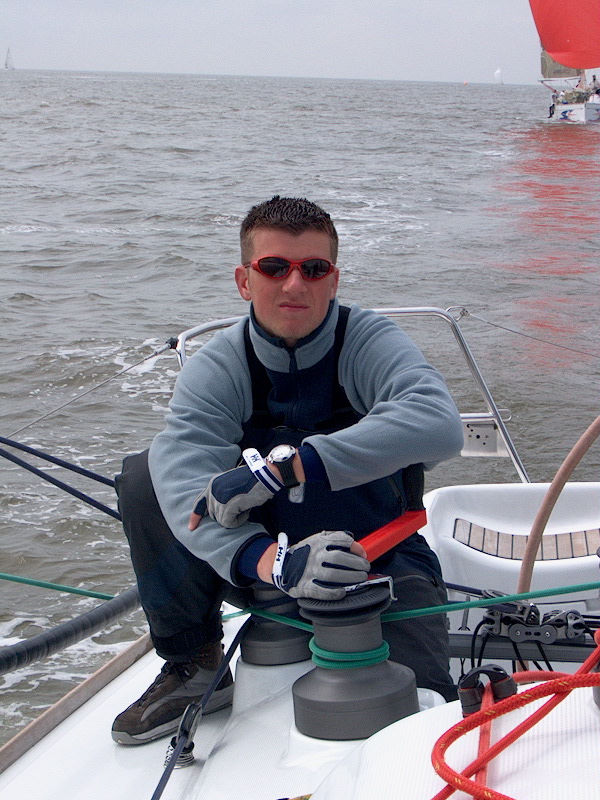
Hans is one of my best friends. Twenty-five years now. That is not something I write in passing. Twenty-five years of witnessing each other’s lives, each other’s successes and setbacks, moving from one chapter to the next and always, however far apart, connected: that is one of the richest things I have.
We met at the diving club. He was the one with the real stories. Not the recreational diving stories that most club members had, the reef at thirty metres on a sunny Saturday. Hans had worked as a professional diver on offshore oil rigs. In the North Sea, in conditions and at depths and with gas mixes that the recreational diving world does not produce and cannot simulate. Heliox, nitrox, mixed gas at working depths where the pressure changes everything: what the human body can sustain, for how long, what the decompression stops are, what happens when you get it wrong. When he sat at the club table after a session and talked about what he had done in the North Sea or elsewhere in the world, the room listened differently than it listened to anyone else. Not because he performed the stories, he never performed anything, but because the weight of real offshore experience in genuinely extreme conditions is identifiable from the first sentence, and Hans had more of that weight than anyone else in the room.
I was drawn to him immediately and specifically. Not with the admiration of someone who wants to impress, but with the recognition of someone who understands they are in the presence of a level of competence they want to learn from. We became friends. The friendship built in the way that good friendships build when both people are serious about the same thing: in the water, in the conversations that followed the water, in the evenings at the club where the specific knowledge that only professional offshore diving produces came out naturally in discussion rather than in performance.
But what struck me most was not his technical knowledge, as impressive as it was and is. It was his energy. Hans has a personality that fills a room without taking it over. He is present in the full sense of the word: interested, direct, always in motion, always moving toward something. He brings life wherever he enters. In the water he is exactly the same: a diver who does not simply descend but pulls toward the depth, with the enthusiasm of someone for whom the sea is still as fascinating as the first time, despite the thousands of dives, despite the decades, despite everything he has already seen. That combination, genuine depth and undiminished enthusiasm, is rarer than you think.
Hans is my anchor. And I am his. That is the most honest way to describe what twenty-five years of friendship is: not the presence of someone who carries you, but the presence of someone who is there when it matters, who knows when it matters without you having to say it, and who expects the same from you in return. We have helped each other in the things that counted. Not always with words. Sometimes simply by being there, present and reliable in the way you only understand after you have had it long enough. Twenty-five years. It adds up.
He now runs the largest offshore diving company in the Benelux. Known across Europe. The man at the club table with the real stories built something from those stories and from the decades of offshore work that preceded them. I am not surprised. What I feel when I think about it is the specific satisfaction of someone who always knew his friend would become what he has become. The work was always in him. The scale of what it eventually produced is simply the measure of how much work there was.
When Cubs Become Lions
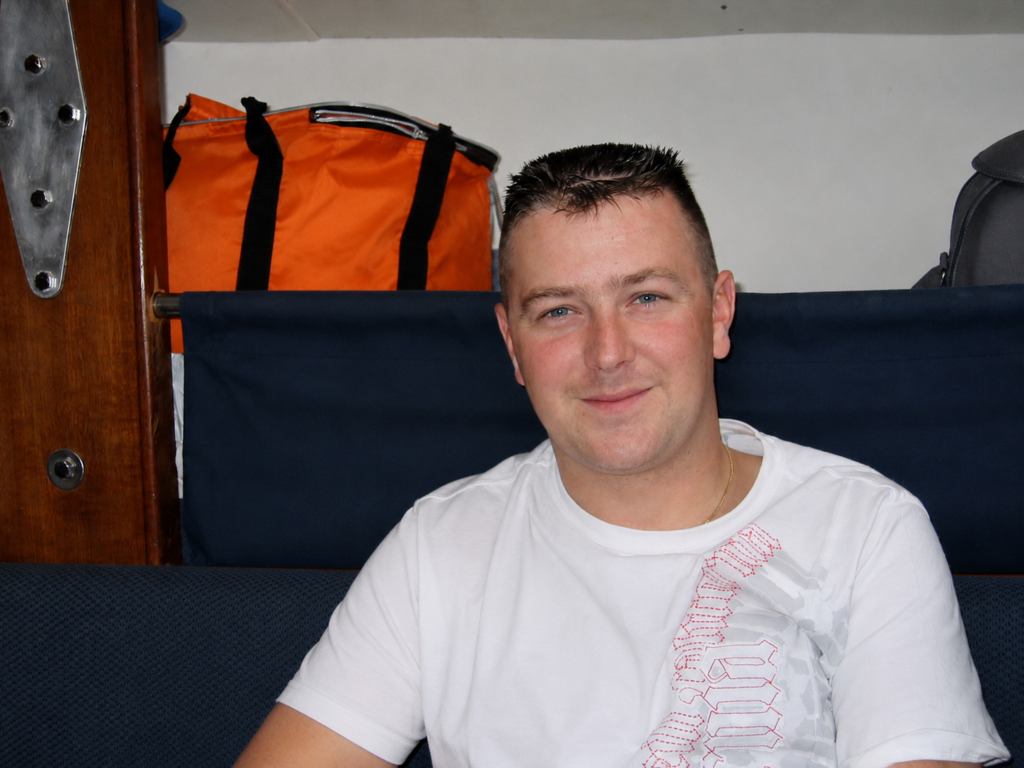
There is a Flemish expression that I have been thinking about while writing this article. Wanneer welpjes, leeuwen worden. When cubs, become lions. It describes the process by which the young and the inexperienced become, through time and instruction and the accumulated experience of trying things that do not work until they do, the people who know how to do the things they once only aspired to do.
I was a cub. Specifically: I was the eager young sailing instructor who started a sailing school in Antwerp (Antwerp Sailing & adventures) and took every delivery that came his way and tried to learn from everything and sometimes succeeded. The people I have described in this article were instrumental in the becoming. Not all of them in the same way: Marc gave me presence, Bik gave me method, Wim gave me precision, Hans gave me the standard, and Barry gave me something that is harder to name but that I would not want to sail without.
Barry gave me the understanding that the best sailing life is not only the most technically accomplished one. It is the one where the person next to you in the cockpit makes you laugh at the right moment and works as hard as anyone aboard and considers the whole endeavour worth the effort with a consistency that does not require good conditions to sustain. That quality, in a crew, on a boat, over years: it is not a luxury. It is the thing that makes the years what they are.
There are others I could name. The sailing life accumulates these debts in a way that is difficult to fully account for, because every passage with an experienced sailor is an education and every person who pushes you further than you thought you could go is a gift. I cannot name them all. But Marc and Bik and Wim and Hans and Barry I will always name, because each of their contributions is traceable in specific things I do and specific ways I think and specific qualities I try to bring to every boat I captain and every person I sail alongside.
If you are a cub reading this: the people who make you are not the ones who tell you how good you are. They are the ones who show you, specifically and without sentimentality, the distance between where you are and where you could be, and who believe by the quality of their attention that the distance is crossable. And sometimes they are the ones who simply make you laugh in the cockpit when the spinnaker wraps and you need reminding that the whole thing is also, fundamentally, supposed to be this good.
Find those people. Stay close to them. Do the work they show you how to do. And when you are on the other side of the distance, do the same for the next generation.
The right people don’t flatter your potential, they expand it.