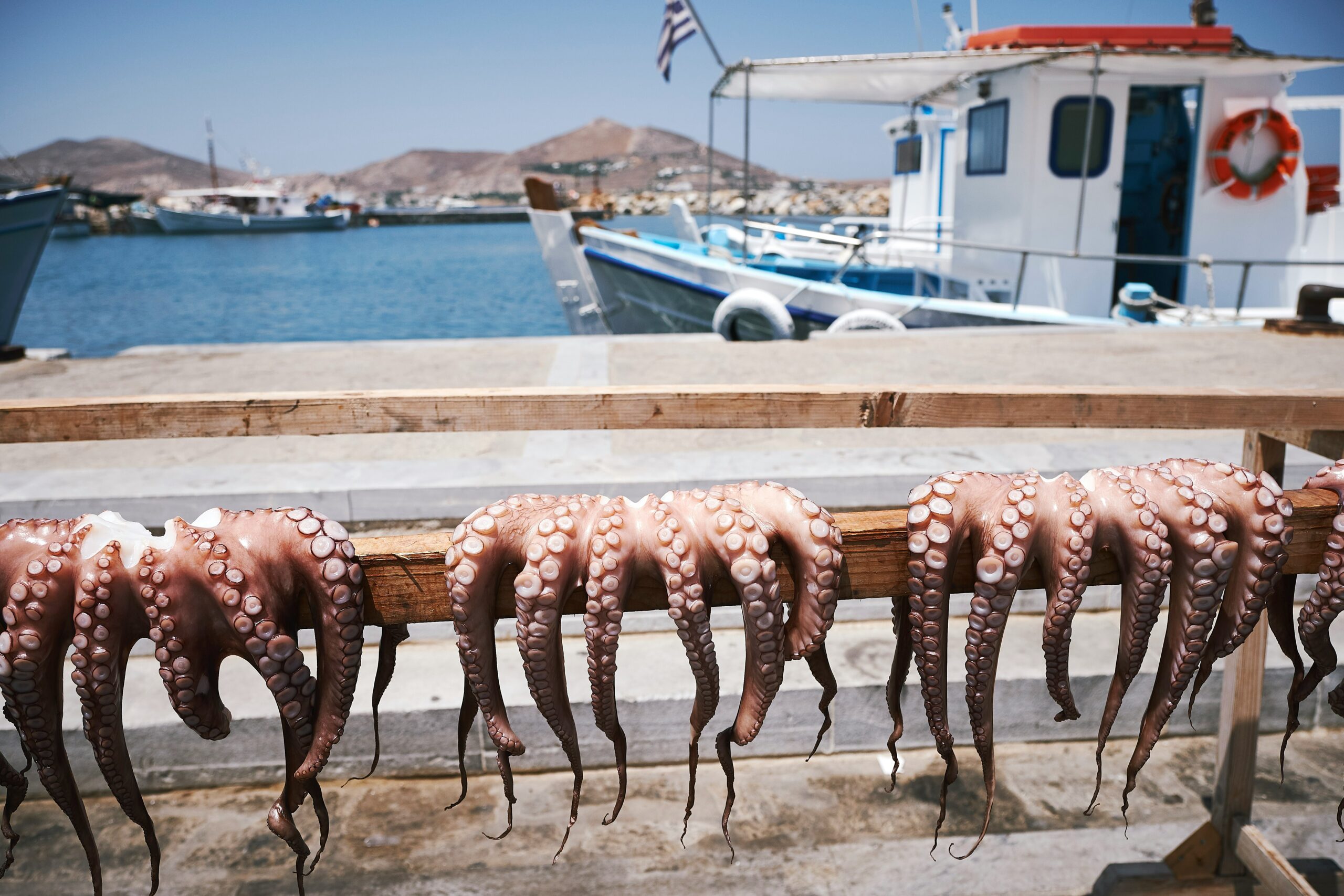
The first time you see it done you do not understand what you are witnessing. A man on a quay, holding an octopus by the mantle, bringing it down against the concrete with a force that seems excessive and a rhythm that suggests it is not the first time. Again. And again. Forty times, sometimes sixty, the tentacles slapping the dock, the suckers releasing and contracting, the animal becoming, through the specific physics of repeated impact, something that the cooking pot alone could not produce.
This is the Greek method. Not a regional variation or an idiosyncratic technique from one particular island. The method, practised from the Dodecanese to the Ionian Islands to the northern Aegean, by fishermen who have been doing it this way since before the written record of it began. The beating breaks down the muscle fibres of the octopus in a way that no amount of cooking time replicates: the result is a tenderness that is specific in character, different from the slow-cooked softness that a long braise produces, closer to the tenderness of something that has been changed at the cellular level before it ever meets heat.
The History
The octopus is the most ancient of Aegean ingredients. It appears in Minoan frescoes from 1500 BCE, depicted with an accuracy that suggests daily familiarity rather than artistic curiosity. The Mycenaeans dried it. The classical Greeks ate it fresh, dried, and preserved in brine. The Byzantine fishing communities of the Aegean islands developed the techniques of preparation that have reached us essentially unchanged: the beating, the sun-drying in the open air that further tenderises the flesh and concentrates the flavour, the grilling over charcoal that chars the exterior while keeping the interior moist.
The specific technique of beating was documented by Aristotle in his natural history writings, where he describes octopus preparation methods with the same precision he applied to biological classification. Three thousand years of continuous practice have refined it to the form it takes today on the quays of Kalymnos and Hydra and Chios: the number of blows, the specific striking surface, the position in the sun that follows. This is culinary knowledge accumulated over a period of time that most cuisines cannot approach, and the result is a dish that is not improvable by any technique that modernist cuisine has produced because it was already exactly what it needed to be.
The Sun
After the beating, the sun. The octopus is hung on a line above the harbour, or spread on a flat rock in the direct light, for anywhere from one hour to a full day depending on the size of the animal and the intensity of the sun. The drying has two effects: it firms the exterior skin and produces the slightly crisp outer layer that grilling later develops into the char that gives the dish its characteristic textural contrast. It also begins the process of flavour concentration that makes sun-dried octopus taste more intensely of the sea than freshly beaten octopus does, because the water that carries the milder flavours evaporates and what remains is the specific mineral and marine quality that the Aegean sea produces in its cephalopods.
The sun-drying is the step that restaurants cannot reproduce and that the quayside taverna can, which is the primary reason that the best octopus in the world is eaten at plastic tables fifty metres from the water in places that have no decor and no wine list and a menu that is written on a chalkboard and changes with the catch. The process requires the specific sun and the specific air and the specific lack of hurry that the Greek island rhythm provides, and it cannot be substituted without losing the quality that makes the result worth eating.
Why You Will Find It Aboard
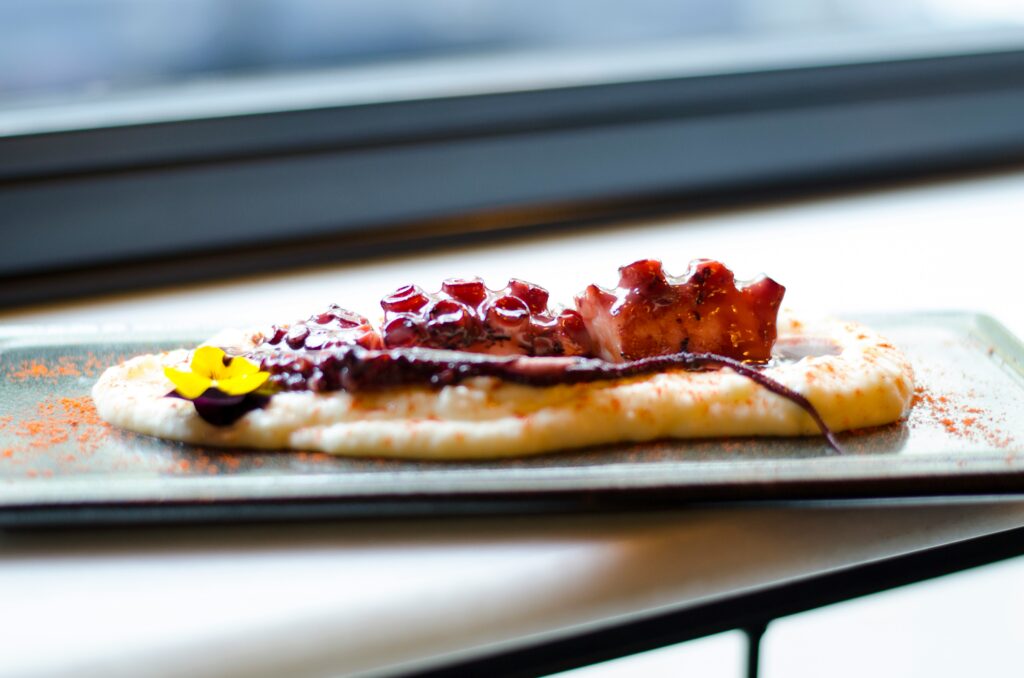
On Naora, the octopus comes from the quay of the anchorage: from the fisherman who brought his catch in at five in the morning and who sells directly from the boat or from a cooler on the dock. Our chef goes to the source, which means the octopus that arrives on the boat is the octopus that was in the Aegean last night. It is beaten on the dock in the traditional way, hung for the appropriate time in the appropriate sun, and grilled over the portable charcoal setup on the afterdeck on the evenings when the conditions allow the fire and the time together.
The result, eaten at the afterdeck table with lemon from the market and the olive oil that we replenish at every Greek port and a glass of whatever the island produces, is the specific and complete thing that three thousand years of Aegean cooking has been working toward. It cannot be better than it is when it is right. And when it is right, it is one of the most honest expressions of a place that food produces anywhere on the route.