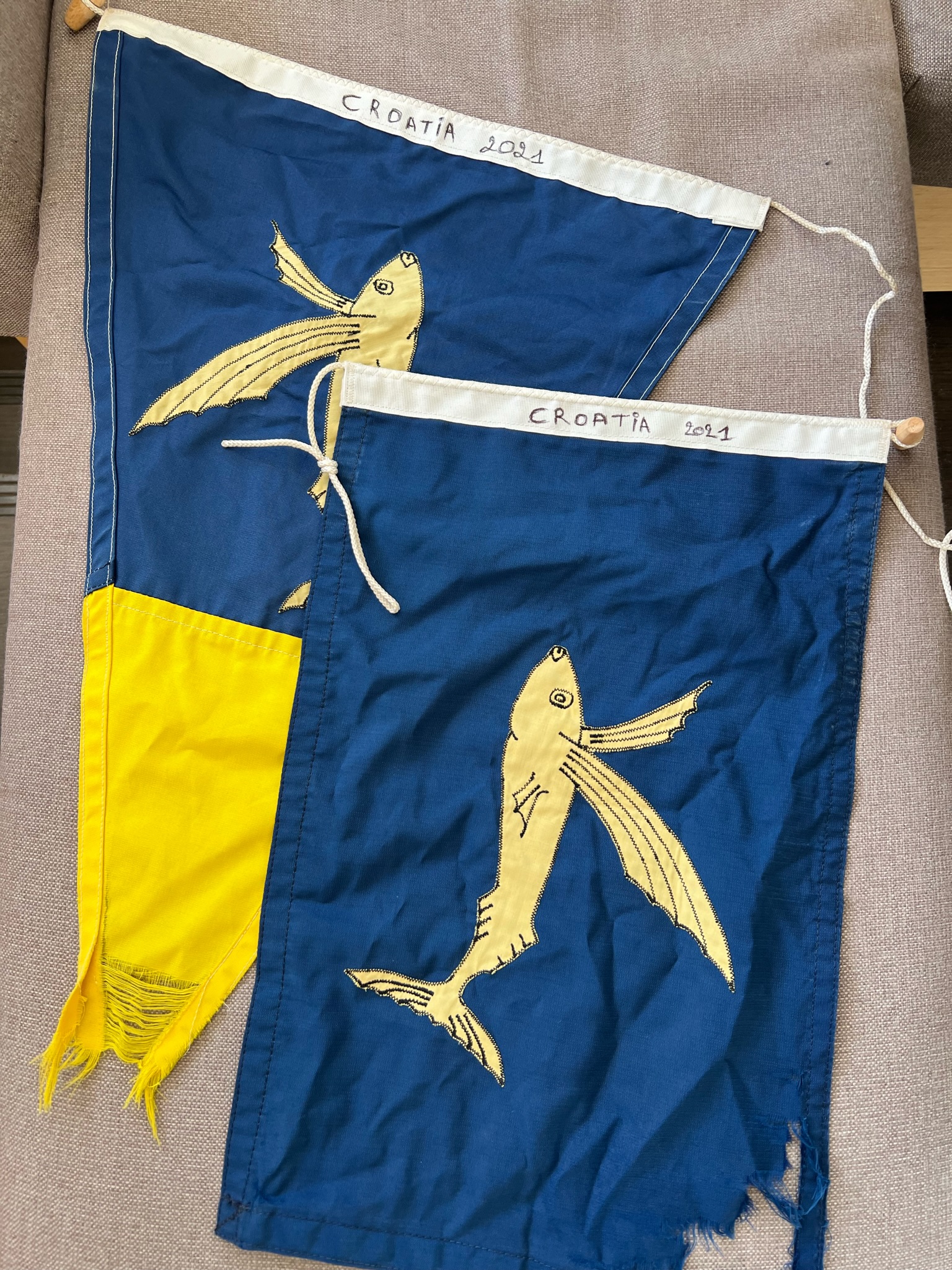
There is a blue and gold burgee with a flying fish on it that I have been flying from my spreaders for many years now. If you know what it is, you know something about me without us having to exchange a word. If you fly one yourself, there is a good chance we will find ourselves in conversation before the day is out, regardless of which ocean we happen to be anchored in at the time. That is, in essence, what the Ocean Cruising Club is: a community of offshore sailors connected by a single shared qualification and a specific attitude toward the sea.
I have been a member of the OCC for many years. I am currently serving my second term as Port Officer for the Belgian coast. This article is about why the organisation matters to me, what it does that nothing else quite replicates, and why I think it is relevant to what we are building with Naora.
What the OCC Is
The Ocean Cruising Club was founded in 1954 by Humphrey Barton after his east-west crossing of the Atlantic in a 25-foot boat called Vertue XXXV. The founding principle was simple and it has not changed in 70 years: membership is based on what you have done, not on who you are or who you know. To qualify as a full member, you must have completed a continuous ocean passage of at least 1,000 nautical miles as skipper or certified crew, in a vessel of no more than 70 feet. That is the entire entry requirement. No committee approval based on social standing, no invitation from existing members, no assessment of your background or your profession. You made the passage. You qualify.
This is a more radical membership criterion than it might initially appear. It means the OCC draws together people who have nothing in common except that they went offshore and kept going. Retired teachers, shipping executives, surgeons, farmers, engineers, people who built their own boats and sailed them across oceans on budgets that would not cover a week’s marina fees in most European marinas.
What they share is not background or wealth or professional status. It is the experience of being at sea, far from land, dependent on their own competence and the competence of the people alongside them. That shared experience creates a specific kind of fellowship that I have not found in any other context.
The Port Officer Network
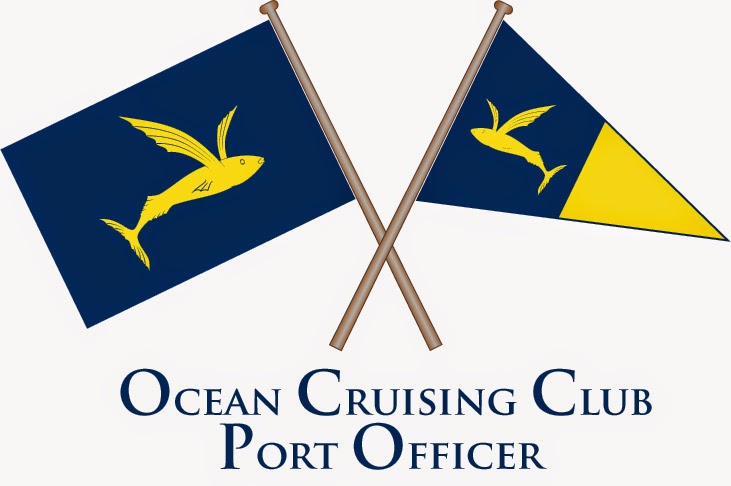
The most practical and most visible part of the OCC is its network of more than 200 Port Officers worldwide. Port Officers are experienced local sailors who volunteer to be the point of contact for OCC members arriving in their area. They are not professional agents or paid representatives. They are people who know their coastline, know their local waters, know who to call when something needs fixing, and are willing to make time for a fellow sailor who arrives from offshore and needs a local resource.
I have been on both sides of this relationship many times. As a travelling sailor in my earlier years, I arrived in ports across the Mediterranean, the Atlantic, and the Pacific where the OCC Port Officer was the first person who knew I was coming and the first person I called when I needed local knowledge. A spare part for a hydraulic pump in the Azores. A reliable diesel mechanic in Martinique. A safe anchorage recommendation for a coast I did not know well. The Port Officer network is not a tourist information service. It is a community of experienced sailors helping each other do something that requires genuine competence and genuine mutual support.
As a Port Officer for the Belgian coast, I am now on the other end of that relationship. When an OCC member is approaching the Belgian coast after an offshore passage, I am the contact. I know the harbours, the approaches, the tides and the currents of this coastline in a way that someone arriving for the first time does not. I can tell them which marina has space, which approach is safest in the current conditions, which fuel dock is reliable, which repair yard will do good work without taking advantage of a sailor who does not know the local options. And when the boat arrives and the crew steps off having been at sea for however many days, I can be there with a local knowledge and a welcome that makes a difference to how the arrival feels.
This is not a complicated thing. It is simply one offshore sailor helping another, in a specific place, with specific local knowledge. But it is the kind of thing that matters enormously at the end of a long passage, and it is the reason that the OCC’s Port Officer network is one of the most genuinely useful structures in the sailing world.
My Second Term: What the Role Actually Involves
I am currently in my second term as Port Officer for the Belgian coast, which means I have been doing this for long enough to have built the relationships and the local knowledge that make the role genuinely useful rather than simply nominal.
In practice, the role involves being available. When an OCC member contacts me ahead of an arrival on the Belgian coast, I respond with whatever they need: harbour recommendations, approach information, local services, weather considerations for the specific passage they are making. When they arrive, I make myself available for whatever follow-up is needed. If something has broken on the passage and they need a specialist, I know who to call. If they want a local restaurant recommendation or a chandlery that stocks a specific part, I know where to send them. If they simply want to talk to another offshore sailor who knows what a long passage feels like from the inside, I am available for that too.
The Belgian coast is a specific sailing environment that requires specific knowledge. The tides run hard. The approaches to the major harbours are managed by port authority traffic separation schemes. The weather windows for offshore departures are genuinely narrow at certain times of year and need to be read correctly. The marinas and harbours from Nieuwpoort to Antwerp have individual characters and individual capabilities that affect whether they are appropriate stops for a particular vessel. I have sailed this coastline in every condition across many years. That knowledge is what I bring to the role.
Flying Fish: The Journal That Keeps the Community Connected
The OCC publishes Flying Fish, its annual journal, alongside a quarterly newsletter and a monthly electronic bulletin. Flying Fish is one of those publications that is easy to underestimate from the outside and impossible to underestimate once you have read it seriously. It is written entirely by members, about passages they have actually made, in places they have actually been. Not journalism, not editorial, not curated travel writing: direct first-hand accounts from offshore sailors who were there and who write with the specific authority of people who navigated those waters themselves.
The Flying Fish archive goes back to 1964. It covers virtually every navigable water on earth, written by people who made the passages when many of those waters were genuinely unknown territory for recreational sailors. The accounts of passages through the Northwest Passage, around Cape Horn, through the Indonesian archipelago before reliable GPS charts existed, through the Red Sea in various political climates: this is an archive of accumulated offshore sailing knowledge that has no equivalent in any library or any website. It is knowledge that was paid for in weeks at sea and written by people who understood what they were doing and why it mattered.
I have contributed to Flying Fish over the years. Writing for it requires a specific kind of honesty: you are writing for an audience of experienced offshore sailors who will know immediately if you are vague about something important or precise about something trivial. The readership keeps the standards high in the best possible way.
Why the OCC Matters to Naora
When I think about what we are building with Naora, the OCC is the context against which I measure certain things. Not the specific structure, which is very different, but the underlying principle: that the most valuable thing a sailing community can offer is the accumulated experience of people who have genuinely been offshore and who are willing to share what they learned.
The Naora Circle is a community built around shared experience at sea. The OCC is a community built around the same thing. The difference is that the OCC’s qualifying passage is the entry requirement, while Naora’s shared experience happens aboard together. But the spirit is recognisable across both: a conviction that offshore sailing produces a specific kind of knowledge and a specific kind of fellowship that cannot be manufactured in a marina or simulated in a classroom, and that the community of people who have genuinely been out there is worth maintaining and extending.
Several of the people I have met through the OCC over the years have become the kind of connections that last: sailors I have crossed paths with in anchorages across five oceans, whose knowledge I have drawn on and whose judgment I trust in the way that only comes from knowing someone’s competence at sea. These are the relationships that the OCC’s burgee makes possible, quietly, without ceremony, simply by signalling that the person flying it has been somewhere offshore and kept going.
If you are an OCC member planning a passage along the Belgian coast or departing from it, I am your Port Officer. Get in touch before you arrive. I know this coast well and I am glad to help.
| OCC at a glance | Detail |
|---|---|
| Founded | 1954, by Humphrey Barton after his Atlantic crossing in Vertue XXXV |
| Qualifying passage | 1,000 nautical miles non-stop offshore as skipper or certified crew, in a vessel of 70 feet or less |
| Membership | Over 3,500 members from more than 60 nations |
| Port Officers | More than 200 worldwide, available to assist OCC members with local knowledge and practical help |
| Publication | Flying Fish annual journal, quarterly newsletter, monthly eBulletin; archive dating to 1964 |
| Burgee | Blue and gold with a flying fish: the signal that connects members in anchorages worldwide |
| My role | Port Officer for the Belgian coast, second term; available to OCC members arriving on or departing from the Belgian coast |