Ludo applied for an IT job. That is the entirely unromantic beginning of one of the better stories in my professional life, and I want to tell it fully because the fully told version is considerably more interesting than the summary version and because Ludo, who is a modest person, would never tell it himself in a way that does it justice.
He applied. He interviewed. He got the job, because the interview produced the specific impression that the good interview produces: the person in front of you is competent, is genuinely interested in what the work requires, and will do what they say they will do. These three things are not as common in combination as the employment market implies they are, and when they are present together in the same person, you hire that person regardless of whether the rest of the CV fits the exact shape of the role you were advertising. Ludo fit the shape of the role and he had the three things in combination and he started work.
What followed was what the good hire produces: he was excellent. Not in the spectacular way that announces itself and requires management. In the quiet and consistent way that the daily operational reality of a company depends on and that is, in my experience, considerably rarer and considerably more valuable than the spectacular kind.
He did what needed doing. He was available when availability was required. He delivered what he committed to deliver and when the delivery required more than the commitment had anticipated, he delivered the more without making the more into a complaint or a negotiation. This is, in the professional world, a description of someone extraordinary dressed in the language of the ordinary. It took me a little while to understand which of the two I was dealing with.
The Problem With the Delivery
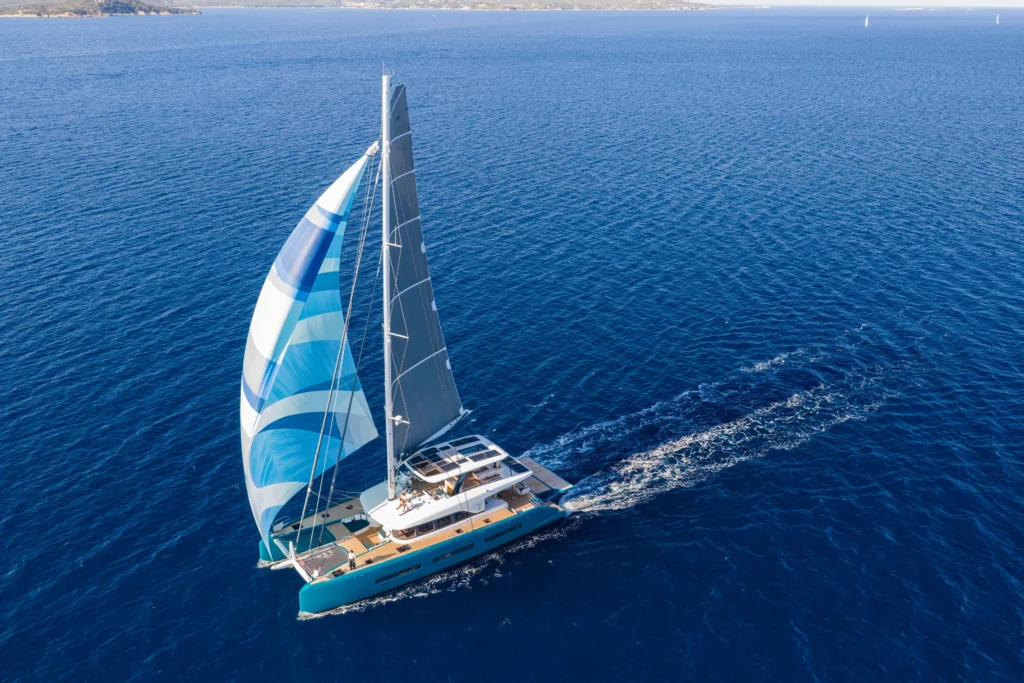
The yacht delivery business has a crew problem that anyone who has run one for long enough recognises with the specific weariness of a problem that is never finally solved: the delivery window opens, the weather is right, the client is waiting at the destination, and the experienced crew members who were available last week are no longer available this week because the offshore sailing world operates on an availability that the professional schedule of the delivery company cannot fully predict or control. I had a delivery. I had a weather window. I had no crew.
I took Ludo with me.
I want to be honest about the specific quality of that decision in the moment it was made, because the retrospective version of the story, told now that Ludo has accumulated more offshore miles than most sailing clubs see in a generation, makes it sound like a calculated act of talent recognition. It was not. It was the pragmatic decision of a captain with a delivery to make and no experienced crew available, who looked at the person who was available, recalled the specific quality he had demonstrated in the professional context, and decided that the qualities that made Ludo excellent in the office were probably the same qualities that would make him useful on a boat. It was an educated guess. It was also, as it turned out, correct.
The First Time at Sea
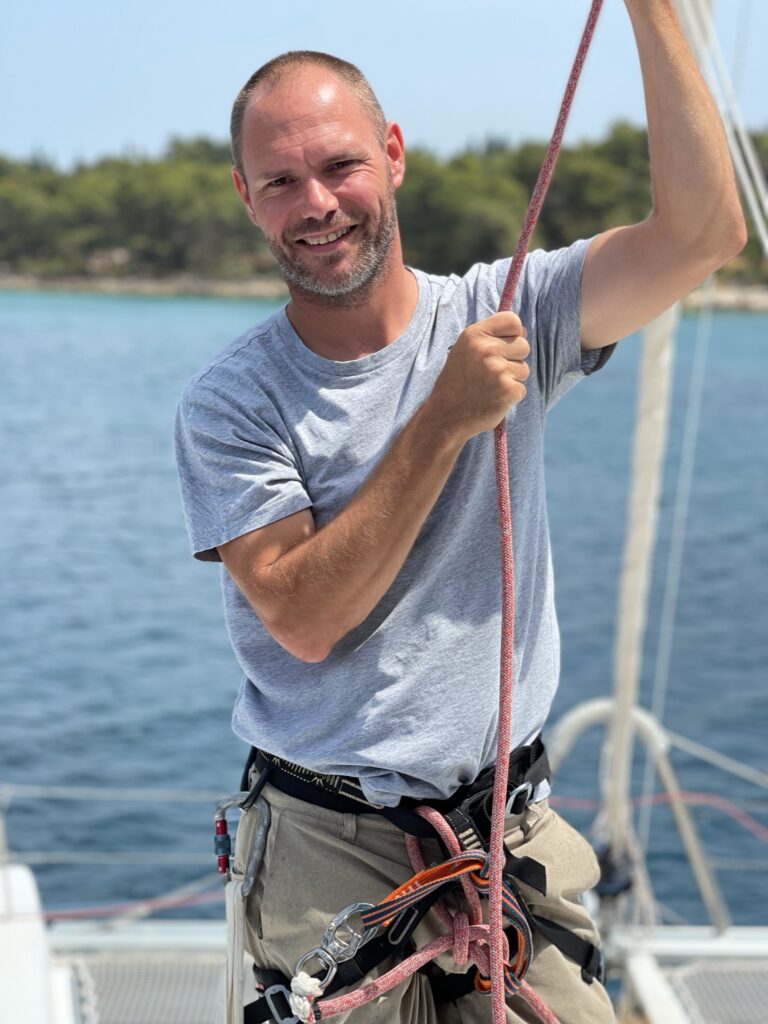
Ludo had never been on a sailing boat. More specifically: Ludo had no experience of the sea in the offshore sense, no sailing background, no accumulated familiarity with the specific environment that an offshore delivery places a person in.
He arrived at the dock with the willingness that the good person always brings to the unfamiliar and with no particular knowledge of what the unfamiliar was going to require of him. This is, in its way, the ideal starting condition: the person who has not accumulated the habits of previous experience has nothing to unlearn and everything to receive.
The first passage was a delivery. The conditions were what the conditions were, which is to say they were not arranged for the comfort of a first-time offshore crew member. The sea does not calibrate its behaviour to the experience level of the people in it, which is simultaneously its most demanding quality and its most honest one. What Ludo encountered on that first passage was the actual sea rather than the managed version of it, and what the actual sea produced in him was not what the first offshore experience produces in many people: the discomfort that leads to the conclusion that this is not for them. It produced the recognition. The specific quality of someone who has found the thing they were looking for in the place they had not thought to look.
He did not complain. I want to emphasise this not because complaining would have been unreasonable, it would not have been, but because the absence of complaint in genuinely difficult conditions is the offshore characteristic that I have found to be one of the most reliable indicators of the person who belongs on a boat. The sea produces difficulty without scheduling it and without providing a mechanism for registering dissatisfaction with the timing.
The person who manages the difficulty without the complaint is the person who has found, at some level that the complaint would interrupt, that the difficulty is part of what makes the experience worth having. Ludo understood this on the first passage. Most people take several passages to arrive at the same understanding, if they arrive at it at all.
What Followed
What followed was the accumulation. Delivery after delivery, from the waters of Sweden southward through the North Sea and the English Channel and the Bay of Biscay and the approaches to the Mediterranean, The Atlantic, the routes that the yacht delivery business covers and that the experienced offshore crew member knows as the specific geography of the work.
Ludo went from knowing nothing of this geography to knowing it in the specific way that only the repeated experience of the actual passages produces: not the chart knowledge, though the chart knowledge came, but the specific physical knowledge of how the Bay of Biscay moves in a southwest swell and what the Channel produces in a spring tide and what the Mediterranean looks like when the Mistral is established and the barometer is doing what the barometer does when you need it not to.
He stood watches that ran longer than they should have because the conditions required it. He managed the boat while I slept, which is the specific act of trust between captain and crew that the offshore sailing life requires and that, once established, defines the quality of the working relationship more completely than any other single measure. He learned to read the weather and the sea state and the boat’s behaviour in the specific way that the accumulated passage miles teach and that the classroom cannot replicate. He was, in the offshore idiom, good value: the crew member whose presence makes the passage better than it would have been without them and whose absence, when it eventually occurs, is felt as a specific reduction in the quality of what was available.
The Certificates
The certificates came later, as they always do for the person who learns offshore sailing from the offshore sailing itself rather than from the training course that precedes it. The SRC, the Short Range Certificate for marine radio operation. The offshore sailing qualifications that the accumulation of logged miles and demonstrated competence produces.
The formal recognition of what the sea had been building in Ludo across the passages from Sweden to the Mediterranean and beyond, recognised now in the language of the certifying bodies that the maritime world uses to describe what it sees as sufficient competence for the offshore context.
What the certificates say, in their formal language, is that Ludo is qualified for the offshore sailing that he was already doing before the certificates said he was. This is the standard narrative arc of the person who learns from doing rather than from studying: the competence precedes the certification, and the certification is the formal acknowledgment of what the practical experience had already produced. The interesting part of Ludo’s story is not the certificates. It is the passages that made the certificates a matter of catching up with the reality rather than producing it.
What He Is
Ludo has, in the years since the first delivery, accumulated more offshore sailing miles than most sailing clubs accumulate in a generation of seasonal weekend sailing. Not because he is exceptional in the way that the professional offshore sailor is exceptional: because he has been consistently available, consistently willing, and consistently the person who said yes when the delivery needed a crew member and the crew list was short.
The miles are the product of the availability compounded across the years, and the competence is the product of the miles, and the crewmate that the compounding has produced is the specific version of the offshore crew member that the delivery captain who has been on enough passages to know the difference values most: not the spectacular one, not the credentialled one, but the one who is there, and who is good when they are there, and who never makes the being there something to be grateful for in the way that the difficult crew member makes the being there something to be managed.
The best crewmate I can imagine is a specific description. Not the most skilled. Not the most experienced. The best: the person whose presence on the boat makes the passage what it should be rather than what the conditions alone would make it. The person who runs the watches correctly and is awake on them and does not need to be managed through the difficulty that the sea produces without scheduling. The person who is not afraid in the way that the offshore context requires not being afraid: with the specific equanimity of someone who has been in enough of the sea’s genuine conditions to understand that the fear is less useful than the attention, and who has trained the attention to replace the fear through the specific repetition of the passages that the years of the work have accumulated.
Ludo applied for a job. He had never seen the sea. He ended up, through the accident of a crew list that was short on a day when the delivery window was open, finding the thing that the professional world he had been in had not provided and that the sea, given sufficient exposure and the willingness to be in it fully, provides with a reliability that the offshore sailing life has always offered to the people who arrive at it with the quality that Ludo arrived with: the simple, consistent, undramatic willingness to do what the situation requires for as long as the situation requires it, without complaint, without fear, and without the need for the situation to be anything other than what it is.
That is a description of a good crewmate. It is also a description of a good person. In my experience, the two descriptions are more often the same description than the professional world, which values a different set of qualities, tends to acknowledge.