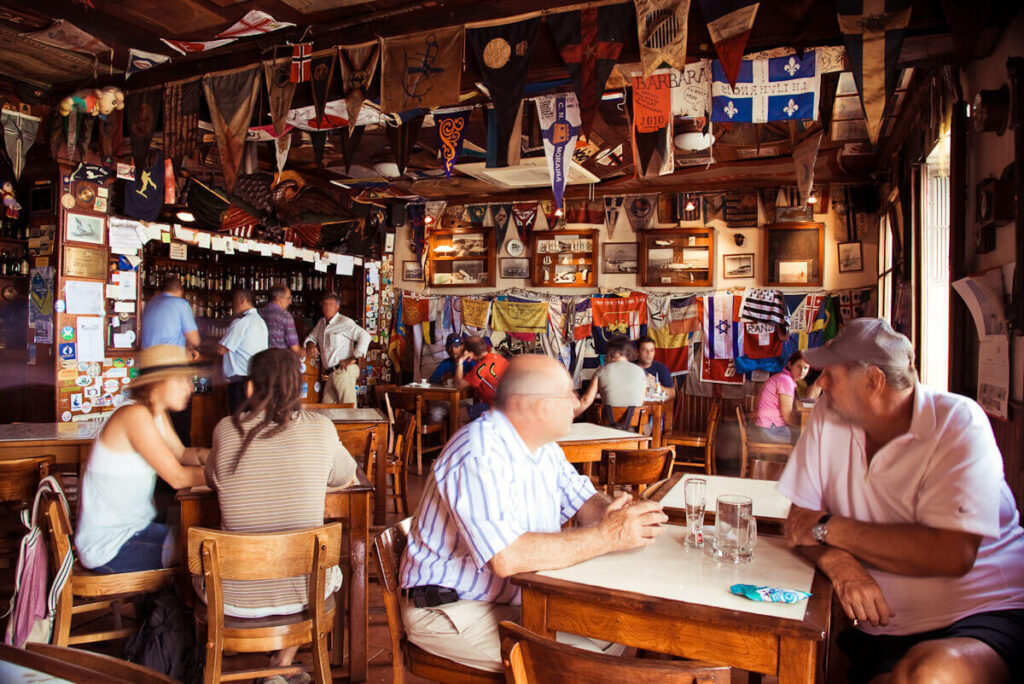
Every harbour has one. Not necessarily the best bar in the harbour, not necessarily the most beautiful or the most famous or the one that appears in the travel guides. The one where the sailors end up. It is identifiable by the specific combination of its position, close enough to the dock that the walk from the boat is manageable after a long passage, and its clientele, who are people in foul weather gear carrying boat cards and drawing anchorage sketches on napkins. It is usually family-owned, usually has a television showing whatever sport is in season, and usually has a menu that has not changed significantly in twenty years because the menu is not why people come.
People come because it is the place where the information lives. Not the information in the pilot books and the weather routing apps and the cruising guides, which is the official information: the historical data and the published advice and the averaged experience of the people who have been here before and written it down.
The information in the harbour bar is the current information: what the anchorage around the headland was like last Tuesday in the Meltemi, whether the customs officer at the next port is as difficult as everyone says, which berth in the marina has the washing machine that actually works and which one takes your money and produces cold water. This information travels from boat to boat at the harbour bar table with a speed and a specificity that no app has yet matched.
The Language of the Bar
The language of the harbour bar is the language of the sailing world, which is not a national language but a technical one: the words for the boat’s systems and the sea’s behaviour and the weather’s patterns that are the same in English and French and Dutch and German because they were all borrowed from the same maritime tradition.
The person at the next table who does not speak your language speaks the language of the AIS and the anchor drag and the weather window, and the conversation that begins with a question about the holding in the bay to the north moves through the shared vocabulary into the broader conversation that the shared context of the sailing life produces.
The harbour bar is one of the places where the Naora members meet the wider sailing community: the offshore sailors who have been doing this longer than any of the members aboard, whose boats are smaller and whose budgets are more constrained and whose knowledge of the specific stretch of water currently being navigated is deeper than anything the pilot book contains.
The conversation at the harbour bar table between a Naora member and a retired couple who have been on their 38-foot sloop for eleven years is one of the most valuable conversations available on the route. It requires only the willingness to begin it and the specific humility to receive what it offers.
The Bar on the Route
The Naora route has specific bars that are part of its geography as much as the anchorages and the dive sites. The bar in Bodrum’s marina that the blue water fleet uses as its informal gathering point before the eastward departures in spring.
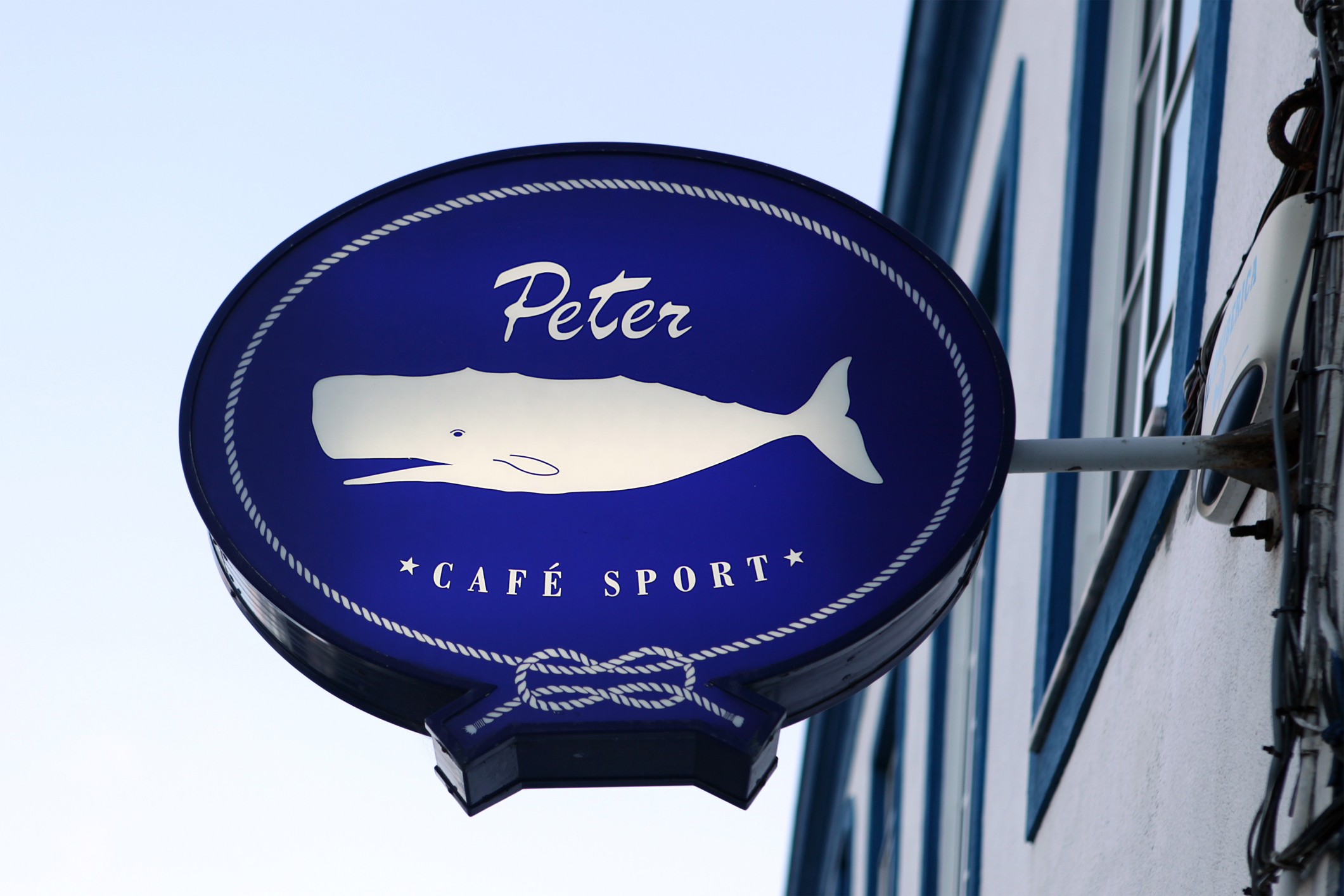
The Peter Café Sport in Horta on Faial in the Azores, which every Atlantic crossing sailor has sat in and whose walls carry the burgees of thousands of boats that stopped there on their way across. The bars in Papeete and Nuku Hiva and Suva and Galle and Aden that mark the waypoints of the Pacific and Indian Ocean and Red Sea and that contain, in the conversations of the people sitting in them on any given evening, a collective knowledge of the passage conditions ahead that no weather routing service has yet made redundant.
These bars are part of what the sailing life is and part of what distinguishes the sailing life from the resort holiday: the social infrastructure of a community of people who are all in motion through the same waters and who share, by virtue of that shared motion, a specific solidarity and a specific willingness to exchange the information that makes the motion safer and more interesting than it would be without it. The harbour bar is the Long Table of the wider sailing world. The Naora Long Table is a specific and formalised version of what has been happening in harbour bars since there were harbours