I was eleven the first time I went to the Galapagos. I had been on boats my whole life and I had seen a lot of marine life. I thought I understood what wildlife looked like up close. The Galapagos corrected that assumption on the first morning ashore.
A blue-footed booby was standing on the path. Not beside the path. On the path, in the middle of it, in the place where the path goes. I walked toward it to see if it would move. It did not move. It looked at me with the complete lack of concern of an animal that has no instilled knowledge of predators, no reason to associate the shape of a human with any threat it has ever encountered. I stood two metres from it for about five minutes and then I walked around it. It watched me go without changing its expression.
That is the Galapagos. Not that the animals are tame. They are entirely wild. But they evolved on islands that had no land predators for millions of years, and the absence of fear is not a trained response. It is the original state. You are the strange one for expecting them to run.
Isabela: The Tortoises
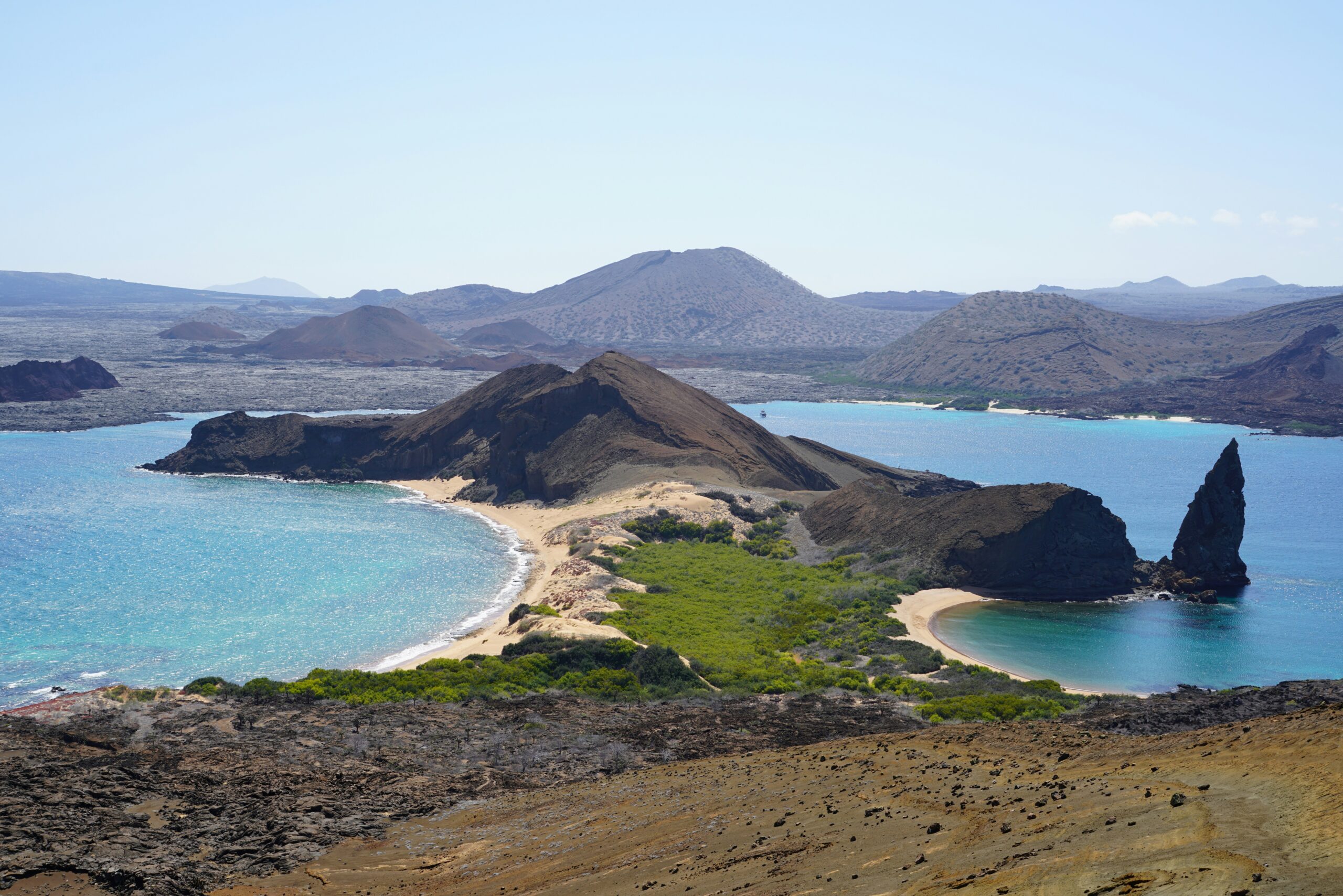
Isabela is the largest island in the Galapagos and the one with the largest remaining population of giant tortoises. They live in the highland interior, moving slowly between the vegetation and the wallows where they spend the heat of the day. The walk from the coast up into the tortoise habitat takes about an hour and a half, through increasingly lush vegetation as the altitude rises and the cloud forest begins.
The first tortoise I found on Isabela was enormous: a century-old male with a shell the width of a kitchen table. He was eating grass, slowly, with the unhurried attention of something that does not have anywhere to be. I sat five metres from him for a long time. He did not acknowledge me once. I was not interesting. The grass was interesting. The ancient rhythm of eating and resting that has governed his species for millions of years was interesting. Whatever I represented was simply not part of the picture.
There is something that extended proximity to a genuinely ancient animal produces that I cannot describe properly. It is not awe exactly, though it is that too. It is more like a recalibration of the timescale against which you are measuring your own life. The tortoise has been here for a hundred years. The species has been here for millions. The island has been here for longer. And you are a visitor with a limited tenure, sitting in the grass, watching an animal eat.
Snorkelling with Sea Lions and Marine Iguanas
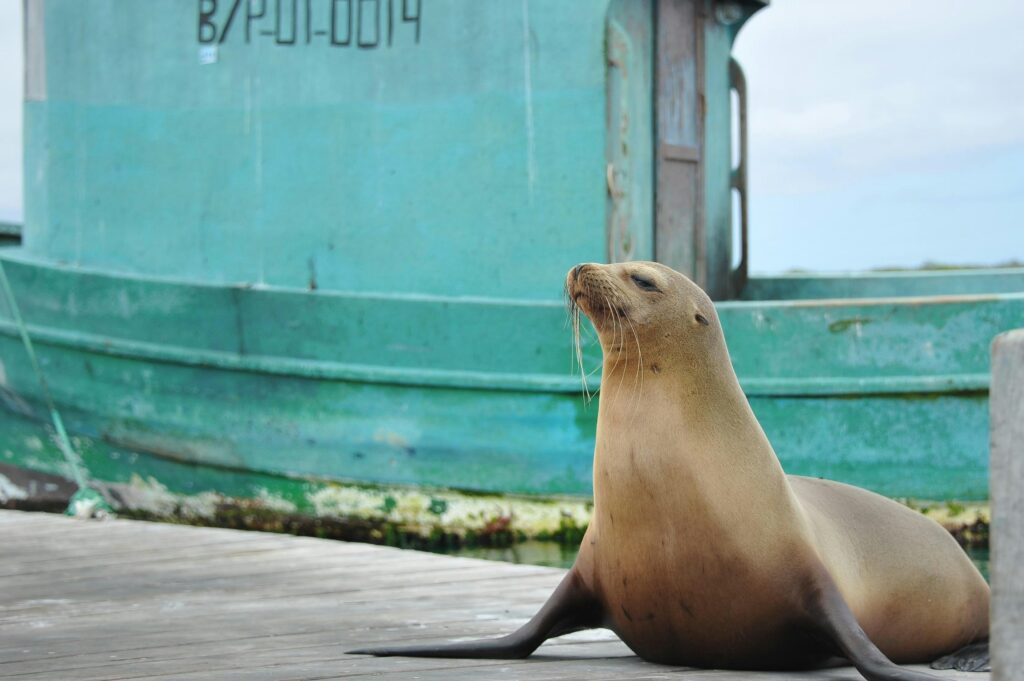
The underwater Galapagos is the same as the land Galapagos in the one way that matters most: the animals are not afraid. Galapagos sea lions treat snorkellers as mildly interesting objects and will swim within arm’s reach, sometimes closer, spiralling around you with the acrobatic ease of animals that have mastered their medium in a way that makes your own movement through the water look primitive. I have had sea lion pups grab my fin and refuse to let go for several minutes. I have had adult females swim directly at my face and veer off at the last moment, apparently for the entertainment value.
The marine iguanas are more serious. They graze the algae on the underwater rocks at a depth of two to three metres, moving slowly and deliberately against the current, and they surface when they need air and descend when they have enough. Swimming alongside one as it grazes is one of the strangest physical experiences available in any ocean. It is a lizard. It is also completely at home in the water, more at home than I am, doing something that lizards are not supposed to be able to do and doing it with complete competence.
What the Galapagos Does to You
The Galapagos is not the easiest destination on the Naora route to access. The Ecuadorian permit system is specific and requires advance preparation. The anchorages are regulated and the movements of visiting vessels are controlled. We manage all of this. It is worth managing.
The members who have joined us for the Galapagos passage consistently describe it as the leg of the circumnavigation that most changes how they think about their place in the natural world. Not because of any single dramatic encounter, though there are those. But because three days of moving among animals that simply do not factor you into their threat assessment recalibrates something in the relationship between yourself and the rest of living things. The world is not organised around you. You are a visitor in it, briefly and on its terms. The blue-footed booby standing in the middle of the path has always known this. The Galapagos is where you learn it.