There is a version of food at sea that most people have experienced. Canned goods, pasta reheated at angle, tinfoil baked fish that was fine given the circumstances. Meals that were about fuel rather than pleasure, eaten quickly between watches, not thought about much.
That is not what happens aboard.
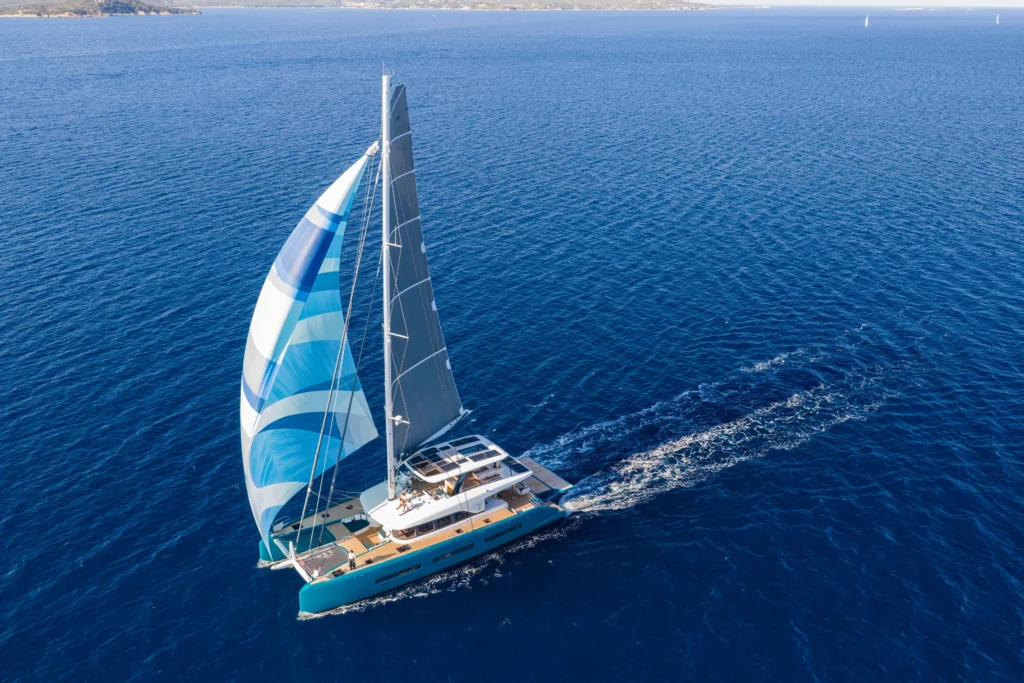
Food is one of the central experiences of the Naora journey. Not an afterthought, not a logistical problem to solve, but something we take as seriously as the sailing itself. Three times a day, every day, whether we are at anchor in a Turkish bay or three days into an Atlantic crossing, the table is set and something extraordinary is prepared. This article is an attempt to explain what that actually looks like, from the source to the plate.
The Chef and the Three Moments of the Day
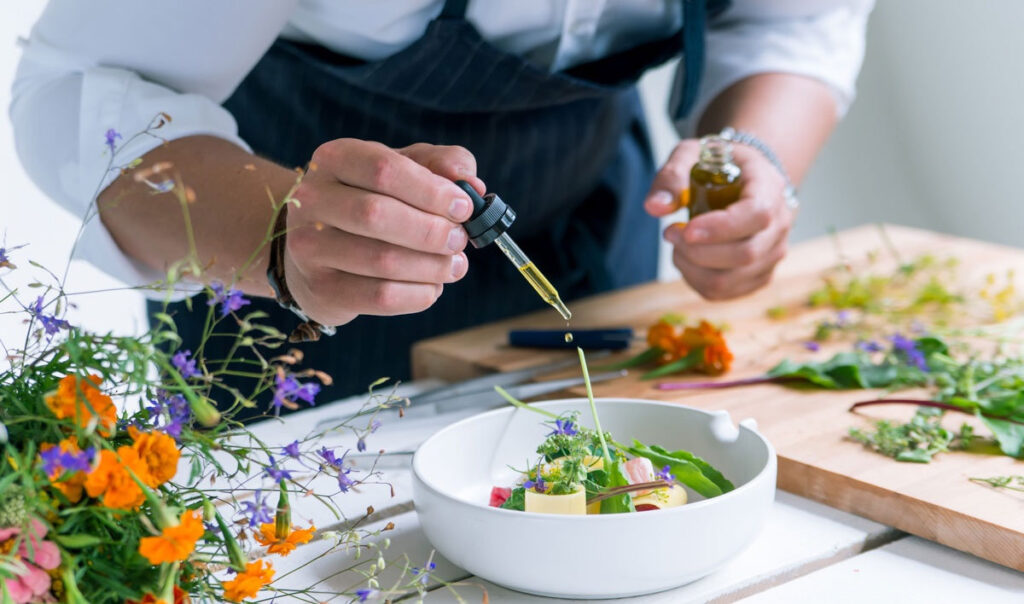
Our chef is at work before most of the boat is awake. The day on Naora is structured around three distinct food moments, each with its own character, and each prepared with the same level of attention.
The first is at eleven in the morning. Not a continental breakfast of packaged things, but a proper late morning meal: the night watch has been stood down, the boat has been sailed since sunrise, and by eleven there is an appetite that deserves a response.
Depending on what came off the fishing line overnight or what was bought in the last port, this might be freshly grilled fish with local bread and a salad, eggs prepared in a dozen different ways with herbs from the deck garden, or something more elaborate if the morning has been calm enough to work properly in the galley. The eleven o’clock meal is unhurried. There is no schedule pressing against it.
The second moment is at four in the afternoon. Aperitif time. The boat is typically at anchor by now, or close to it. The afternoon has been spent swimming, diving, running ashore, reading, or simply being in the place we are in. At four, the table reappears: small dishes prepared with whatever the day produced, a glass of something cold, the light on the water at the particular angle it takes in the late afternoon. This is not a course. It is a pause. A transition from the day to the evening, handled with the kind of care that makes the transition itself feel worth having.
The main meal of the day comes in the evening. This is where the chef’s full range appears. A meal planned from the morning, built around what is freshest, what caught our eye in the market two ports ago and has been marinating since, what the fishing line produced in the afternoon watch. Multiple courses. A table set properly. A meal that in any restaurant context would be described without hesitation as fine dining, produced in a galley on a boat that is occasionally moving and always at the mercy of what the day brought.
What Comes Off the Fishing Line
We trail a fishing line from the stern on most offshore passages. Not as a hobby, but as a genuine source of food. The ocean is generous on a trade wind crossing, and what comes up is frequently extraordinary.
Mahi-mahi, also known as dorado, is the most common catch on the Atlantic and Pacific trade wind passages. It is one of the finest eating fish in the ocean: firm white flesh, mild flavour, and a versatility that makes it as good grilled simply over fire as it is prepared with more complexity. A large dorado can feed everyone aboard twice, and on a good day we catch two.
Yellowfin tuna is the other regular. Pulled from blue water in the middle of an ocean crossing, eaten within hours of being landed, it is a different fish entirely from anything bought onshore. The texture and flavour of tuna this fresh is not something that refrigeration and transport can replicate. When the line goes tight on a tuna in the middle of the Atlantic, there is an immediate understanding of what Japanese chefs mean when they talk about the difference between fish that has been hours from the water and fish that has been days.
Wahoo, barracuda, and various species of jack come up depending on the ocean and the depth we are fishing. In shallower coastal waters near the Mediterranean or in the island chains of the Pacific, reef fish caught by hand from the dive platform extend the range. In certain anchorages, the fishing from the shore or the tender at dusk produces red mullet, sea bream, and other species that require almost nothing from the chef except getting out of the way.
Our chef works around what is caught rather than planning despite it. The morning catch shapes the afternoon aperitif. The afternoon catch shapes the evening meal. When nothing is caught, we eat from what was provisioned. But on most passages, the line provides, and the freshness of what comes off it is the single biggest differentiator between eating aboard Naora and eating in a restaurant ashore.
Where the Produce Comes From
The vegetables and fruit aboard Naora do not come from supermarkets. This is not a philosophical position. It is simply that the best produce on the route is almost never found in a shop.
In Turkey, the farms that supply the local market in the town behind the anchorage grow tomatoes, aubergine, courgettes, peppers, and herbs that are harvested in the morning and available by ten. We go ashore specifically for these, often from individual growers rather than stalls, and the quality is so far beyond anything that has spent time in a cold chain that the comparison is almost meaningless.
In the Marquesas, the local women bring fruit to the anchorage by pirogue in the early morning: breadfruit, papaya, grapefruit, limes, and bananas of a variety and flavour that simply does not exist in export form. We provision for the Pacific crossing here, loading fruit for weeks, and the produce holds better than anything commercial because it was picked mature rather than early.
In Fiji, the village markets have taro, cassava, greens, and root vegetables that are central to Pacific cooking and which make their way into dishes that reflect where we are rather than where we came from. In Southeast Asia, the morning markets in every port produce the kind of ingredient quality that Michelin-starred chefs in Europe pay freight costs to access. We are there. We walk in and buy it for almost nothing.
The pattern is consistent across the entire five-year route: the best produce is local, bought directly from the people who grew it, at the moment of the season when it is at its best. Our chef knows this and plans provisioning accordingly, arriving in each port with a clear picture of what is available and what the boat needs for the next leg.
The Herb Garden on Deck
One of the details aboard Naora that surprises people most on arrival is the herb garden. Growing on the deck, in purpose-built planters suited to the marine environment, are the herbs that the chef uses daily: basil, thyme, rosemary, chives, flat-leaf parsley, coriander, and whatever else has been started from seed or cutting at the last port. On longer passages, the garden is watered, monitored, and occasionally supplemented with new plants bought in the most recent anchorage.
Fresh herbs change a dish in a way that dried herbs do not. The basil that goes onto the evening fish was growing six feet from the galley six hours ago. The thyme in the marinade that has been working since the morning was picked fresh before the anchor was raised. The difference this makes to the flavour of what is served is not subtle. It is the kind of difference that trained palates notice immediately and that everyone else notices without being able to name exactly why the food tastes the way it does.
The herb garden is also, practically, a solution to one of the real challenges of offshore provisioning: fresh aromatics deteriorate quickly and are often unavailable in remote anchorages. By growing them on board, we are never without the flavour layer that separates a genuinely good dish from an adequate one, regardless of how far we are from the nearest market.
The Standard We Cook To
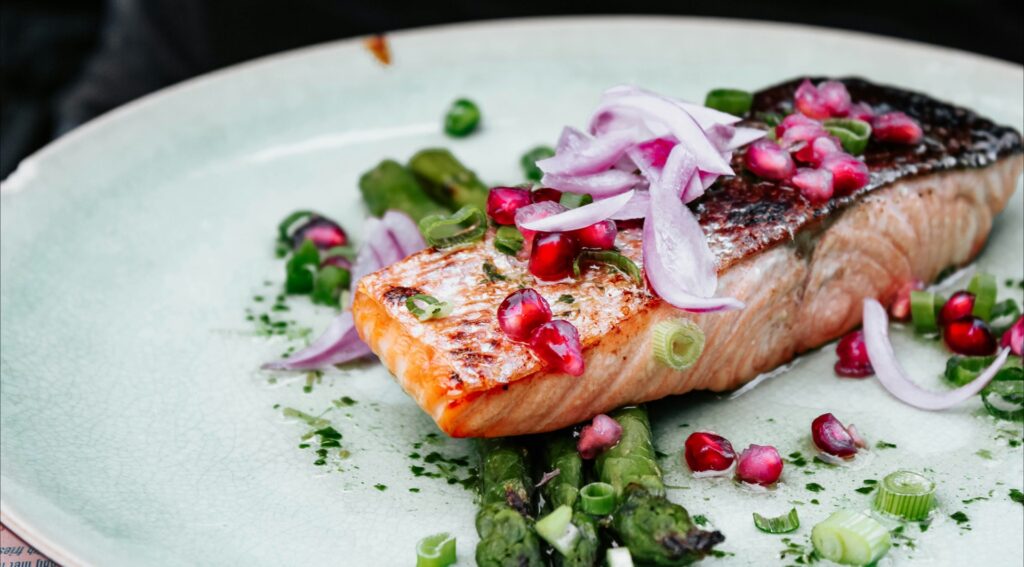
The word Michelin gets used carefully in this context because it is often a shorthand for expensive fussiness rather than what it actually means: technical precision in the execution of a dish, exceptional quality of ingredient, and the discipline to let both speak clearly without obscuring them with complexity for its own sake.
That is exactly the standard our chef cooks to. Not in the sense of foam and tweezers, but in the sense of genuine craft applied to the finest available ingredients. A piece of mahi-mahi pulled from the line three hours ago, prepared simply but with precision, served with locally grown greens dressed with good olive oil and a herb from the deck garden, is a more purely excellent piece of food than most of what is served in expensive restaurants.
What makes it extraordinary is not the technique, though the technique is there. It is the combination of freshness, provenance, and the particular pleasure of eating something that was alive and free in the ocean half a day ago.
The evening meals push further. Multiple courses, sauces that have been developing through the day, preparations that require patience and timing and the kind of focused attention that a professional kitchen demands. The galley is small compared to a restaurant kitchen. Everything about cooking in it is harder: the motion of the boat, the limited counter space, the unpredictability of passage days.
Our chef has learned to work in this environment with the same results that a well-equipped kitchen produces. That is a specific skill, and it is one of the things that makes the food aboard what it is.
| Meal | Time | Character | Typical source of main ingredients |
|---|---|---|---|
| Late morning meal | 11:00 | Substantial, unhurried, built around what the morning produced | Fishing line, local market from last port, eggs and staples from provisioning |
| Afternoon aperitif | 16:00 | Small dishes, a drink, the transition from day to evening | Whatever is freshest: catch of the day, local cheese and charcuterie, herbs from deck garden |
| Evening meal | Sunset onwards | Multiple courses, full preparation, the centrepiece of the day | Best of the day’s catch, local vegetables provisioned ashore, deck herb garden, quality pantry staples |
What Eating Aboard Actually Does to a Day
Food aboard does something to the structure of the day that is worth naming directly. The three moments, eleven, four, and evening, create a rhythm that replaces the clock-driven schedule of a life on land with something more physical and more satisfying. You are hungry at eleven because you have been on the water since before dawn.
You are ready for the aperitif at four because you have been active since the morning meal. You arrive at the evening table genuinely ready for it, in good company, in a place that was an anchorage chart two days ago and is now a specific memory.
The members who reflect on the Naora journey afterward almost invariably mention the food. Not as a luxury extra, but as something that was woven into the quality of the days in a way they did not fully anticipate. A tuna sashimi prepared at anchor in the Tuamotu. A lamb shoulder that marinated through a full day’s passage and was ready when the anchor went down in Croatia.
An oyster breakfast bought from a man in a pirogue in French Polynesia who had gathered them that morning. These are not restaurant memories. They are experiences with a specific place and time and company attached to them, and the food is inseparable from the context.
That is what we mean when we say food is central to the Naora experience. Not that it is impressive, though it is. But that it is a genuine part of how the days are made, how the places are remembered, and how the community at the table comes together every time the anchor drops.
- Three meals daily: late morning at eleven, afternoon aperitif at four, and a full evening dinner from sunset
- A professional chef dedicated entirely to the food aboard, provisioning fresh at every port and planning around what is caught and what is seasonal
- Fishing line trolled on all offshore passages: mahi-mahi, yellowfin tuna, wahoo, and whatever the ocean offers
- Vegetables and fruit bought directly from local growers and village markets, not from supermarkets
- A working herb garden grown on deck, providing fresh aromatics for every meal regardless of how far we are from the last port
- Michelin-level preparation and technique applied to the freshest possible ingredients in every ocean and in every season