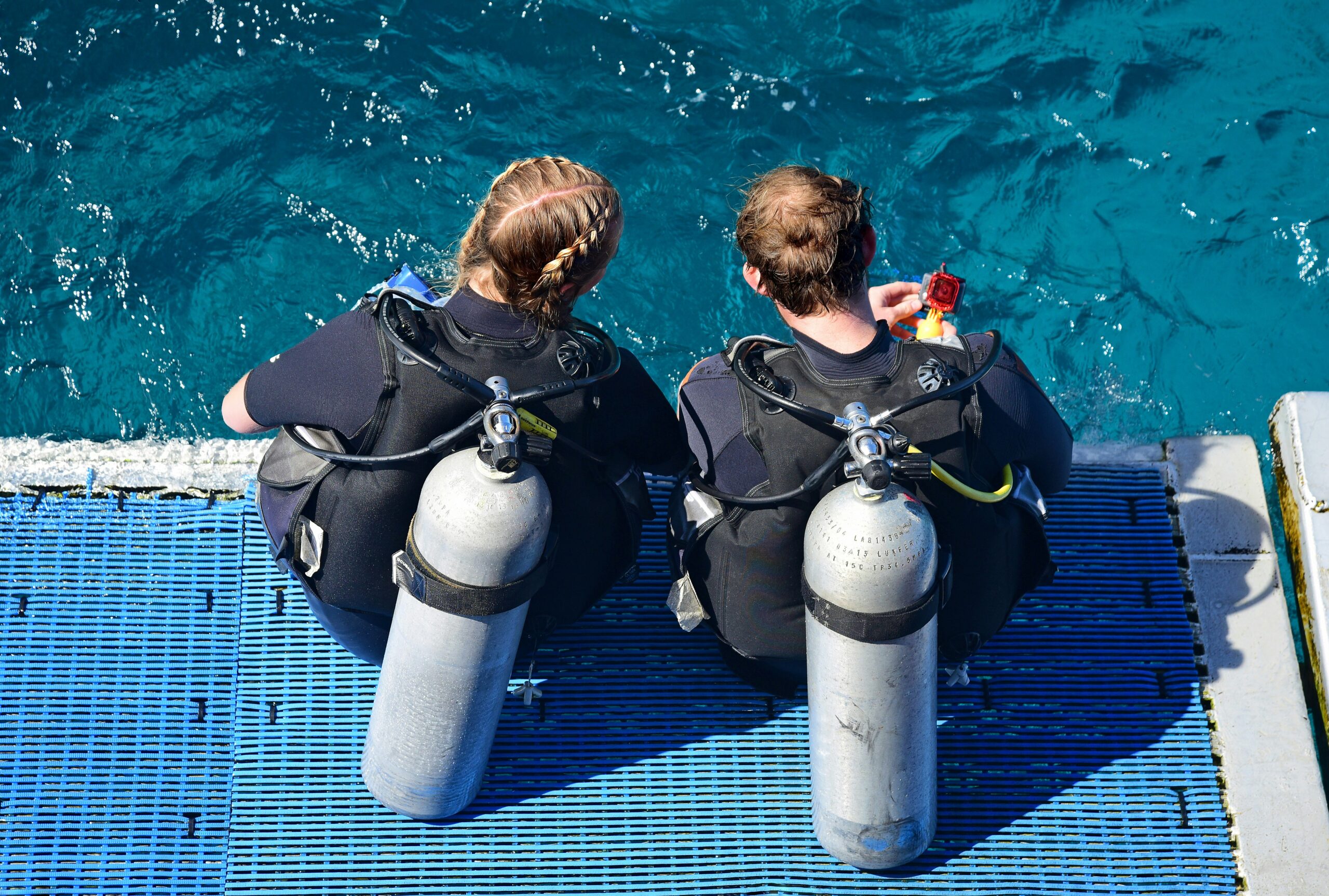
Most divers learn to dive in conditions that are not representative of what diving actually is at its most remarkable. The resort dive in the Red Sea or the Maldives or the Great Barrier Reef produces a specific kind of diver: competent in the skills, familiar with the sensations, but accustomed to the managed conditions of the dive centre operation where the sites are chosen for their approachability and the groups are kept in the shallows where the guides can manage them without difficulty.
The first dive on an offshore site, a real offshore site far from any dive centre, with an experienced divemaster who knows the specific site and the specific conditions and who leads the dive rather than manages a group, is a different experience. Not necessarily more difficult: many offshore sites are technically straightforward for any certified diver. But categorically different in the quality of the encounter with the water and what is in it.
The Reef Edge
The moment that most specifically distinguishes an offshore dive from a resort dive is the reef edge: the point at which the coral structure ends and the open ocean begins, expressed as a vertical wall that drops from the surface to depths of hundreds or thousands of metres with nothing below but blue water and whatever is moving through it. The reef edge is where the largest animals on the reef concentrate: they come up from the depths to feed on the current that the wall generates, and they move along the wall in the mid-water between the reef and the open ocean.
The first time a diver who has only dived in sheltered reef areas reaches a reef edge and looks over into the open blue, the experience is specific and often described in similar terms by very different people: a feeling of being very small in a very large and entirely indifferent environment, combined with the specific beauty of a blue that has no bottom and no walls and no limit. It is the oceanic equivalent of standing at the edge of a cliff, with the additional dimension of being weightless in a medium that surrounds you on all sides. It is overwhelming and it is the most beautiful thing many divers have ever seen, and the two qualities arrive simultaneously.
The Current
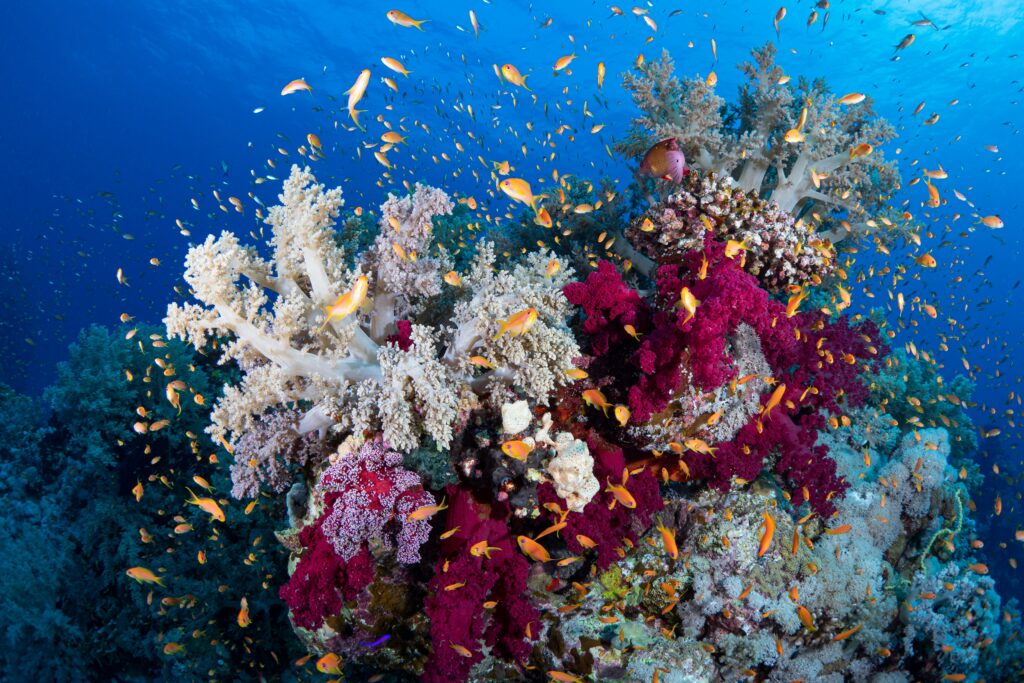
Offshore reef sites, unlike most resort dive sites, often have current. Not always strong current and not always on every dive, but present and requiring specific management in a way that the resort dive does not typically demand. The current is not a problem to be avoided. It is the reason the site is productive: the nutrients it carries and the plankton it concentrates are the food source that supports the large animal life that makes offshore sites more extraordinary than sheltered reef sites.
A diver who has learned to use current rather than fight it has access to a dimension of diving that is unavailable in still water: the drift dive, where the current does the work and the diver moves through the water column without effort, observing what the current brings to them rather than what they swim toward. The drift dive on the outer wall of a Tuamotu atoll in a light current at fifteen metres, with grey reef sharks in the blue below and parrotfish in the coral above and the specific quality of moving through water without swimming, is among the finest things that diving at any level produces.
At the Naora Sites
Sven leads the dives. This is not a ceremonial role: his 2,800 dives across the Naora route regions and his CMAS instructor qualification mean that the briefing he delivers before each dive is specific to the site and the conditions, and that the dive is led by someone who has specific knowledge of what this site offers and how to manage the conditions it presents. For divers making their first offshore dives on the Naora route, this leadership is the difference between an experience that is managed rather than had and a dive that produces the specific encounter with the site that the briefing promised.
The first ocean dive on the Naora route is whatever the route and the season make available at the moment of the first dive: the outer wall of a Tuamotu atoll, the current edge of an Indonesian passage, the deep wall of a Red Sea offshore reef. It is, consistently, the dive that members describe most specifically when they describe what the underwater experience of the Naora voyage was. Not because it was the most technically demanding or the most wildlife-rich but because it was the first time the open ocean was beneath them rather than in the distance, and that specific first time is the experience that every subsequent dive on the route builds upon.