The word decentralised has been appropriated by so many products and movements that it has begun to lose its meaning. Used as a marketing term, it describes products that are structurally as centralised as any legacy system and whose claim to decentralisation is a technical detail rather than a philosophical commitment. Used accurately, it describes a specific architecture: a system whose function does not depend on any single point of control, whose rules are the same for every participant regardless of their position in the network, and whose continued operation is not contingent on the continued cooperation of any specific institution or authority.
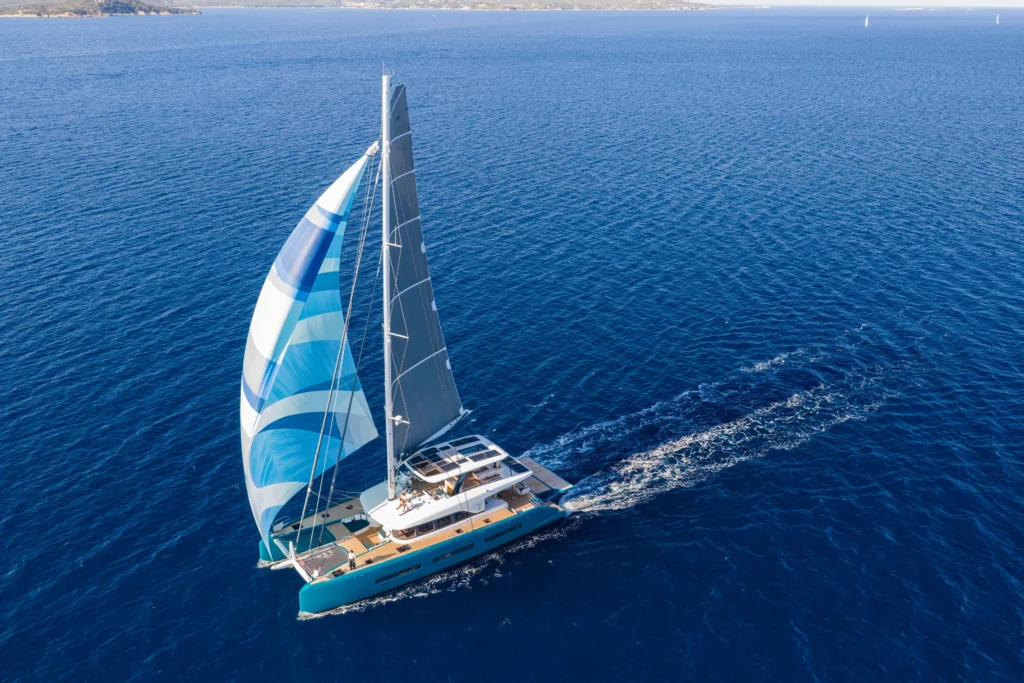
Bitcoin is decentralised in this accurate sense. Offshore sailing, at the level of the self-sufficient boat that carries its own water, its own air, its own power, its own food production capability, is decentralised in a structurally analogous sense. And the life that combines both, that holds wealth outside the centralised monetary system and experiences the world from outside the centralised tourism infrastructure, is the decentralised life: not as a political position but as a practical architecture for living.
No Central Authority
The Bitcoin network has no CEO. There is no person or institution whose decision determines which transactions are valid and which are not, whose policy change determines what the rules are, whose interest shapes the direction of the system. The rules are in the protocol and the protocol is enforced by the network. The participant who holds Bitcoin and understands the protocol has a relationship with the monetary system that does not pass through any intermediary whose interests may not align with theirs.
The offshore sailing voyage has no central authority in the analogous sense: no tour operator determining which anchorages are available, no cruise line schedule determining when you leave and when you arrive, no hotel management company determining what your room looks like and what is on the menu. The captain reads the conditions and makes the decision. The boat goes where the conditions allow and the plan requires. The experience is determined by the interaction between the vessel’s capability and the ocean’s behaviour, without the mediation of any institution whose function is to manage that interaction on behalf of a larger operation.

The Same Rules for Everyone
Bitcoin’s most radical property, the one that its critics most frequently underestimate and its proponents most frequently overstate, is not its scarcity or its resistance to censorship. It is the uniformity of its rules: the same rules apply to every participant in the network regardless of their identity, their jurisdiction, their political connections, or the size of their holdings. The transaction of a small holder is processed by the same rules as the transaction of the largest institution. The rules do not change because of who is transacting.
The ocean is like this. The same physics that governs the small boat governs the large ship. The same weather affects every vessel. The same tides rise and fall for every hull at anchor. The sea is one of the few environments in human experience that is genuinely indifferent to status and identity: it does not give preferential treatment to the expensive boat or the famous sailor. It treats every vessel according to the same physical laws, and the only currency it accepts is preparation.
This specific quality of the sea, its democratic indifference to human social distinctions, is part of what draws people to offshore sailing and part of what connects them to the Bitcoin world, where the protocol’s indifference to identity is a design feature rather than an accident.
The Naora Member as a Node in the Network
The Naora Circle is a small, distributed network of people who share a specific set of values and a specific set of experiences across a five-year arc. Like a distributed network, it functions through the connections between its participants rather than through any central coordinating authority. The Commodore holds the culture in trust but does not determine it. The Long Table produces the conversation but does not direct it. The rituals mark the thresholds but do not define what happens at them.
The member who joins the Naora Circle is a node in this network: connected to the other nodes through the shared experience of the voyage, maintaining those connections across the distances and the time zones that the circumnavigation produces, and contributing to the network’s value through the quality of their participation rather than through any formal authority or institutional position. This is the architecture of a decentralised network expressed in human rather than technical terms.
It is also the architecture that produces the most durable and the most genuine communities, because it does not depend on any central authority remaining trustworthy. It depends on the nodes themselves, and the nodes were selected for exactly the qualities that make them worth depending on.