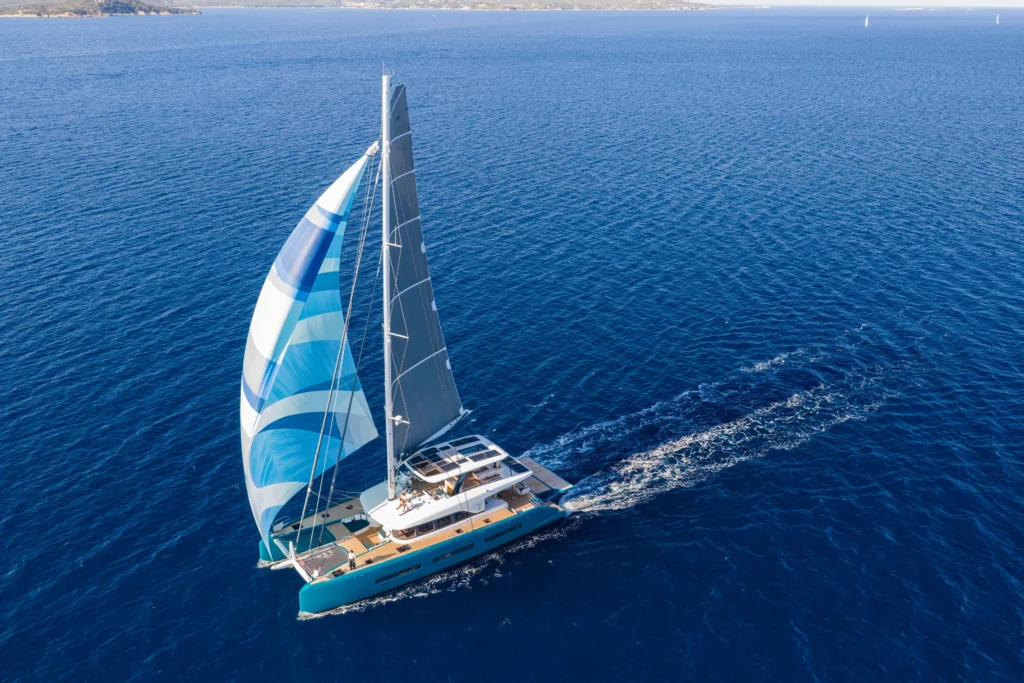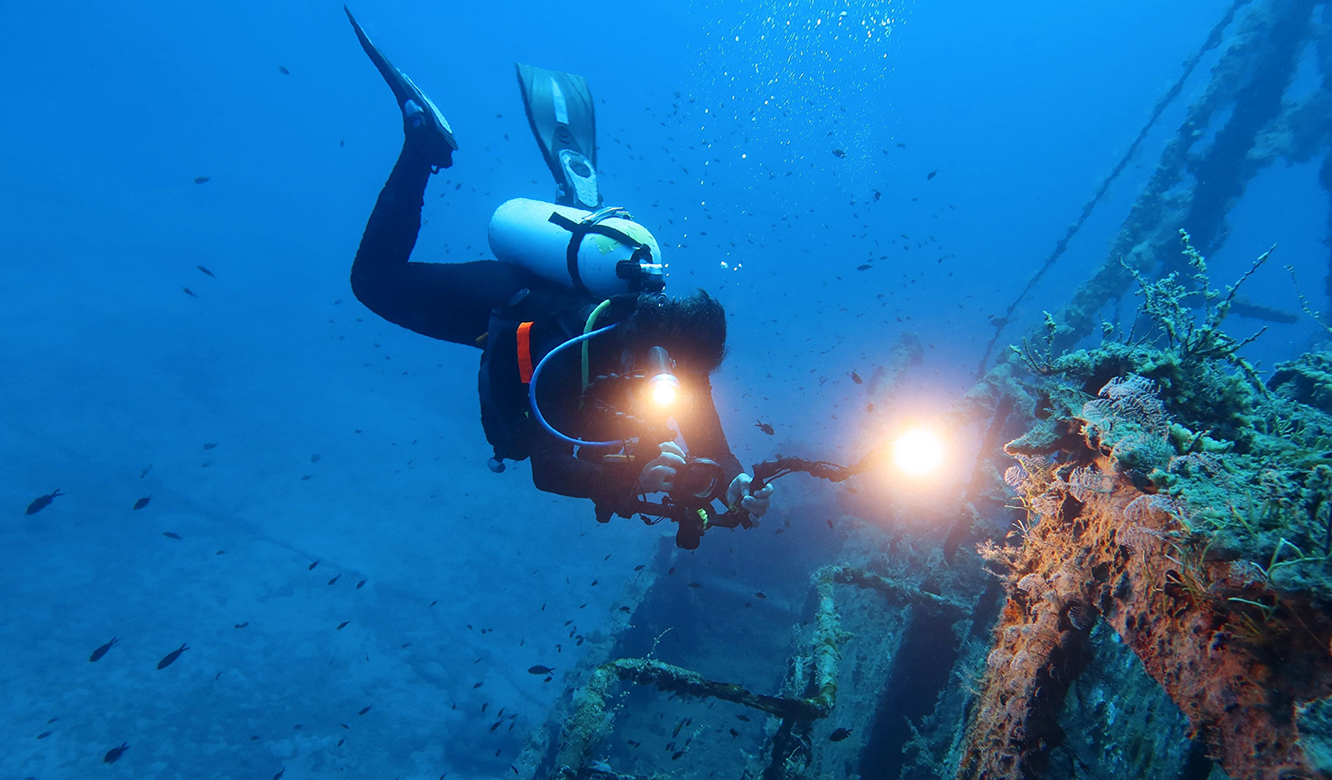
We carry a 300-bar diving compressor aboard, fitted with both DIN and international connections. Every dive we make in the Mediterranean is organised from the boat, on our own schedule, at the site we choose, without depending on a dive centre ashore.
That changes what is possible. It means we arrive at a wreck at six in the morning before the day-trip boats show up. It means we can make two dives on the same site in the same day when it deserves it. It means the wrecks that are too far from a shore operation, or too awkward to access by rib from a beach, are simply part of our route rather than exceptions to it.
The Mediterranean has more shipwrecks per square mile than almost any other sea on earth. Thousands of years of maritime trade, two world wars, and the particular misfortune of being a sea ringed by coastlines that have always been at war with each other have left an extraordinary archive beneath the surface. What follows is our list of the wrecks we return to, written for experienced divers rather than beginners, with the depth, character, and diving logistics of each.
Malta: The Best Wreck Diving in the Mediterranean, Full Stop
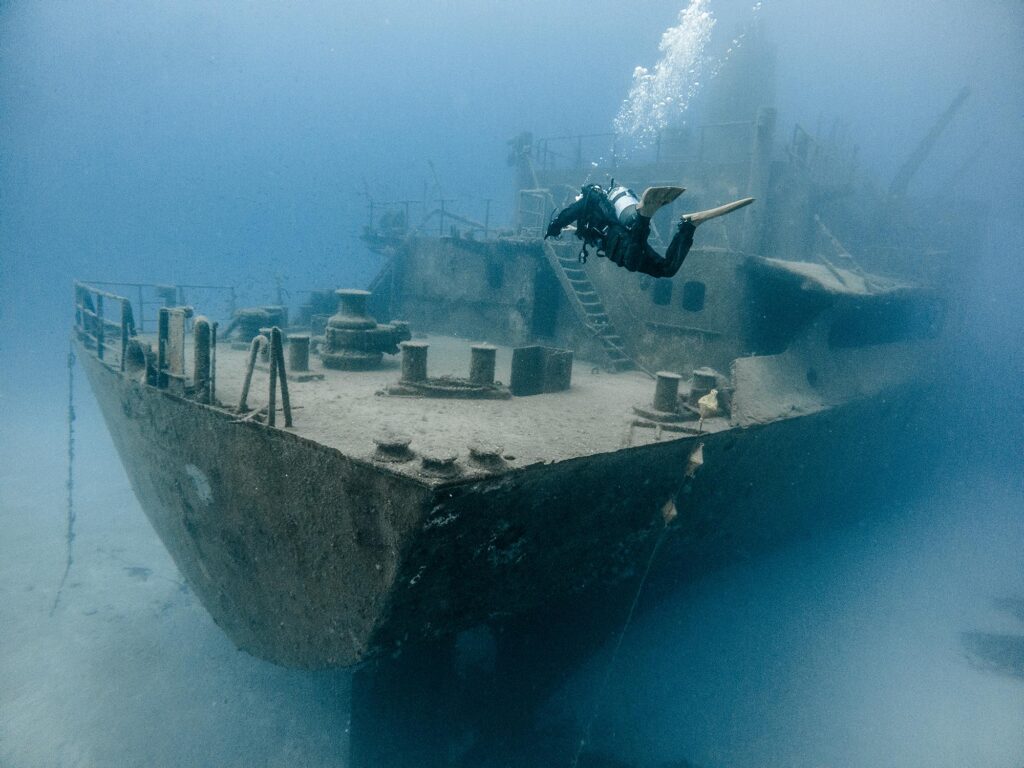
Malta is the wreck diving capital of the Mediterranean and it is not close. The island sits at the crossroads of every naval campaign that was ever fought in these waters, which means the seabed around it is littered with the results. More than a hundred wrecks have been identified around Malta and Gozo, ranging from accessible shallow sites for all levels to deep technical dives that rank among the most demanding in the world. We spend significant time here on every Mediterranean season, and we approach it with the compressor running.
The Um El Faroud is our first choice for a serious wreck dive in Maltese waters. A 10,000-tonne oil tanker, 115 metres long, scuttled in 1998 off Malta’s southern coast after a gas explosion killed nine workers during a refit. It sits upright on a sandy bottom with the top of the wreck at around 18 metres and the keel at 36 metres. The penetration options are extensive, the marine life is exceptional, and the sheer scale of the structure demands multiple dives to do it properly. From the boat, we anchor above the site and descend the shot line to the deck. Maximum depth is accessible on standard air, which means no gas logistics that cannot be handled from our own compressor.
The HMS Maori, a WWII Tribal-class destroyer lying in St. Elmo Bay at just 14 to 16 metres, is a different kind of dive entirely. Shallow, historically significant, and densely populated with marine life. The Maori was bombed by German aircraft in 1942 while at anchor in Valletta’s Grand Harbour. The forward section was later scuttled at its current location. Gun mounting bases, broken superstructure, and the particular atmosphere of a warship that fought in the hunt for the Bismarck before ending up here. The shallow depth makes it a good first dive of the day before moving to deeper sites, and the marine density, octopuses, moray eels, scorpionfish everywhere, rewards the photographer.
For technical divers in the group, the HMS Stubborn off Qawra Point sits upright at 57 metres, a 66-metre S-class submarine in extraordinary condition. Conning tower, torpedo tubes, three open escape hatches. This is a trimix dive. We plan it from the boat with the appropriate gas mix, and it is one of the dives that justifies the compressor capacity we carry.
Cyprus: The Zenobia
The MS Zenobia off Larnaca is consistently voted one of the best wreck dives in the world, not just in the Mediterranean. A 172-metre Swedish roll-on roll-off ferry that sank on its maiden voyage in 1980 after computer ballasting failures caused progressive listing that could not be corrected. The ship now lies on its port side in 42 metres of water, 1.6 kilometres from the Larnaca shore, with the top of the starboard hull accessible at around 16 metres.
What makes the Zenobia extraordinary is the cargo. More than a hundred trucks, still lashed to the vehicle decks, now lying sideways on the seabed or stacked against the interior hull. Volvos and DAFs with their loads still in place, barnacled and colonised by soft corals but entirely recognisable. The penetration routes through the vehicle decks, the accommodation spaces, and the engine room are well-established and offer guided progression from straightforward to genuinely challenging. Visibility is excellent. Current is minimal. The wreck can absorb multiple dive days without repeating itself.
We anchor close to the site, drop our divers by tender to the shot line, and run two dives in the day. The second dive, typically into the deeper cargo sections and toward the engine room, is planned with more conservative profiles given the penetration requirements. This is the kind of site where having your own compressor and your own gas planning discipline makes the difference between a good visit and a thorough one.
Croatia: The Adriatic’s Hidden Archive
Croatia has more documented WWII wrecks in its waters than most people realise, and the combination of relatively cool, clear Adriatic water and the protection of the islands means many of them are in excellent condition.
The B-17 Flying Fortress off the island of Vis is one of the most memorable dives in the Adriatic. An American bomber that went down in 1944, lying at around 66 metres on the sandy bottom south of Vis. The aircraft is largely intact: fuselage, engines, gun turrets. A technical dive requiring appropriate gas planning, but one of those sites where the descent reveals something that genuinely takes a moment to process. The scale of the aircraft and the clarity of the Adriatic make it one of the more surreal dives we have made in the Mediterranean.
The Taranto wreck near the island of Premuda is a large Italian merchant vessel from WWII lying at 40 to 55 metres, offering extensive penetration in good condition. The Adriatic here is often cooler than the central Mediterranean, which suppresses marine growth and keeps the visibility exceptional. We treat this as a dedicated dive day, anchoring close and making one deep planned dive followed by a shallower decompression dive to complete the day.
What the Compressor Changes in Croatian Waters
Many of Croatia’s best wreck sites are offshore, away from the main island chains and not served by regular dive centre operations. Getting to them requires either a liveaboard or exactly the kind of self-sufficient diving platform that Naora represents.
We anchor above the site, brief the dive from the deck, kit up from the stern platform, and recover to the boat after the dive. There is no rib transfer, no waiting for a group, no dive guide whose schedule determines what you see. The compressor fills tanks overnight. The morning dive begins at first light. That is the only way to do these sites properly.
Greece: Wrecks with Three Thousand Years of History Behind Them
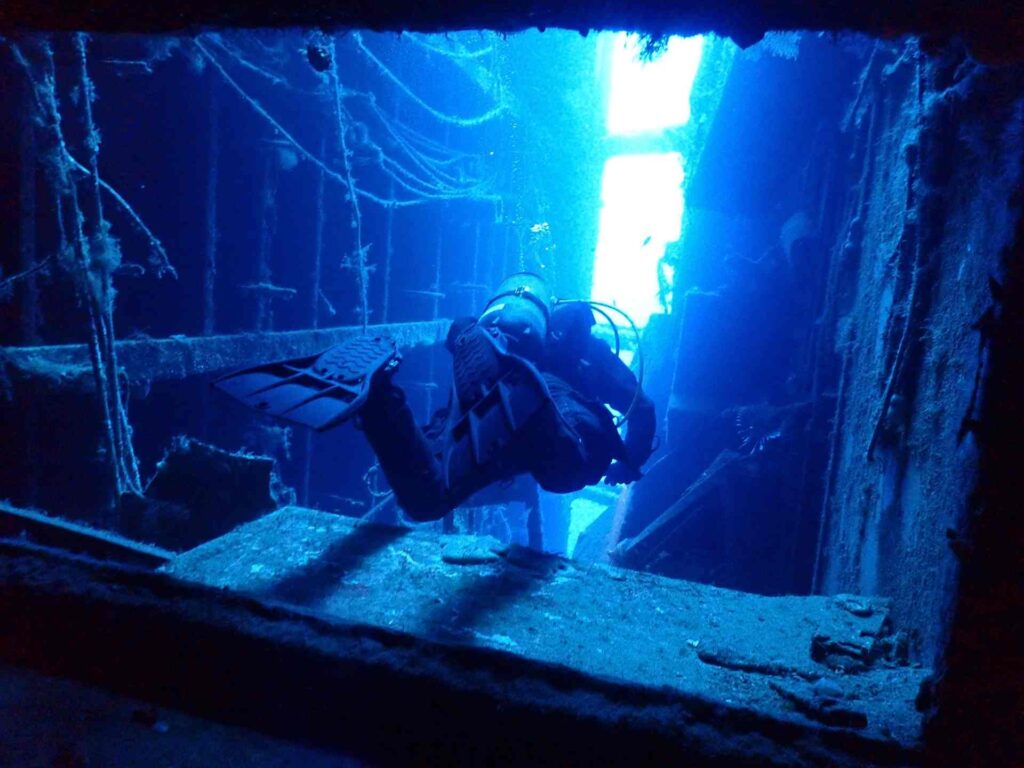
Greece has a specific quality to its wreck diving that no other Mediterranean country matches: the sheer age range of what is down there. Roman amphorae fields at 30 metres alongside Ottoman cargo vessels alongside WWII aircraft alongside Byzantine merchantmen. The Aegean has been a trade route for longer than most civilisations have existed, and the density of historical material on the seabed reflects that.
The HMHS Britannic off Kea Island is, technically, accessible from the Naora route through the Aegean, but it belongs in a separate category: 272 metres of ship lying at 120 metres on the seabed, accessible only to technical divers on CCR or fully planned open-circuit trimix with extensive decompression. It is the largest accessible shipwreck in the world. It is the sister ship of the Titanic. It sank in 1916 after striking a mine. Our captain, Sven, with more than 2,700 dives behind him, considers this one of the most significant dives in the Mediterranean. For the technically qualified divers aboard Naora who wish to attempt it, the dive requires meticulous planning, appropriate certification, and the kind of preparation that we take seriously. It is not an everyday dive. It is a once-in-a-season dive, when everything is right.
At more accessible depths, the waters around Kas in Turkey (easily reached from our Bodrum base) offer Roman amphorae at 30 to 50 metres alongside aircraft wrecks and Ottoman vessels. The visibility here frequently reaches 30 to 40 metres. We make multiple dive days in this area on every Turkish coast passage and the variety of the sites, from shallow amphorae fields to deeper structural wrecks, means the compressor is running every evening to prepare for the next morning.
Our Wreck Dive Reference: Key Sites by Region and Depth
For planning purposes, here are the wreck sites we return to most often, organised by region with the key diving information for each.
| Wreck | Location | Max Depth | Type | Level |
|---|---|---|---|---|
| Um El Faroud | Malta, south coast | 36m | Oil tanker, 115m, scuttled 1998 | Advanced recreational |
| HMS Maori | Malta, St. Elmo Bay | 16m | WWII destroyer, broken forward section | All levels, excellent for photography |
| HMS Stubborn | Malta, Qawra Point | 57m | WWII submarine, intact | Technical, trimix required |
| MS Zenobia | Cyprus, Larnaca | 42m | Roll-on ferry, 172m, trucks still aboard | Advanced recreational to technical |
| B-17 Flying Fortress | Croatia, south of Vis | 66m | WWII American bomber, largely intact | Technical, planned gas required |
| HMHS Britannic | Greece, Kea Island | 120m | WWI hospital ship, 272m, Titanic sister | Technical CCR or trimix, elite level |
| Roman amphorae fields, Kas | Turkey, Aegean coast | 30 to 50m | Ancient wreck sites, amphorae scattered | Advanced recreational |
| Le Rubis submarine | France, Var coast | 40m | WWII submarine, scuttled 1958, largely intact | Advanced recreational |
How We Dive
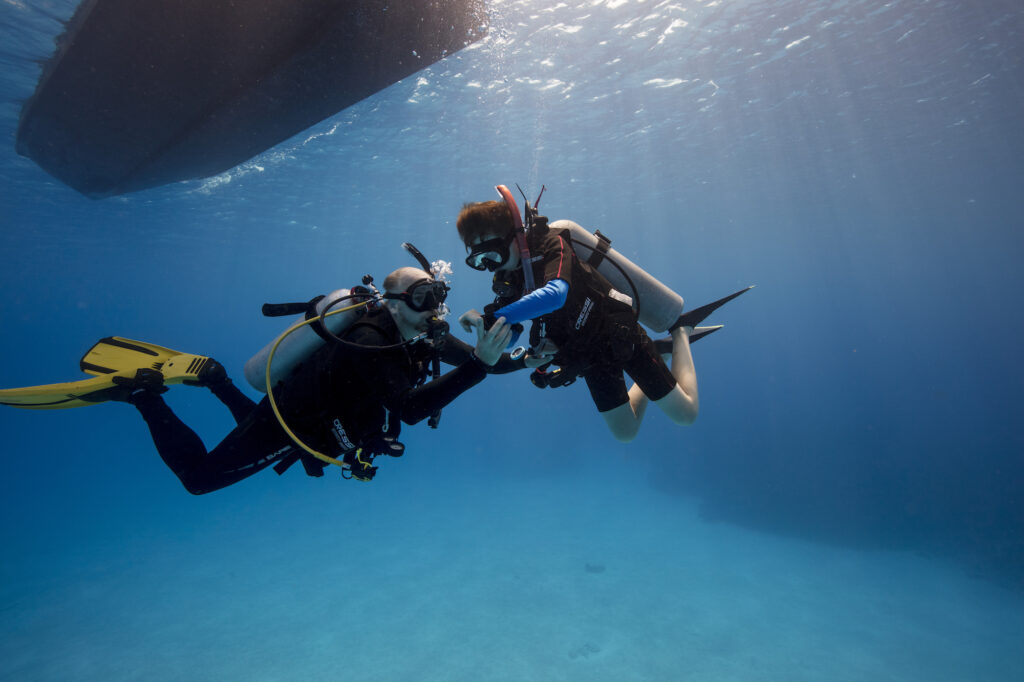
The 300-bar compressor with DIN and international connections means we are completely independent from shore-based dive operations for the entire season. Tanks are filled from the boat. Gas planning for technical dives is managed from the boat. Entry and exit from the stern dive platform. The tender is used for surface cover and for getting divers to shot lines on offshore sites.
We dive with full dive briefings before each site, conservative profiles suited to the conditions, and surface cover for every dive. For the technical sites, we plan decompression schedules in advance and carry appropriate stage gas. The diving with Naora is serious, self-organised, and managed to the same standard as the sailing.
Members who dive with us are expected to have appropriate certification for the sites they intend to dive. Recreational divers join the shallower sites. Technically certified divers can access the full list above. For members who want to improve their skills or extend their certification during the season, the time at anchor in quiet bays provides exactly the right environment for training dives.