There is one sailing passage that, above all others, represents the crossing from one kind of life to another. The Atlantic passage from the Canary Islands to the Caribbean has been made by thousands of sailors, in every kind of vessel, over five centuries of ocean crossing. Columbus did it in 1492 on the northeast trade wind and changed the history of the world. Today, several hundred sailing boats make it each year between November and January, most of them carrying people for whom it is the most ambitious sailing they will ever do.
For Naora, it is one of the four major ocean crossings of the five-year circumnavigation, and it is the first one. The passage that establishes the rhythm, the vocabulary, the community dynamic, and the quality of presence that define everything that follows. What you learn on the Atlantic crossing, you carry across the Pacific.
The Departure from the Canaries
We leave from the Canary Islands in late November or early December. The timing is specific: late enough to be clear of the main Atlantic hurricane season, which officially ends on November 30th, and early enough to catch the northeast trade wind at its most established and reliable before the northern winter pushes the wind systems southward.
Las Palmas de Gran Canaria is the traditional departure point for the ARC, the Atlantic Rally for Cruisers, which leaves each November and gathers several hundred boats in a loose convoy across the ocean. We are not part of the ARC. We choose our own departure window based on the specific weather pattern rather than a fixed calendar date, which typically means leaving a few days before or after the main fleet when the synoptic situation is most favourable. The difference between leaving in a good weather window and leaving on a fixed date regardless of conditions can be several days of time and several hundred miles of routing.
The departure from the Canaries is a specific moment. The harbour entrance, the turn to the southwest, the islands receding behind the stern and the open Atlantic ahead. Most members who are crossing an ocean for the first time describe this moment, rather than the landfall three weeks later, as the one that stays sharpest in memory. Not because it is dramatic. Because it is irreversible. The boat is going. The coast is behind. The trade wind is in the sails.
The Passage: 2,700 Miles on the Trade Wind
The passage from the Canaries to the Caribbean is approximately 2,700 nautical miles. At a comfortable passage-making speed of seven knots, that is 385 hours of sailing, or 16 days. In practice, most Atlantic crossings take between 17 and 22 days, accounting for variable wind speeds, routing adjustments, and the occasional day of lighter conditions near the Cape Verde Islands before the northeast trade establishes itself properly.
The route takes us southeast from the Canaries before turning west, dipping below the latitude of the Cape Verde Islands to pick up the trade wind belt at its most reliable. The temptation to head directly west from the Canaries is something Sven resists consistently: the direct route is shorter in miles but longer in time, because the trade wind is stronger and more consistent fifty miles further south. Going south to go west is one of the counterintuitive lessons of Atlantic routing that experience teaches and pure distance calculation does not.
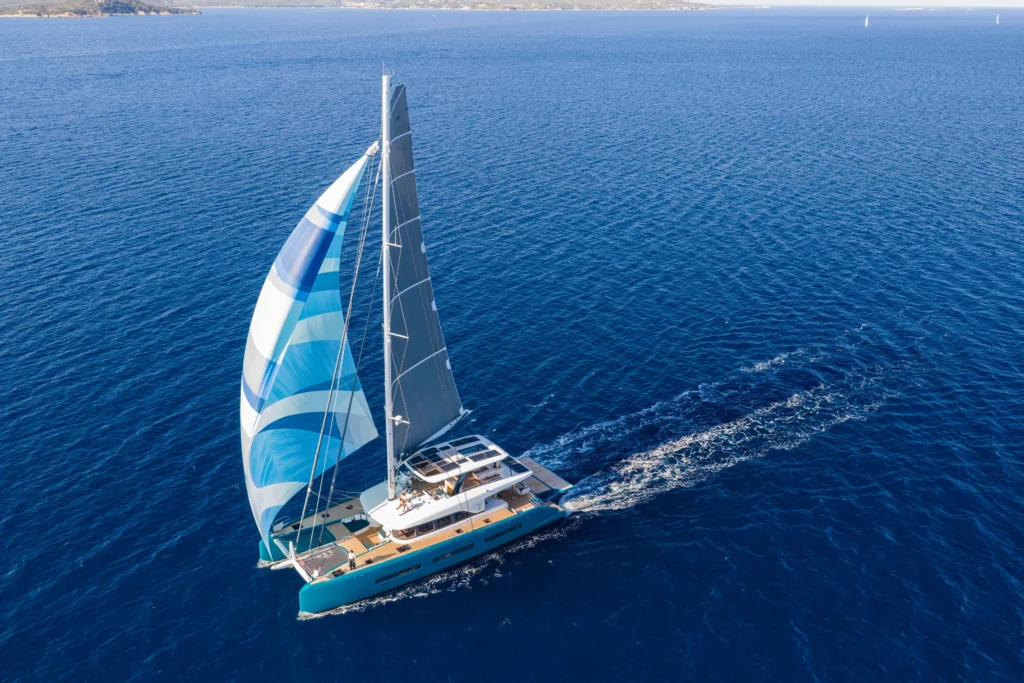
Once in the trade wind belt, the passage settles into its rhythm. The wind is between 15 and 20 knots from the northeast. The boat runs on the starboard tack with the wind in the aft quarter. The swell is regular and following. The days are warm and the nights are bright. The fishing line produces regularly. The watch rotation becomes habit. By day five, most members have stopped counting the days.
The Middle of the Ocean
At roughly the midpoint of the crossing, there is a moment of pure geographical isolation that most people have never experienced in any other context. The nearest land in any direction is several days sailing away. The nearest ship, typically, is the vessel on the AIS display that is twenty or thirty miles away and moving in the same general direction. There is nothing between you and the horizon in any direction except water.
Members describe this midpoint differently. Some find it clarifying: a physical expression of the separation from everything else that has been building since departure. Some find it mildly vertiginous, a visceral understanding of scale that the map does not produce. Most find it, after a day or two of processing, deeply peaceful. The middle of the ocean is not frightening when you are on a well-found vessel with an experienced crew and the right conditions. It is one of the quietest places available.
The Landfall
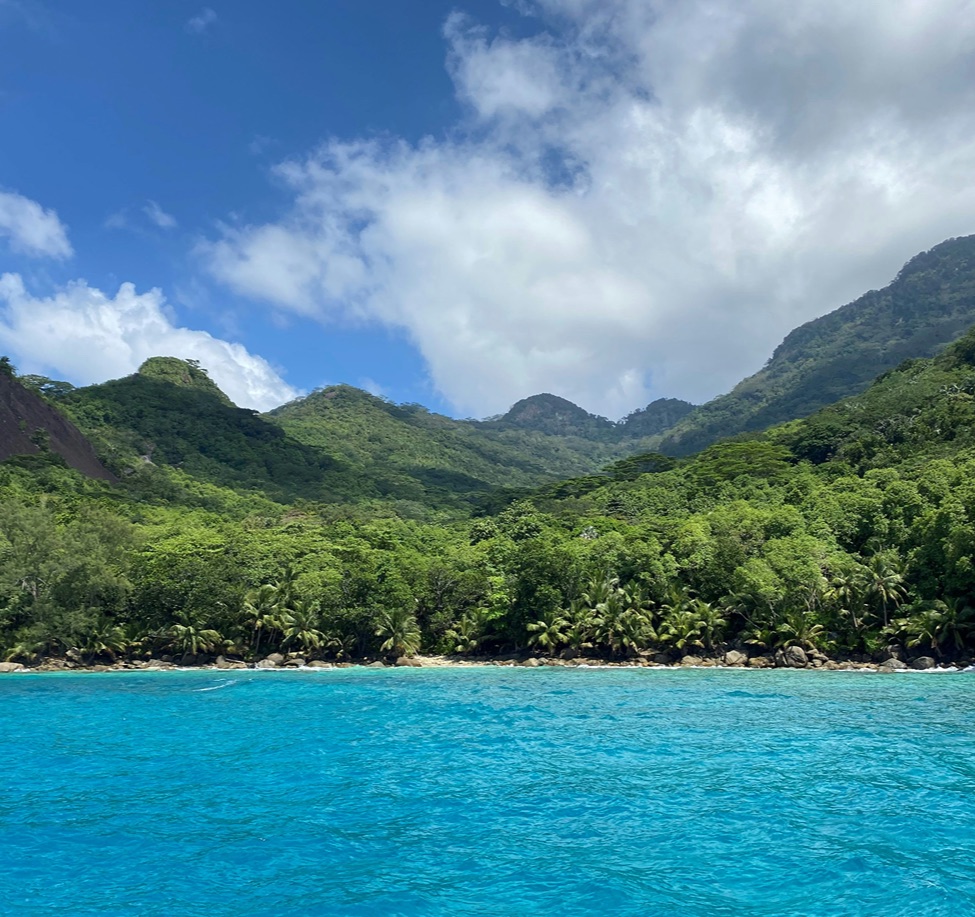
Martinique or St. Lucia, depending on the specific routing. The first sign of land is usually a cloud formation: in the tropics, cumulus builds over islands during the day as the heated land creates convection. A specific, stationary cloud on an otherwise clear horizon is land, seen hours before the land itself. Then the silhouette, dark against a sky that is lightening into the Caribbean sunrise. Then the smell: vegetation, soil, the specific tropical richness that is entirely absent from three weeks of sea air.
The anchor goes down in the first sheltered bay. The swell stops. The boat is still. And the twenty days that just happened are simultaneously immediate in memory and entirely improbable in retrospect. Most members who complete the Atlantic crossing describe the 48 hours after landfall as one of the strangest transitions they have experienced: the sudden stillness, the colour of the Caribbean water, the sound of birdsong, and the specific quality of having crossed an ocean and arrived somewhere completely different on the other side.
| Stage | Detail |
|---|---|
| Departure point | Las Palmas, Gran Canaria or Santa Cruz, Tenerife; late November to early December |
| Initial routing | Southeast to pick up the trade wind belt below Cape Verde latitude before turning west |
| Trade wind passage | 15 to 20 knots from the northeast; boat on starboard tack; 17 to 22 days typical duration |
| Distance | Approximately 2,700 nautical miles to Martinique or St. Lucia |
| Midpoint character | Furthest from land in any direction; deepest isolation; typically the most peaceful days of the crossing |
| Landfall | Cloud formation first, then silhouette, then smell; anchor in first sheltered Caribbean bay |