A small swell lifts the kayak beneath your hips, pauses, then lowers it again. From the yacht, the same movement can be almost invisible. SUP and kayak in the Marquesas begin with this difference: the anchorage that looked still from the deck becomes a living surface when the body is close enough to register it. There is the faint pull beneath the hull, the sound of a blade leaving the water, the need to make a small correction before taking the next stroke.
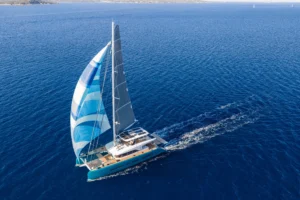
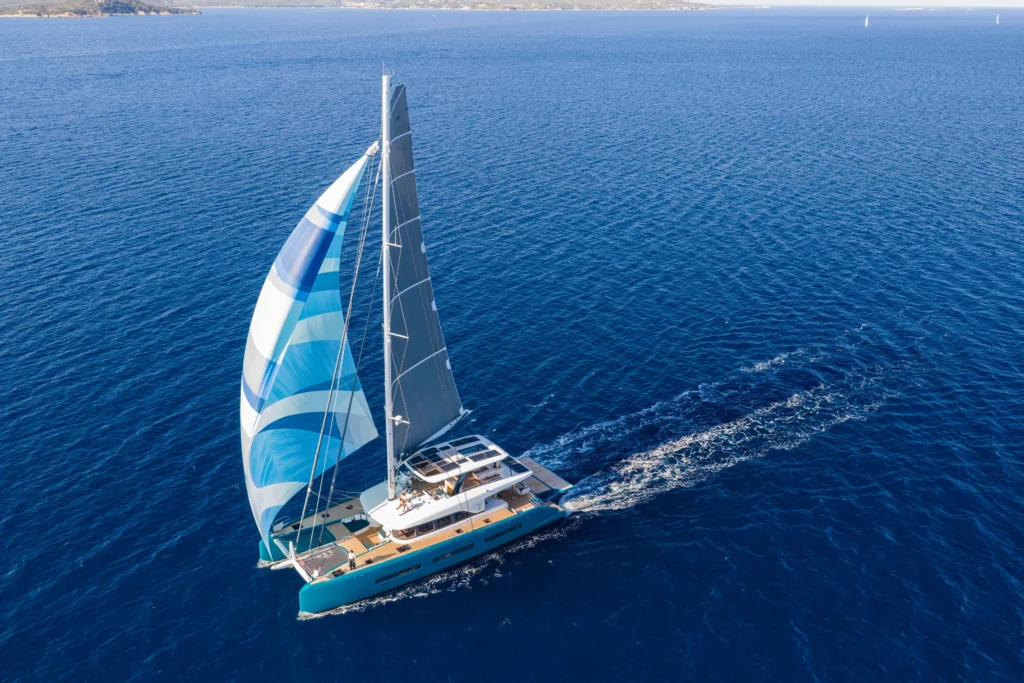
Discovery, the Lagoon Eighty2 sailing the Naora Global Expedition, gives us a comfortable place from which to look at a coast. A paddle changes the relationship. The cliffs cease to be a backdrop and become rock meeting water, with everything that happens along that boundary suddenly worth our attention. Getting closer does not necessarily mean paddling nearer the cliff. Often it means slowing down enough to understand what we are already seeing.
Shelter For SUP And Kayak In The Marquesas
The first distinction is geographical. The Marquesas are high volcanic islands, generally without the encircling barrier reefs that shelter lagoons elsewhere in French Polynesia. Coral is present, but we should not arrive expecting a continuous reef to remove the ocean swell before it reaches the anchorage. A bay may offer useful shelter from the wind while remaining open to energy travelling from much farther away.
This matters because a good anchorage for Discovery is not automatically good paddling water. The yacht’s security depends on sufficient depth, suitable holding ground, room to swing and acceptable exposure. A paddler needs something additional: a manageable route in both directions, somewhere clear of traffic and obstacles, and a reliable way back aboard. The fact that the anchor is holding tells us very little about how easily someone will return on a board.
The prevailing east to southeast trade winds provide the broad pattern. Within a bay, steep terrain can interrupt it. A headland may create a patch of apparently sheltered water while a valley channels stronger gusts towards the shore. Beyond the point, the wind can be quite different from what reaches the yacht. Smooth water close aboard therefore deserves a second look at the bay entrance and the slopes behind it.
There is no dependable afternoon appointment with calm. We would not plan around the idea that the trade wind stops at a particular hour and resumes the following morning. A useful window is something we observe and assess against the forecast. It may arrive early, remain brief, or fail to arrive at all. Leaving the boards aboard on that last kind of day preserves the pleasure of using them on another.
What The Cliffs Do To The Water
A steep rock face can send part of an arriving wave back towards open water. Where incoming and reflected waves meet, the surface becomes confused, with little peaks and sideways movements that are difficult to read from above. The sound can be misleading too. A quiet wash against dark rock may become a heavy intake of water when a larger swell reaches the same indentation.
We watch several groups of waves rather than judging the coast during a convenient lull. The wet band above the water, foam moving in and out of a recess, and the height reached by successive surges all say something about the space a small craft needs. None gives permission to move within arm’s reach. Reflected water, submerged ledges and the possibility of falling rock are reasons to appreciate a cliff from a sensible distance.
A cave is particularly good at making distance disappear. From outside, the dark opening seems close and the water between looks uncomplicated. Inside, the room available can change with every surge, and turning around may become harder just when it matters most. For an unhurried anchorage paddle, there is no need to enter. Listening from clear water can reveal more than pushing into the opening would.
This is part of the attraction of the Marquesas at water level. The land has not been arranged into an easy shoreline. Its shape continues beneath the surface, sometimes abruptly, and the paddle lets us feel that relationship without needing to test its limits.
Choosing Between A Board And A Kayak
A standing paddler presents more body area to the wind than someone seated low in a kayak. That simple difference often decides the choice. On a genuinely quiet patch of water, a SUP offers an open view and the pleasure of balancing through small movements of the ankles and knees. As gusts build, those same exposed shoulders become a sail that the paddle has to work against.
A kayak usually offers a lower centre of gravity and less windage from the paddler, though it is not automatically safe in stronger conditions. Hull shape, the person’s experience and their ability to recover after a capsize all matter. We would rather choose the craft someone can control and reboard comfortably than the one that seems more adventurous from the deck.
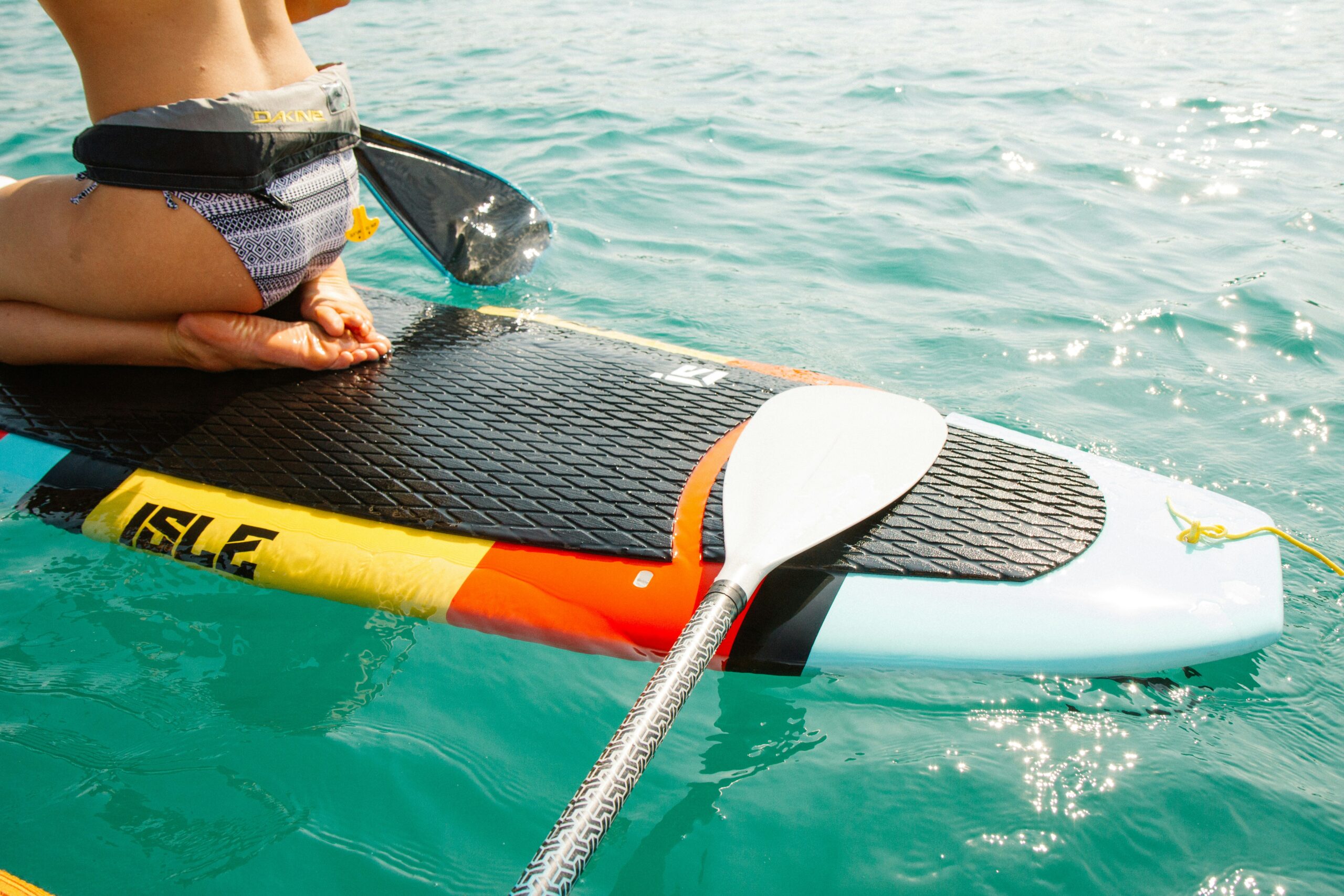
On a board, kneeling can reduce windage and make balance easier. It is a useful change of position, not a solution to an unsuitable outing. We want that option understood while the paddler is still close to Discovery, along with how to climb back onto the board. Discovering that reboarding is difficult after drifting away adds effort at precisely the wrong moment.
The connection to the board matters as much as the paddle. A board drifting at an illustrative speed of just 1 knot would travel about 31 metres in a minute. That is why a suitable SUP leash deserves proper attention, but its type and release arrangement must fit the environment and the risk of entanglement. It does not replace a correctly fitted buoyancy aid. For either craft, recovery should be understood before distance is added.
Planning SUP And Kayak In The Marquesas
Sven, Naora’s founder and captain, plans every weather window and sails every leg himself. The judgement behind an ocean passage also has a smaller, local application: looking beyond the pleasant conditions beside the hull and asking what could change before everyone is back. A short paddle does not require an elaborate expedition within the expedition. It does require agreement about where it goes and how it ends.
That agreement includes a visible boundary, a return time, who remains aware of the paddlers and how to signal for assistance. It also includes how assistance would actually reach them. Being able to see the yacht is reassuring, but a person low in the water may be much harder to spot from its deck, particularly against glare or a dark shoreline. A companion and a clear communication plan are more useful than vague confidence about being nearby.
Where the shoreline and conditions permit, we prefer to begin against the dominant wind or current, keeping the easier direction for the return. This is a preference, not a guarantee: wind can shift, and currents near a point may differ from those inside the bay. An unexpectedly effortless outward paddle is worth investigating. Sometimes the water is doing work that will have to be repaid.
The arithmetic is simple enough to keep in mind. A return of 0.5 Nm takes 15 minutes at 2 knots of progress over the ground, but 30 minutes at 1 knot. These are examples, not promised paddling speeds or suggested boundaries. They show why a modest reduction in progress can double the time needed to get home, even before fatigue enters the calculation.
Launching and returning need their own clear space. We do not assume that equipment should be lowered from a particular part of the yacht regardless of conditions. The crew selects a suitable boarding point, keeps the activity clear of propellers and loose lines, and coordinates any machinery use. The paddler needs to know where to wait on returning and when to approach. A quiet arrival alongside is easier when nobody is improvising the final few metres.
The View Below The Surface
Once the blade stops, small sounds become distinct. Water ticks from the paddle onto the board. A companion’s next stroke arrives across the surface before you turn to look. Standing, you feel a faint tremor in the calves as the board finds its balance beneath you; seated, you notice the same movement through the hips. The shore is still there, but it no longer occupies all your attention.
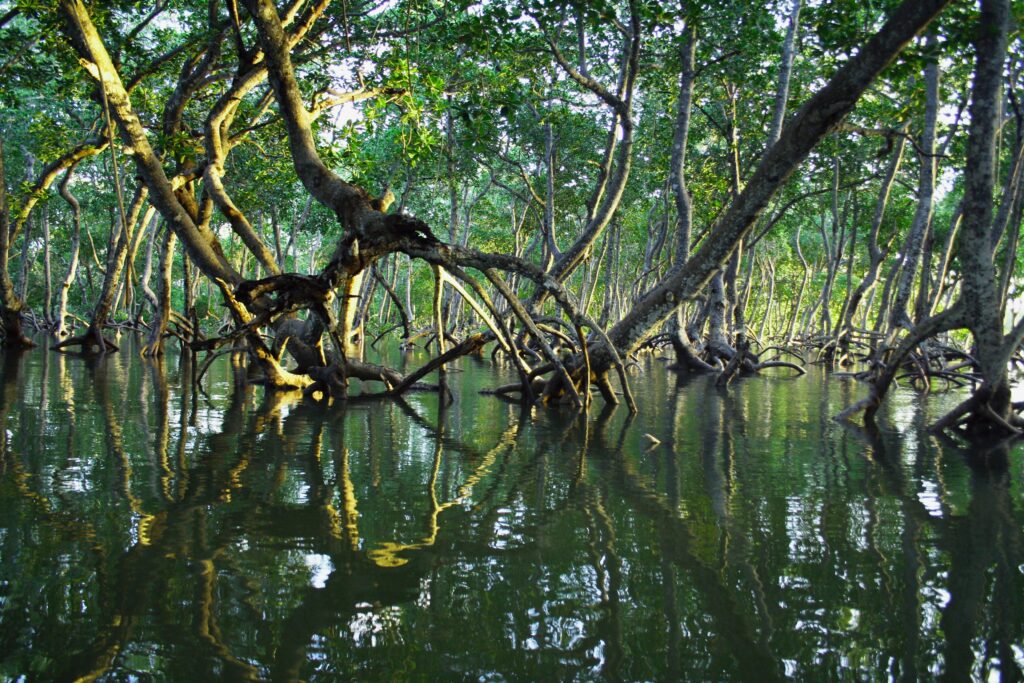
The view into the water is conditional. Glare, cloud cover, surface disturbance and suspended material decide how much is visible. Marquesan water should not be described as a permanently transparent window onto coral. Plankton can give it a greener cast, while rain and runoff can reduce visibility near shore. Murkiness alone is not a verdict on the health of a place, and clear water alone does not establish that it is safe to enter.
Where the bottom is visible, the useful habit is to look before crossing into shallower water. A darker patch might be rock, coral or simply a change in depth. The SUP fin needs clearance, as does the kayak beneath its hull. Neither a paddle blade nor a foot belongs on living coral. If we cannot distinguish the bottom well enough, we stay in water whose clearance is understood rather than using contact to find out.
The islands lie roughly between 8 and 11 degrees south of the equator. At those latitudes, sun protection remains relevant even during a gentle outing, and reflected light makes the feeling of coolness on the water deceptive. Drinking water, covered skin and a secured hat are ordinary preparations. They allow attention to remain with the coast rather than with thirst or the growing heat across the shoulders.
Approaching The Shore As A Guest
A beach viewed from a kayak can seem like an obvious place to pause. The landing still needs to be read. Swell that passes harmlessly beneath a craft offshore may steepen and break as the bottom shoals. A steep beach can produce a sharp shorebreak even when the bay behind it appears calm. Getting ashore is only half the decision. We also need a credible way to launch again.
There is no obligation to land. Sometimes the best choice is to remain outside the breaking water, turn slowly and see the island from a position that walking cannot offer. Paddling does not become more worthwhile because it ends with footprints on a beach.
Where a landing is suitable, access deserves the same care as the water. An apparently empty stretch of shore can lead directly into someone’s home, working space or cultivated land. We establish where landing is appropriate, keep access clear and ask before crossing private ground. Fishing boats, canoes and equipment drawn up above the water are part of daily life, not objects placed there for our interest.
The courtesy is uncomplicated. Greet before photographing. Ask before walking farther. Keep the craft out of the way of people using the shore. Arriving quietly by paddle may make a first encounter easier, but it confers no special right to privacy, land or attention. The coast belongs to a living place long before it becomes part of our day.
Returning To Discovery
The useful turning point often arrives before anyone feels tired. A few more corrective strokes, a darker band of ripples beyond the kayak, or the need to lean harder into the same heading can be enough. We prefer to respond while the return remains ordinary. There is little pleasure in discovering the exact limit of a paddler’s strength between the shore and the yacht.
Near Discovery, the scale changes again. The hull becomes tall, voices carry down from the deck, and the final approach calls for slower strokes rather than a last burst of effort. The agreed boarding point matters now. Paddles and craft need securing without leaving someone balanced awkwardly between moving surfaces. Once everyone is aboard, rinsing salt from equipment, checking fittings and putting things away properly are what make the next outing straightforward.
Members choose when they join Naora, where along the worldwide route they step aboard and how long they stay. Some may have a week with this part of the expedition; others may remain for a much longer stretch. Discovery continues around the world beyond any individual stay. Within that larger movement, a short paddle offers something deliberately small: time to become familiar with the water immediately around us, without adding another destination to the day.
There need be no circuit completed and no distance worth recording. After the paddle has been rinsed and put away, the dark line at the foot of the cliff remains visible from the deck. The water lifts against it and falls away. There is no reason yet to go below.