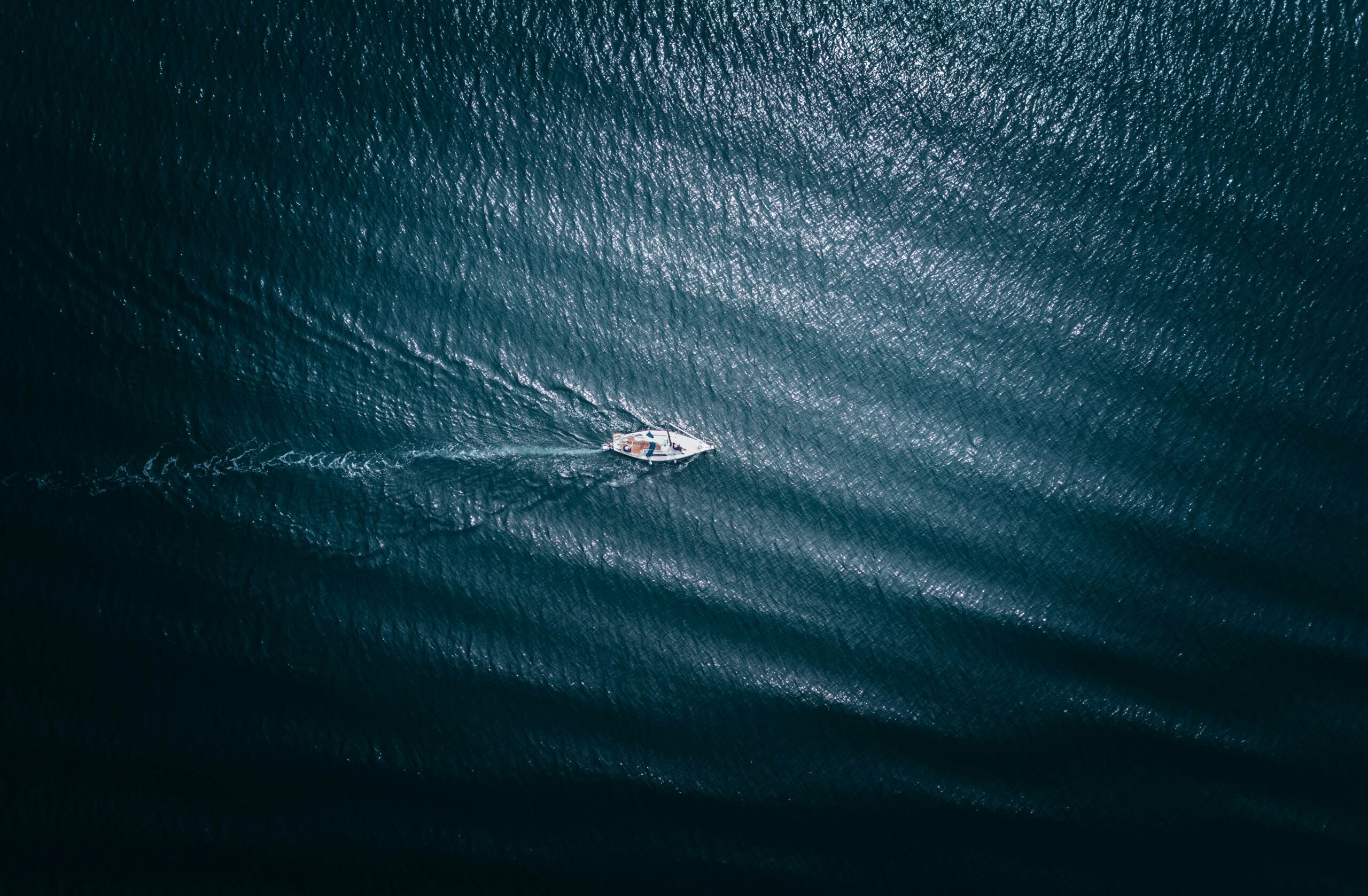
I have sailed alone. Not as a practice, not as a lifestyle, but as something that happened in the years before Naora when the opportunity arose and the boat was available and the passage seemed worth making alone rather than waiting for the right moment to make it with someone else. A handful of offshore passages, single-handed, that were among the most instructive experiences of my sailing life.
I want to be clear at the outset that Naora is not a solo operation and never will be. The Eighty2 requires a professional crew and carries ten to twelve members, and the safety and quality of the experience depends on that structure. What I am writing about is something separate: the solo passages from my earlier years and what they taught me about the sea, about myself, and about what sailing with other people actually means when you understand what the alternative is.
The First Night Alone
The first night of a solo passage is unlike any night on a crewed boat. When you go below to sleep, even for an hour, the boat is entirely your responsibility and there is nobody to share that responsibility with. The alarm wakes you every twenty minutes, you go on deck, scan the horizon, check the instruments, go back below. You do this all night. By the second or third night, the body has adapted to the fragmented sleep and the routine has become automatic, and you can close your eyes for twenty minutes and wake to the alarm without the disorientation that characterised the first night. But the first night is long.
What the solo night watch gives you, that the crewed watch does not, is total solitude. Not the pleasant solitude of a watch where the next person is sleeping comfortably below. True solitude: there is nobody below. The voice you hear, if any, is the wind. The decisions are entirely yours and they are entirely about the boat because the boat is entirely your responsibility and there is no one to share it with. This concentrating of responsibility produces a quality of focus that crewed sailing, with its distributed responsibility, does not generate in the same way.
What the Sea Tells You When You Are Alone
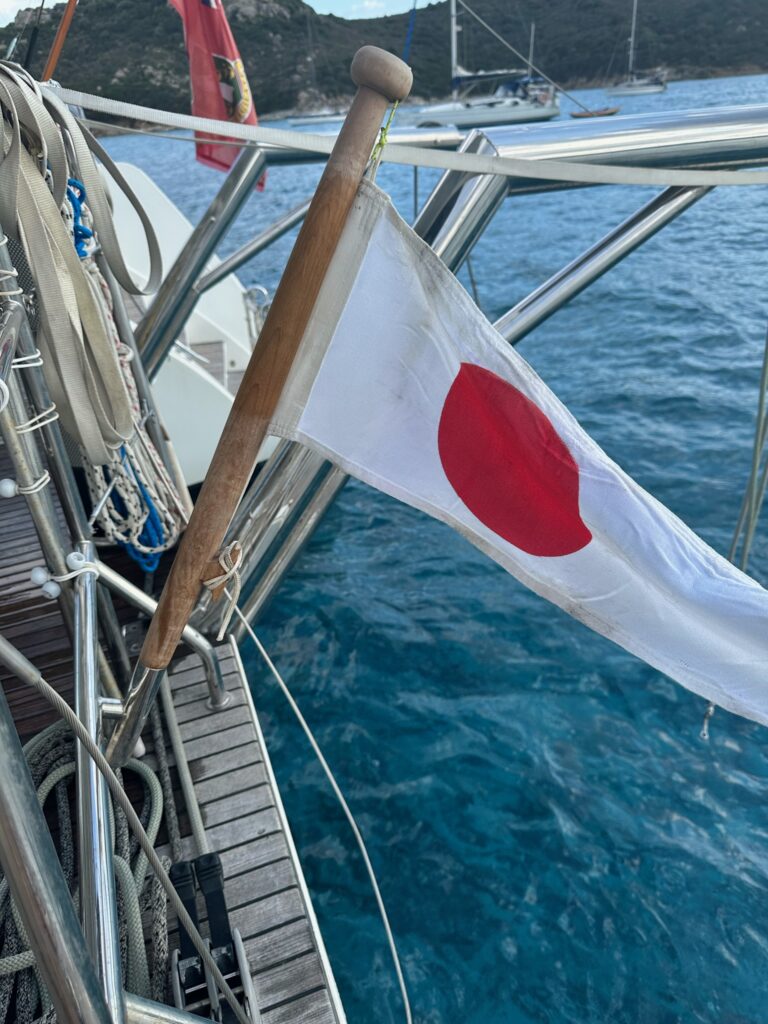
When there is nobody else on the boat, the relationship between the sailor and the sea becomes direct in a way that the presence of other people inevitably mediates. On a crewed passage, the conversation and the watch rotation and the shared meals and the presence of other human beings create a social layer between the sailor and the ocean. The ocean is always there, but it is not the only thing there. Alone, it is the only thing there.
What the sea tells you when you are alone is primarily what it tells any sailor, but without the filter of social context. The swell pattern that suggests a distant disturbance. The colour of the water changing as the depth decreases over a shelf. The wind shift that preceded the squall by twenty minutes and that, with other people aboard, might have been noticed and not remarked upon.
Alone, these things are not filtered. They go directly from the environment to the decision-maker and they produce a quality of attentiveness that I found genuinely surprising the first time I experienced it. The sea is a rich source of information and it communicates continuously. Alone, you have no choice but to receive what it is saying.
What You Find Out About Yourself
Solo sailing is one of the most accurate mirrors I know. Not because it is designed to be one, but because the conditions it creates strip away the usual cushions between a person and an honest assessment of themselves. When you are afraid on a solo passage, there is nobody to be courageous for.
The fear is simply there, in its actual size, without the social performance of managing it. When you are exhausted, there is nobody to take the next watch. The exhaustion is simply there and you manage it or you do not. When the decision is wrong and the consequences arrive, they arrive entirely on you.
I found out things about my own competence on solo passages that I could not have found out any other way. Specifically, I found out where my competence was solid and where it was borrowed from the presence of other people. The navigation that I thought I understood turned out, alone, to be something I understood better than I thought.
The sail handling that felt natural on a crewed boat turned out, alone at night in thirty knots of wind with no one to help, to require a level of physical problem-solving that I had not previously tested. Both discoveries were useful. The first was reassuring. The second was instructive in the specific way that discovering your limitations is instructive when there is no option but to work through them.
What Solo Sailing Taught Me About Sailing With Others
The most valuable thing that solo sailing taught me was not about sailing alone. It was about sailing with other people. Having experienced the full weight of offshore responsibility alone, I understood for the first time what it means to distribute that weight across a crew.
The competent mate who handles the night watch without needing to be told what to watch for. The crew member who sees the chafe on the sheet before I do and addresses it without being asked.