The Coral Triangle is the area of ocean bounded by the Philippines to the north, Papua New Guinea to the east, and Indonesia to the south and west. It contains the highest marine biodiversity on earth: more coral species, more fish species, more invertebrate species than any other equivalent area of ocean.
The comparison with the rest of the world’s reef systems is not marginal: the Coral Triangle contains approximately 76 percent of all known coral species and over 3,000 species of reef fish. The nearest rival, the coral reefs of the Hawaiian archipelago, contains perhaps 400 fish species.
The reason for this extraordinary concentration of biodiversity is geological: the Coral Triangle sits at the intersection of three major ocean basins and has been the centre of reef evolution for millions of years, providing the stable reef environments in which new species could diversify and the connections between ocean basins through which species could spread.
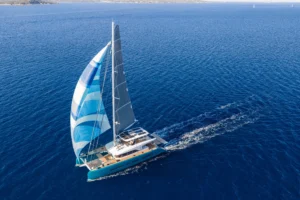
The Naora route passes through the heart of this system: the Indonesian archipelago from Banda Neira through Komodo to Bali and Lombok is the most biodiverse section of the most biodiverse marine region on earth.
What Snorkeling Here Shows
The specific quality of snorkeling in the Coral Triangle is the density: the number of species visible in a single glance at a healthy reef is greater than the number visible in a full tank of air at most other reef destinations. The concept of a representative species list for a Coral Triangle reef does not really exist because the list would be too long to be informative.
What is visible on a single snorkel session in a healthy bay in the Banda Sea includes: multiple species of butterflyfish, multiple species of angelfish, multiple species of damselfish, parrotfish in several colour phases, surgeonfish, triggerfish, wrasse in a dozen species, lionfish in the coral, stonefish on the sandy patches between coral heads, blue-ringed octopus if the conditions and the search effort permit, and, in the water column above the reef, the occasional pass of a school of fish in the hundreds of thousands that the Coral Triangle produces in a way that no other reef system replicates.
The blue-ringed octopus deserves a specific note because it is the most venomous cephalopod in the world and because it is more common in the Coral Triangle shallows than most snorkellers realise. It is small, typically five to eight centimetres in mantle length, and its rings are not always blue: they flash blue only when the animal is disturbed or threatened.
The correct approach is the approach appropriate for any marine animal in a protected environment: do not touch, observe from a distance that does not cause a stress response, appreciate what you are seeing from the specific position of someone who is present in an environment that produced this animal rather than collecting it for an aquarium.
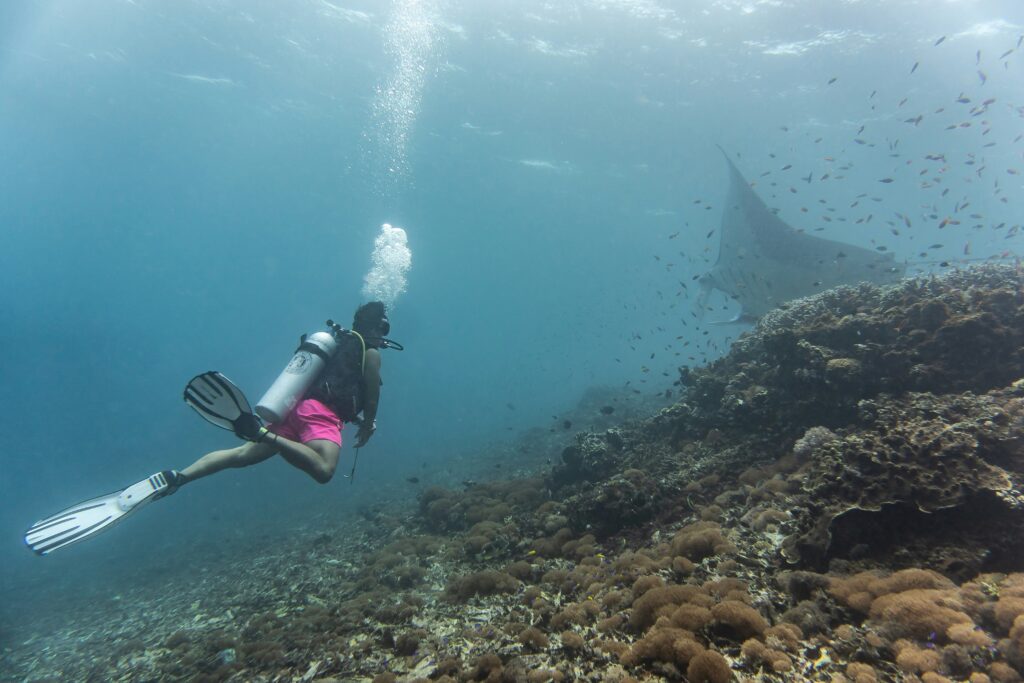
Komodo
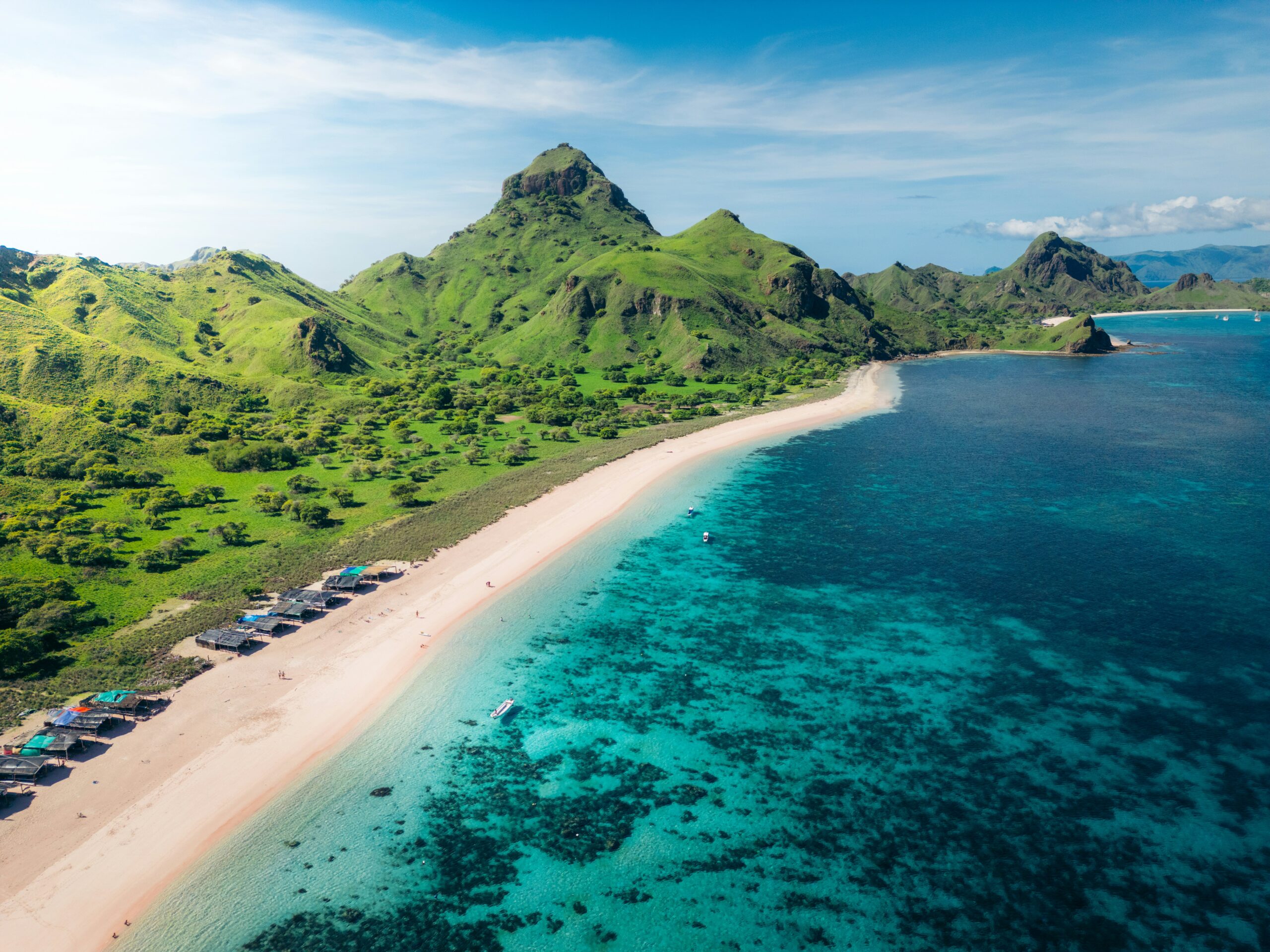
The Komodo National Park, which encompasses the islands and marine waters surrounding Komodo and Rinca and several smaller islands in the eastern Lesser Sunda Islands, is one of the most productive marine environments in the Coral Triangle. The park sits at a point where cold upwellings from the deep ocean floor bring nutrient-rich water to the surface, producing a phytoplankton bloom that supports a food chain of extraordinary density from the smallest planktonic organisms to the manta rays and whale sharks that feed on them.
Snorkeling in the Komodo National Park is an experience that often exceeds what the famous dragons on land have prepared visitors for: the underwater park contains more wildlife per square metre than any comparably sized terrestrial park, and it is visible without the managed observation conditions that the dragon visits require. The manta rays at the cleaning stations in the Komodo waters are reliable encounters. The schools of fish at the current sites, often so dense that the individual fish are indistinguishable and the school moves as a single organism, are encounters with the ocean’s capacity for biological production that no aquarium and no documentary fully prepares you for