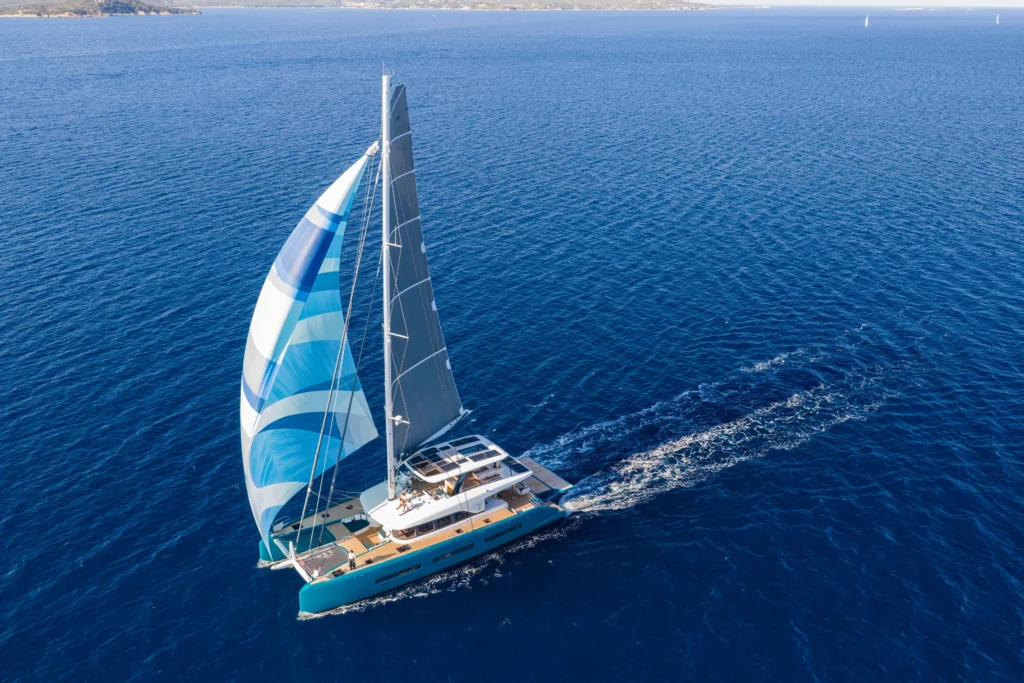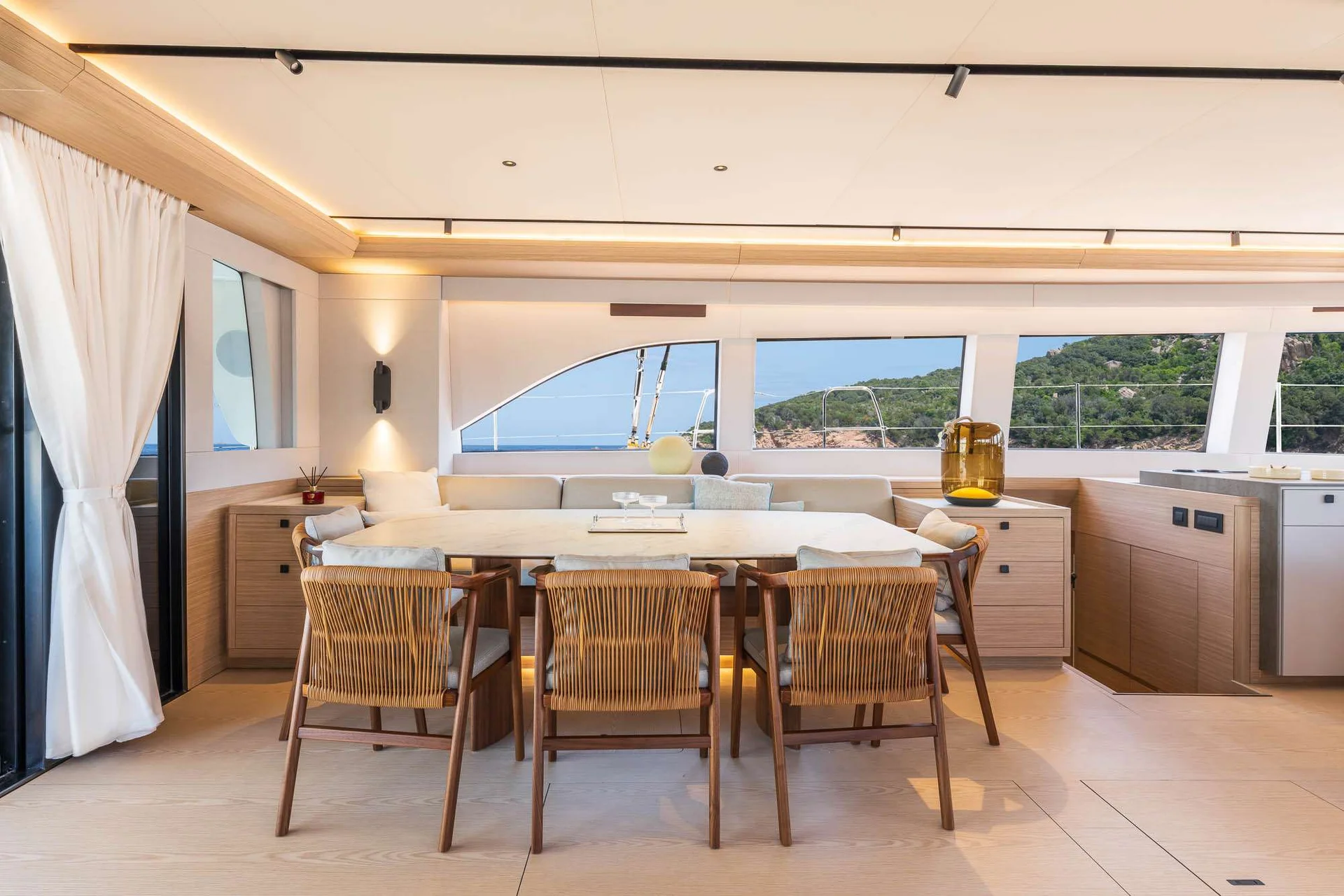
The sleep quality aboard the Eighty2 is one of the things members mention most consistently and most specifically when they describe the voyage. Not as a secondary benefit, not as a pleasant side effect of the fresh air and the exercise, but as a primary experience in itself: a quality of sleep that most people have not had since childhood, or perhaps not since the last time they were on a boat, or perhaps genuinely never before in a form this specific and this restorative.
This deserves an explanation because it is not accidental. The offshore environment provides a combination of conditions that the sleep science literature consistently identifies as optimal for deep, restorative sleep, and that modern land-based life consistently fails to provide. Being at sea assembles all of them simultaneously.
The Sound
Urban ambient sound keeps the nervous system in a mild state of alertness that prevents the deepest phases of sleep from being fully reached. Traffic, voices, mechanical systems, the irregular sounds of other people’s lives conducted in proximity: all of this is present in every city bedroom regardless of how good the insulation is, and the nervous system responds to it even when the conscious mind has stopped registering it.
At anchor in a remote bay, the sound environment is the water against the hull, the wind in the rigging if there is wind, and silence at the frequencies the urban environment fills continuously. This is not silence in the absolute sense: the ocean is never completely silent. But it is the right kind of sound: consistent, natural, non-threatening, not requiring any part of the nervous system to remain alert to it. The body recognises it as safe in a way that the city body has stopped having the opportunity to do. Sleep deepens accordingly.
The Motion
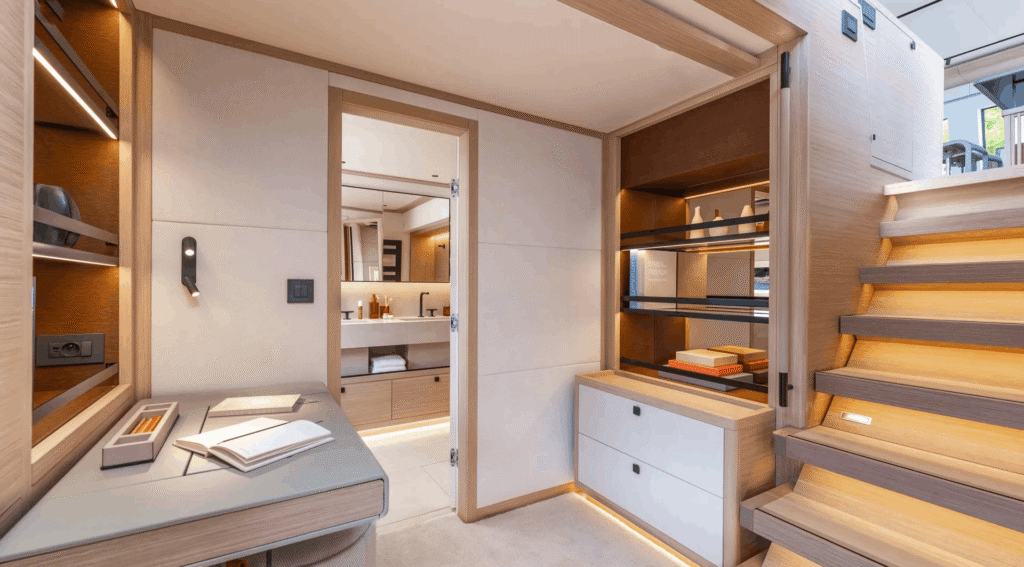
The gentle motion of a boat at anchor, the slow roll produced by the residual swell that reaches even a sheltered bay, is one of the oldest sleep inducers known to human experience. Infants are rocked to sleep because the motion signals safety: if something were wrong, the rocking would stop. The adult body retains this response, and the specific rocking of a well-anchored boat in a sheltered bay produces a quality of physical relaxation that no sleeping aid replicated successfully and that the body receives with the specific gratitude of something that has been waiting for permission to let go.
On the Eighty2, the catamaran’s wide beam reduces the rolling motion significantly compared to a monohull: the boat is more stable than most and the motion at anchor is gentle rather than pronounced. This is not a compromise between comfort and the sleep-inducing benefits of motion. The gentle motion is enough to produce the effect. The absence of the vigorous rolling that a narrower hull produces means the effect arrives without the seasickness that can accompany it on less stable platforms.
The Air
The air over the open sea is among the cleanest available anywhere on earth at the latitudes the Naora route covers. No industrial pollution, no vehicle exhaust, no urban particulate matter. The specific combination of salt ions and reduced particulate load in marine air has been associated with improved respiratory function and sleep quality in the research literature, and the practical experience of anyone who has slept on a boat offshore confirms it: breathing is easier, deeper, and more productive than it is in the same person’s bedroom in the city they left from.
The porthole in the cabin ventilates the sleeping space with this air throughout the night, if the temperature allows it, which in the Mediterranean and the tropics it almost always does. The cabin does not have the recirculated air of a hotel room or the compromised ventilation of a sealed land building. It has the ocean coming through an opening sized and positioned to produce a gentle flow without a draught.
The Physical Demand
The body does real work on a sailing boat. Not labour, not exercise in the structured sense, but the continuous low-level physical engagement of a body maintaining balance and responding to motion and swimming and walking ashore on uneven ground and hauling the tender onto the beach. This is not the sedentary demand of a day at a desk followed by a few hours of deliberate exercise. It is the continuous physical engagement that the human body was designed for and that modern life systematically removes. By the evening, the body has done what it was built to do. Sleep is the natural consequence.
The specific sleepiness that arrives in the early evening on a boat, around nine or ten, that is earlier than most members are accustomed to sleeping at home and that is impossible to resist once it arrives: this is the body’s honest report on its own expenditure across the day. It is not tiredness in the depleted sense. It is the satisfaction of a body that has been genuinely used and that knows, from the sound and the motion and the air and the permission of the dark anchorage around it, that rest is available and correct. The sleep that follows this sleepiness is the best sleep available. Most members find this out on the first night and find it again on every night that follows.