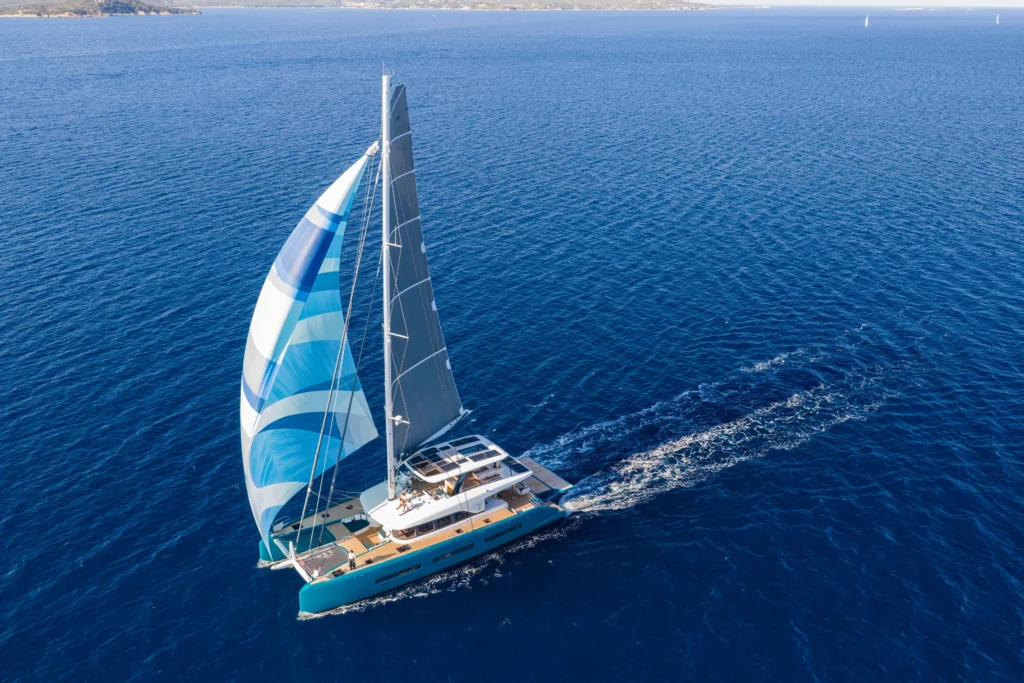
Ten to twelve people sharing a 24-metre boat for weeks at a time is not an arrangement that produces friction automatically. It is an arrangement that requires the right combination of space design, social structure, professional management, and the specific kind of people the Naora community attracts to function well. All four of those elements are present on the Eighty2, and the result is a social environment that most members describe as one of the most comfortable and least effortful community experiences they have had.
Here is what makes it work.
The Spatial Logic
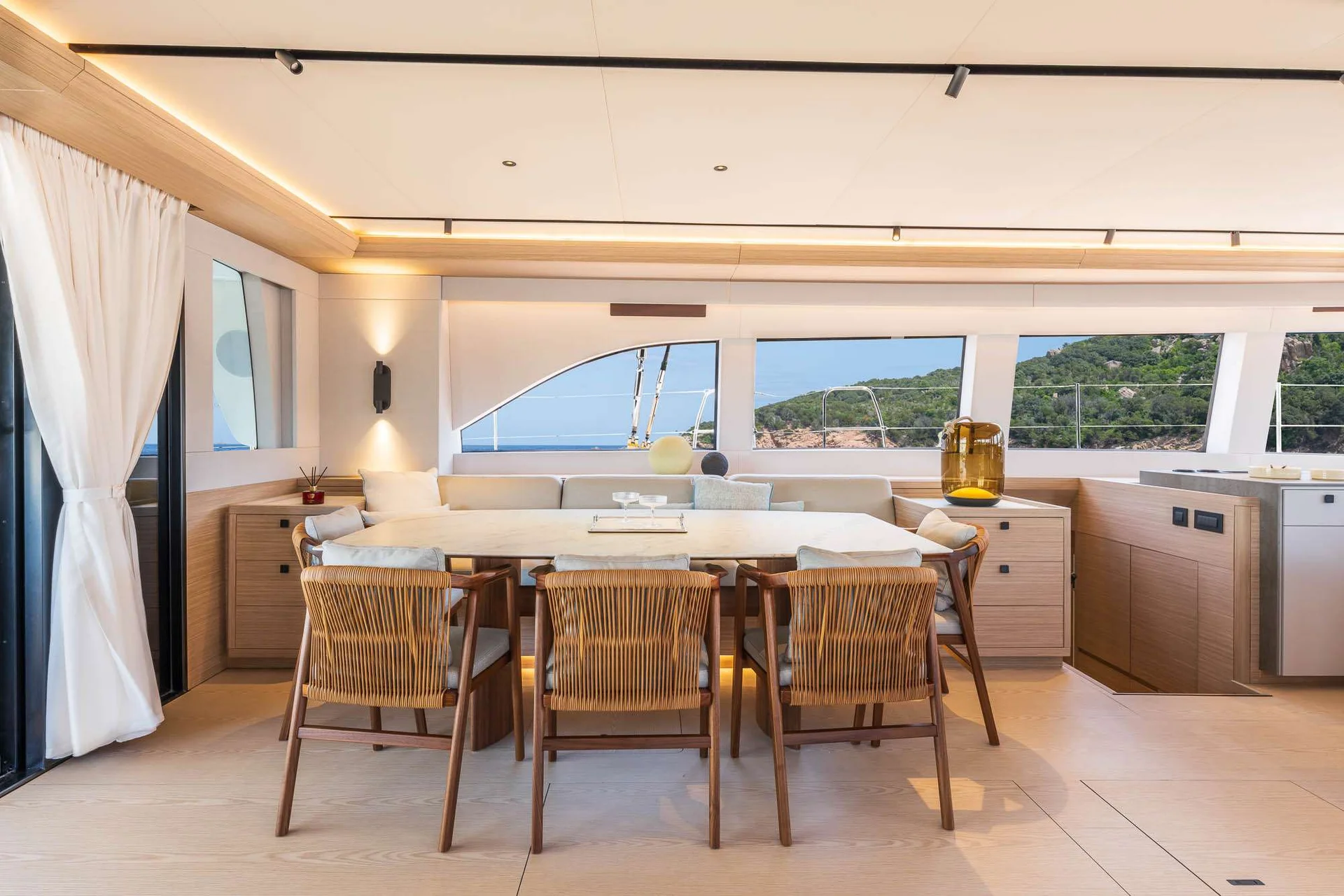
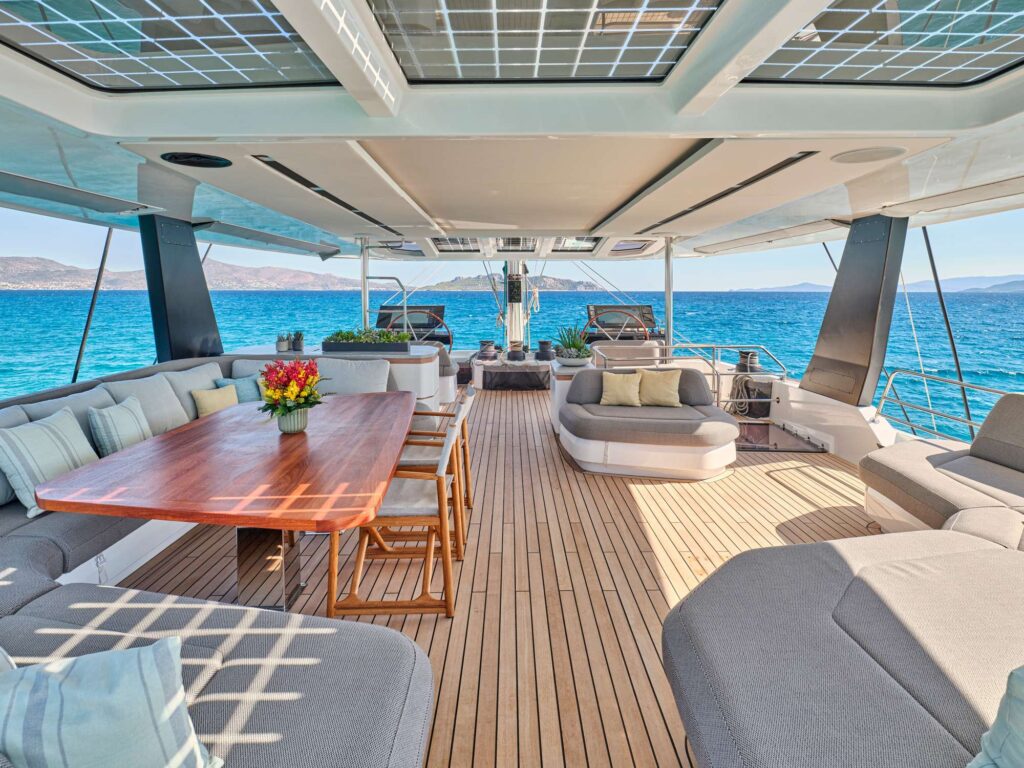
The Eighty2 is designed around a spatial logic that separates private from communal in a way that smaller boats cannot achieve. Each member has a private cabin with a door that closes and an en-suite bathroom that is theirs alone. The communal spaces, the salon below and the afterdeck and the flybridge above, are genuinely communal: large enough for everyone to be present simultaneously without crowding, and sufficiently varied in character that different people can be in different parts of the boat doing different things without being in each other’s way.
The afterdeck is the primary social space in good conditions: the table where meals are served, the place where the aperitif happens, the deck from which the fishing line is deployed and the sunrise and sunset watched. The flybridge is the elevated helm station and observation deck: slightly removed from the afterdeck’s social activity, a good place for the person who wants to be part of the boat without being part of the conversation for an hour. The bow is the quietest space on the boat: forward of the main social activity, with a clear view of the water ahead, the specific place where you can be alone without being away.
The Professional Structure
The crew manages the domestic logistics that shared living generates: the meals, the cleaning, the cabin service, the laundry, the provisioning, the thousand small tasks that communal life produces and that, if left to the community members themselves, would consume the energy and attention that the voyage is designed to free. When these logistics are professionally managed, the shared space stops feeling shared in the potentially tiresome sense and starts feeling hosted: someone else has thought about whether there is enough hot water and whether the food will be ready at eleven and whether the tender is fuelled for the shore excursion.
This professional management is the structural difference between a Naora passage and a shared charter, where the logistics management falls to the group itself and the social energy that should be available for the experience gets consumed by the domestic friction of who is cooking tonight and whose turn it is to deal with the engine alarm. On Naora, nobody’s turn is the engine alarm. The crew handles the engine alarm. The members handle the experience of being here, which is a full-time occupation in itself.
The People
The most important factor in shared space functioning well is the people sharing it. The Naora invitation-only model exists partly for this reason: not to keep certain people out, but to ensure that the people sharing the boat for weeks at a time share a specific set of qualities that make the sharing possible. Curiosity rather than cynicism. Respect for different ways of being. The honesty that comes from not performing for an audience. The willingness to be genuinely present rather than perpetually preparing for the next thing.
These qualities do not prevent personality differences or moments of friction. They prevent those moments from becoming the defining character of the shared experience. Ten people with these qualities, on a well-designed boat managed by a professional crew, in the specific conditions that offshore sailing creates: this produces a community that consistently surprises members with how easy it is to inhabit and how much it gives back.