The sea urchin risotto is the dish that the Tyrrhenian sea produces and that the Naora voyage can only make when Sven has been in the water below the anchorage. The sea urchin does not come from the market in the standard provisioning morning: the fresh urchin that the risotto requires is the urchin that has been in the rock pool thirty minutes before it arrives in the galley, and the only way to have it thirty minutes fresh is to collect it yourself from the rock pool rather than from the supplier who collected it last week and sold it through two middlemen to the restaurant that charges the premium the rarity commands.
Sven dives for the urchins from the boat’s dive platform in the morning, before the day has decided what it will be, in the specific way of someone who has been collecting sea urchins from Mediterranean rocks for twenty years and who knows the specific rocky depth where the largest and fullest urchins sit in the current that feeds them.
Opening the Urchin
The sea urchin is opened with the scissors at the equator: the cut that runs around the middle of the shell and separates it into two halves, each half containing the five tongues of roe arranged in the star pattern that the sea urchin’s pentagonal body plan produces.
The roe is scooped with the small spoon into the bowl of cold water that keeps it fresh while the risotto base is being made. The urchin that is alive when opened and whose roe is the vivid orange of the fresh and unfaded kind is the urchin for the risotto. The urchin whose roe is pale or dull or grey is the urchin whose time has passed and it goes back in the water. This is the quality control that the dive produces and the market cannot: the knowledge of the freshness at the moment of opening.
The Risotto and the Taste
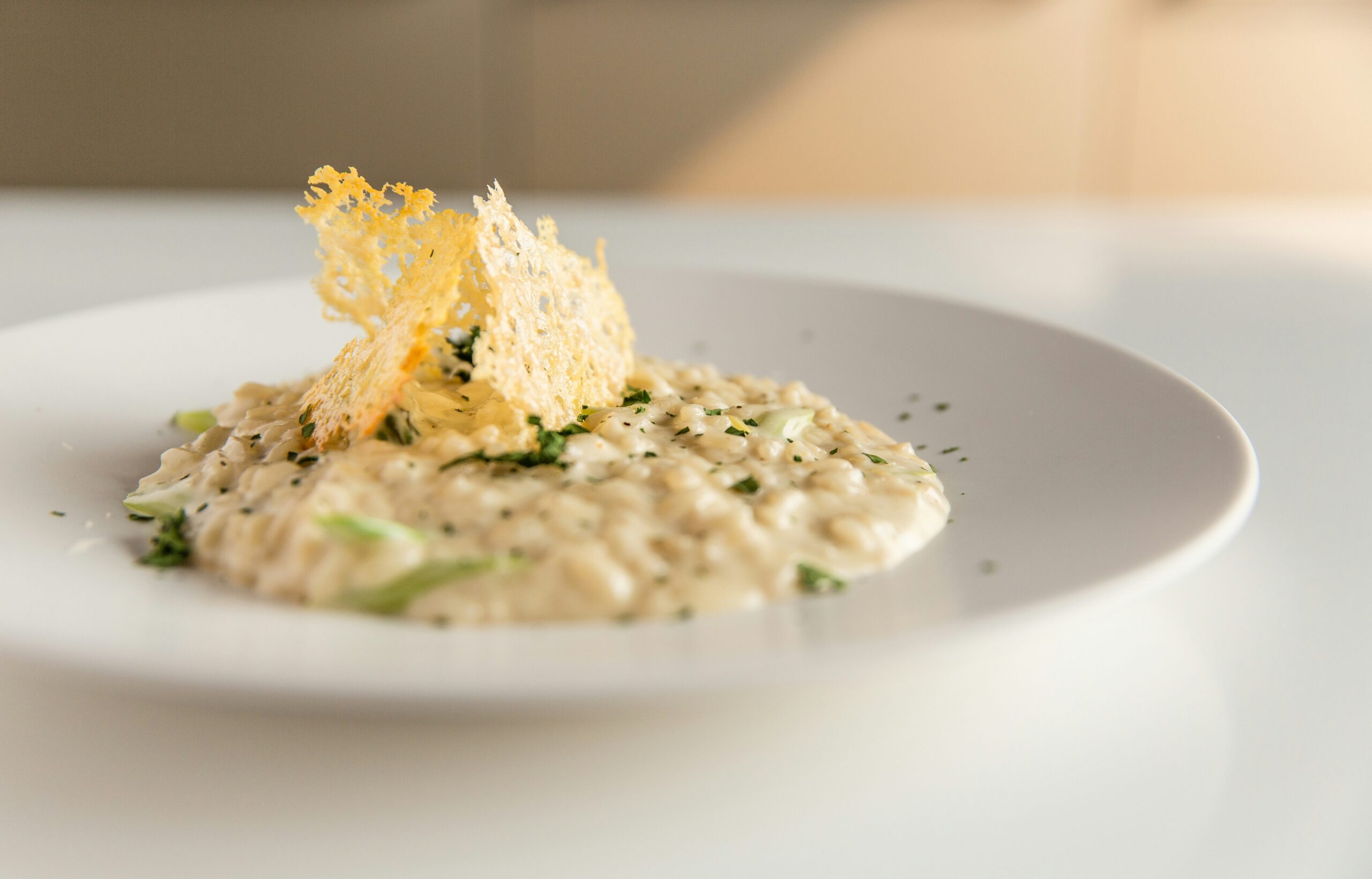
The risotto base is the standard Sicilian risotto base: the shallot sweated in butter, the Arborio rice toasted until it turns translucent at the edge, the white wine added and absorbed, the fish stock from the previous night’s fish bones added ladle by ladle until the rice is al dente in the eighteen minutes that the correct risotto requires if the stock is hot and the stirring is constant.
The urchin roe goes in off the heat, with the cold butter and the lemon juice and the single clove of raw garlic grated over the bowl: the roe added off the heat because the heat that cooked the risotto will continue cooking it from the residual temperature of the pan and the overcooking of the urchin roe is the specific error that produces the fishy rather than the sweet result and that the Sicilian kitchen learned to prevent by the instruction that has been passed from the grandmother to the grandchild since the instruction was first needed.
The taste silences the table. Not metaphorically: the Long Table that receives the sea urchin risotto made from the urchin that Sven dived for this morning produces the specific silence of twelve people who are all tasting the same thing and who are all deciding whether the word for what they are tasting exists in any language they speak.
The iodine and the sweetness of the fresh sea urchin roe in the fat of the butter and the starch of the Arborio rice is the taste of the Mediterranean floor brought to the surface and made warm and placed in the bowl on the table thirty metres from where Sven found it this morning. It is not a restaurant taste. It is the taste of the place, prepared in the place, eaten in sight of the place.