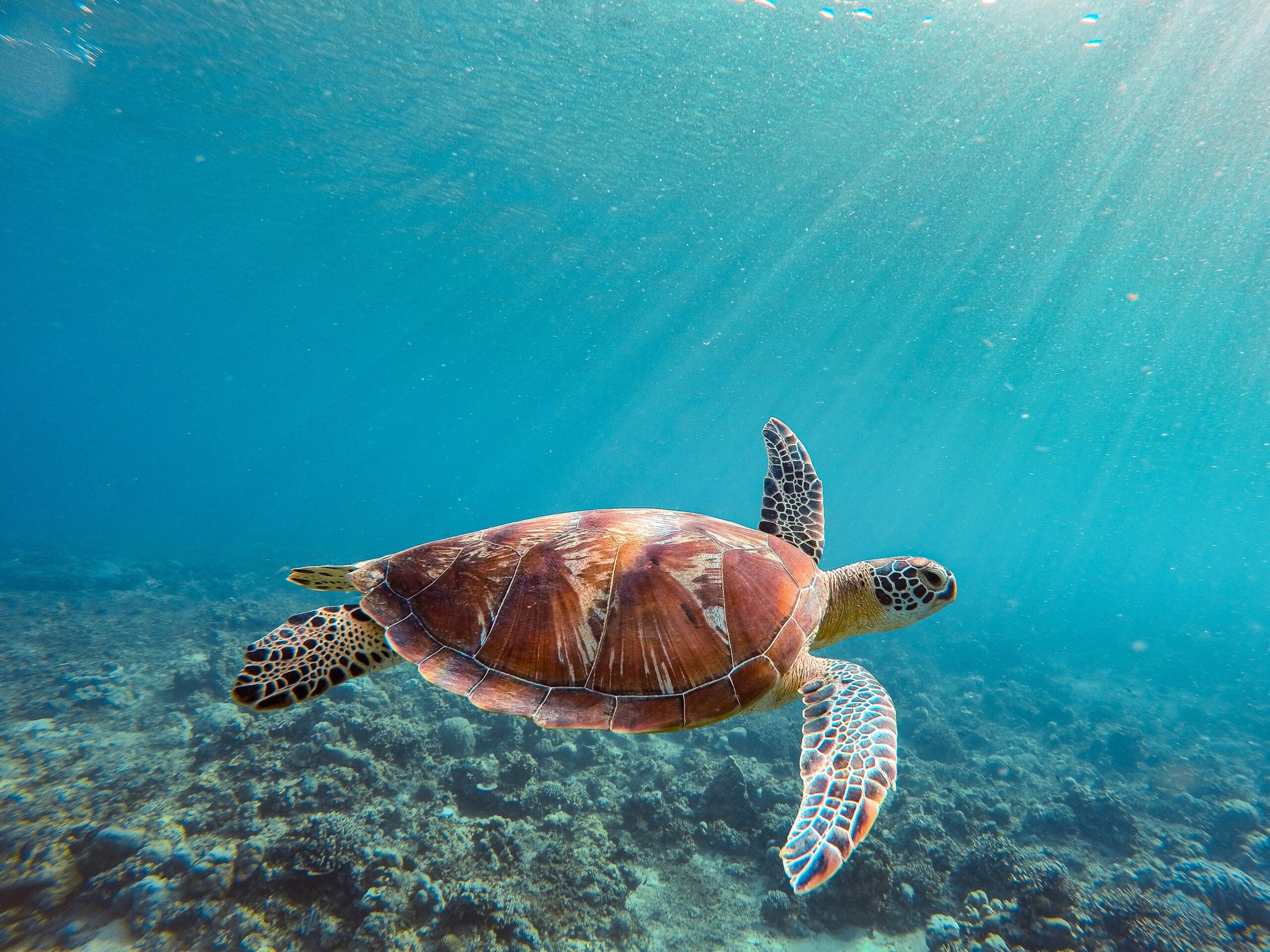
The sea turtle’s lineage extends one hundred and ten million years into the past, to the Cretaceous period when the dinosaurs were still present and the ocean had a different shape and different species swimming in it. The sea turtle survived the mass extinction that ended the non-avian dinosaurs. It survived the gradual reshaping of the ocean basins by plate tectonics.
It survived the Pleistocene glaciations that repeatedly altered the temperature and the chemistry of the waters it lives in. It has not survived the last century of human interaction with the ocean with anything close to the equanimity that the one hundred and ten million years of prior survival suggests the species is capable of. Seven of the eight sea turtle species are listed as vulnerable, endangered, or critically endangered. The threats are human: bycatch, plastic ingestion, coastal development, poaching of eggs, boat strike, climate change altering the sand temperatures that determine the sex of the hatchlings.
The sea turtle’s life is extraordinary in its navigation: the female returns to the beach where she hatched to lay her own eggs, navigating across thousands of miles of open ocean using the Earth’s magnetic field as a compass in the specific geomagnetic imprinting that happens in the first hours of the hatchling’s life.
The loggerhead turtle that hatches on the beach in Florida will cross the Atlantic twice before returning to that beach as a mature female to lay her eggs: a circuit of fifteen to twenty years across two ocean crossings in water that has no landmarks and no navigational infrastructure except the magnetic field that the Earth provides and that the turtle’s nervous system is calibrated to read.
What We Do When We See One
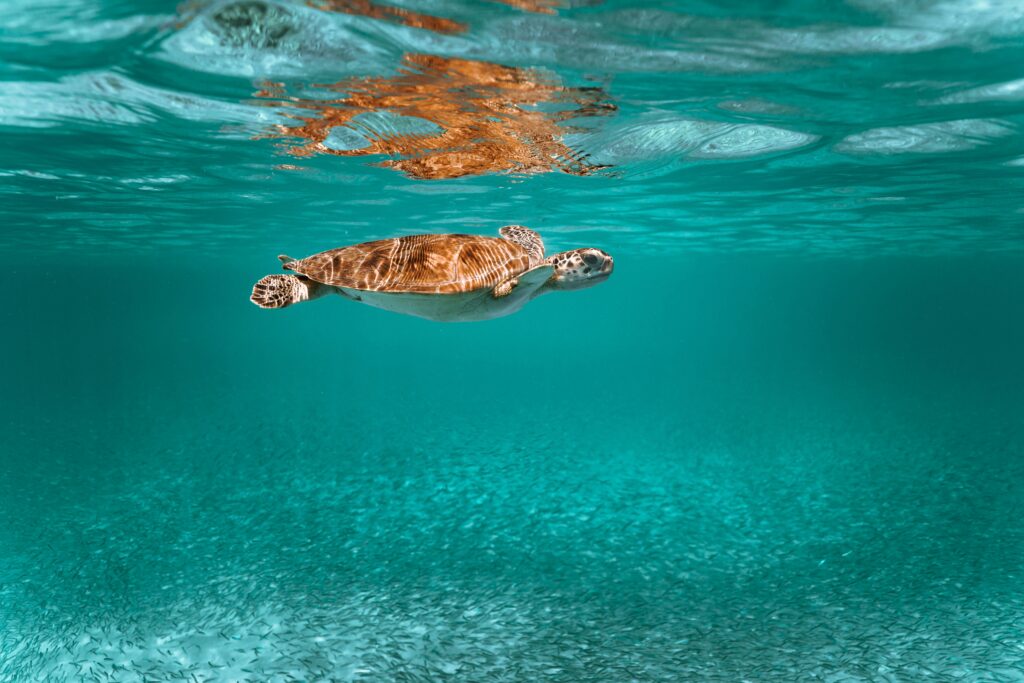
Sea turtles appear at the Naora anchorages regularly: the cleaning stations below the boat’s keel in the Maldivian lagoon, the coral heads in the Tuamotu, the seagrass beds in the Aegean that the green turtle feeds in. The turtle surfaces to breathe in the regular rhythm of the resting turtle: every four to seven minutes when resting, every one to two minutes when active.
The Naora rule when a turtle is visible from the boat or from the water is the rule of the undisturbed animal: do not approach closer than three metres in the water, do not touch, do not restrict the path to the surface for the breath. The turtle that needs to breathe and cannot because a diver is between it and the surface will drown. This is not a hypothetical risk. It is the specific way that well-intentioned divers who got too close have killed sea turtles in the documented incidents that the marine wildlife interaction research records.