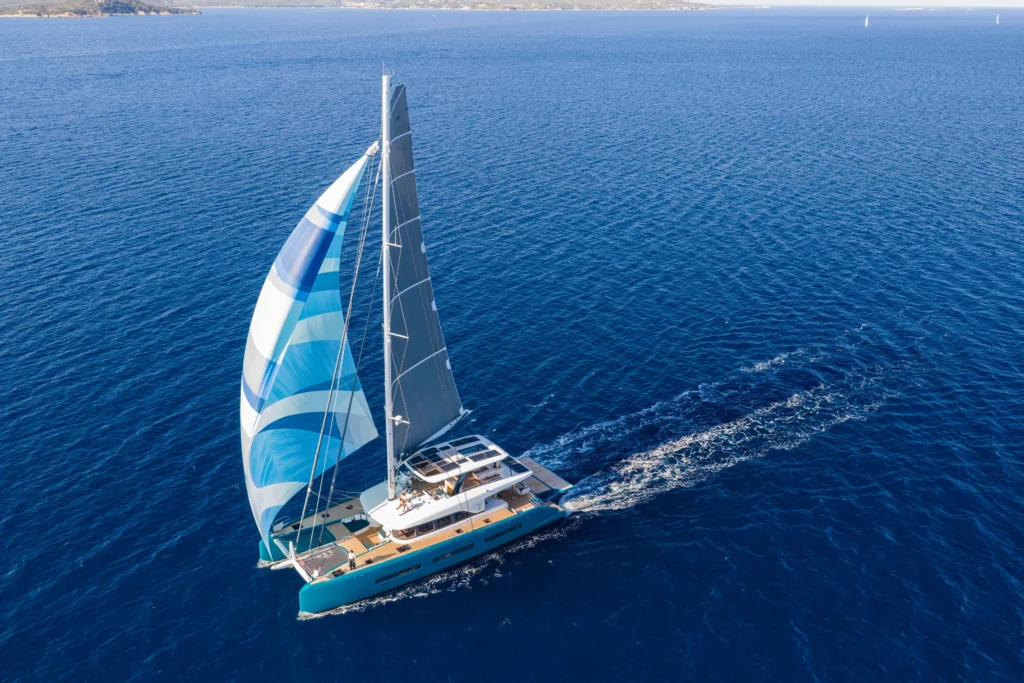
The gear industry sells the offshore sailing experience as a product. Bright colours, dramatic photography, specific claims about performance in conditions that most people who buy the product will never encounter. I have been buying offshore gear for twenty-five years and I have a clear view of what the claims are worth and what the actual performance is, and the gap between the two is occasionally significant and always specific to the individual context in which the gear is used.
This article is not a product review in the commercial sense. We do not have sponsor relationships that shape what we say about any piece of equipment. What follows is the honest account of what we are testing in the year before the departure, what we are looking for, and what the testing has produced so far.
Foul Weather Gear
The foul weather jacket and trousers are the most personal piece of safety equipment on a sailing boat, more personal than the life jacket because they are worn continuously rather than in specific emergency situations, and their performance across a range of conditions, from the damp cool of a Mediterranean evening sail to the sustained forty-knot-plus conditions of a Biscay or Southern Ocean-adjacent passage, determines more than any other piece of kit the quality of the watch crew’s function and comfort in difficult conditions.
The specific failure modes that I test for are different from the failure modes that the marketing addresses. The seam tape failure that allows water ingress at the shoulders and cuffs after extended periods of sustained rain: this is the failure that the two-hour squall test does not reveal but the six-hour sustained rain passage does.
The hood that provides genuine face protection in forty-knot wind without restricting the peripheral vision that the watch requires: almost every hood on the market fails this test, and the ones that pass it are the ones worth the premium price they command.
The pocket closure that stays closed in a boarding sea rather than filling with water through a zip that the marketing describes as waterproof but that the wave that comes over the bow in a following sea treats as optional.
The Dive Equipment
The dive equipment that travels aboard the Eighty2 will be used in water temperatures ranging from the fifteen-degree cold of the northern Mediterranean in early season to the thirty-degree warm of the Coral Triangle. It will be used in current at the Tuamotu passes, in the open water of the Red Sea offshore sites, and in the confined spaces of Indonesian channel passages.
The equipment needs to perform across this entire range without modification and without the shore-based service infrastructure that most dive equipment’s maintenance schedule assumes.
The regulator servicing happens before departure and will be repeated at the refit windows during the voyage. The BCD, the dive computer, the wetsuits in three different thicknesses for the temperature range, the masks and fins that will spend five years in a saltwater environment: all of these are being tested in the year before departure in the conditions most similar to the most demanding conditions they will face.
A regulator that performs perfectly in the heated pool of the dive centre reveals its limitations in the cold North Sea. The cold North Sea test is the one worth doing before Bodrum.
What Has Failed
Two pieces of kit have failed the testing process so far. A pair of offshore boots whose ankle support, adequate for light coastal sailing, proved insufficient for the specific lateral loading that the knee rehabilitation has revealed as the critical demand of offshore movement on a moving deck. Replaced with a higher-cut option that provides the ankle support that the five-year voyage requires and that the marketing of the original boots implied but did not deliver.
A headlamp whose red-light mode, essential for preserving night vision during the night watch, was sufficiently bright to be useful but not sufficiently controllable to avoid illuminating the person next to you at the chart table.
Replaced with a model whose red-light intensity is adjustable rather than fixed. A minor failure that the night passage reveals immediately and that the evening at the chart table on land never would. The pre-departure testing exists for exactly this: to find the minor failures before they become offshore inconveniences at the moment when inconveniences are most expensive.