The sound changes when the tomatoes have given up most of their water. A wet bubbling becomes a quieter frying, the spoon begins to leave a clear track across the bottom of the pot, and the smell loses its raw, acidic edge. Much of the pleasure in Réunion Creole food depends on noticing such ordinary things. The ingredients may be familiar. The judgement lies in knowing when to leave them alone and when the next ingredient can go in.
This is where we want to begin with Réunion, rather than with an eruption or a list of dishes. The volcano deserves attention, and arriving from the Indian Ocean gives the island’s height a particular force, but a kitchen offers another way of understanding the landfall. It asks us to distinguish what looks similar, to wait through changes that cannot be hurried, and to recognise that a meal can carry a difficult history without becoming an explanation of it.
The Histories Within Réunion Creole Food
Réunion is a French overseas department whose Creole culture grew through colonisation, slavery, indentured labour, trade and family life. Enslaved people were brought from Madagascar and continental Africa. Indian migration, including Tamil-speaking communities, carried religious practices, ingredients and cooking knowledge across the ocean. Chinese migrants contributed food and commercial traditions, while French influence extended through domestic cooking as well as colonial power. These were not equivalent forms of arrival, and the table should not make them seem so.
Slavery was abolished on Réunion on 20 December 1848, a date commemorated in the celebrations known as Fèt Kaf. Indentured labour expanded around and after emancipation, under conditions that could themselves be deeply coercive. Calling the resulting cuisine a happy meeting of cultures leaves too much outside the frame. People preserved and remade ways of eating within circumstances they had not necessarily chosen. The food belongs to their descendants, not to a visitor’s comforting account of cultural exchange.
The phrase four continents makes sense only if we include the American origins of tomatoes and chillies alongside the African, Asian and European histories present here. It is a useful reminder of how far an everyday ingredient has travelled, but a poor formula for assigning ownership. Slow cooking is not uniquely African, nor does every sausage dish have a simple French parentage. Réunionnais Creole is a language in its own right; the cooking, too, has become something more particular than a collection of borrowed parts.
How A Cari Builds Its Flavour
A cari is a family of preparations, not a single sauce. Chicken, fish and other main ingredients require different handling, and tomatoes are common without being universal. Onion, garlic, ginger, thyme and turmeric recur in many versions, but their proportions and presence belong to the cook and the dish. On Réunion, turmeric may be called safran or safran péi. It is not the saffron made from crocus stigmas, a distinction worth understanding before buying a spice or trying to reproduce a flavour.
For a chicken cari, one sound method begins with drying the pieces and browning them without crowding the pot. Wet meat steams; too much meat at once lowers the heat and leaves liquid where a browned surface should be developing. The onions then need enough time to soften and colour without catching. Garlic and ginger can be pounded with salt into a paste, giving a different texture from coarse chopping and distributing their flavour through the base.
Turmeric needs restraint. As a starting point rather than a declaration of tradition, about half a teaspoon of ground turmeric for four portions gives colour and an earthy background without making the sauce dusty or bitter. Brief contact with the cooking fat helps distribute it, but leaving ground spice against a hot, dry pot risks scorching it. Tomatoes, where used, provide moisture and then need reducing. The useful signal is that change in sound: less water boiling, more of the base beginning to fry.
Water is added with a purpose, enough to finish cooking without turning the dish into soup. A mature bird needs longer than a tender young one, so texture matters more than a borrowed cooking time. Safety remains a separate check: for chicken, a probe reading of at least 75°C in the thickest flesh, away from bone, is a practical benchmark, not something to infer from the colour of the sauce. Fish calls for gentler handling and less stirring, so that the pieces reach the plate rather than disappear into it.
Rougail And The Balance Of Réunion Creole Food
Rougail is a word worth pausing over because it can describe quite different things. Rougail saucisse is a cooked dish, usually built around sausages, onions and tomatoes. Rougail tomate is generally a fresh accompaniment, with chopped tomato, onion, chilli and salt. Reading the same word twice on a menu does not mean the kitchen is repeating itself. One may be the substantial centre of the meal; the other may arrive in a small bowl whose contents are best approached a little at a time.
For rougail saucisse, the sausage determines the first decision. Fresh and smoked versions behave differently, and some benefit from preliminary simmering to moderate saltiness before slicing and browning. The maker’s advice matters more than a rule that every sausage must be boiled for the same duration. Ginger, garlic, turmeric and thyme appear in different household recipes and are absent from others. A good account leaves room for that variation instead of treating one family’s pot as the island’s only legitimate version.
The fresh condiment brings another kind of intensity. Chilli supplies heat, while tomato retains its uncooked brightness. Where combava, the fragrant makrut lime, is used, a little finely grated outer peel can scent the whole bowl; the white pith underneath brings unwanted bitterness. Keeping this accompaniment separate allows each person to find their own balance. A child can eat from the same main dish as someone who wants considerably more heat, without the kitchen having to produce two unrelated meals.
Rice and grains complete the structure. Here, grains means cooked pulses, such as beans or lentils, rather than another cereal. Their softness and cooking liquor sit between the plain rice and the more concentrated flavour of the cari. Achards, often made with finely cut vegetables, acid and spices, add a different edge and some crunch. They should not automatically be described as fermented pickles. The pleasure is in adjusting successive mouthfuls, rather than mixing everything together before discovering what each part contributes.
What The Market Asks Of The Galley
Buying locally starts with a conversation about what is actually local. An island market can sell produce grown nearby alongside imported ingredients, and proximity to the stall does not establish origin. For our purposes, ripeness matters as much as appearance. Tomatoes for a sauce should have flavour and enough maturity to collapse readily; firmer produce may make more sense for a later passage meal. Buying everything at its softest and most fragrant merely moves the problem into the yacht’s refrigeration.
There is similar judgement in choosing accompaniments. Achards offer contrast without needing the long cooking of the main pot, but finely cut vegetables lose their texture if handled as though they were stew ingredients. Depending on the preparation, they may be briefly blanched or sautéed before seasoning. Fresh rougail benefits from being made nearer the meal, since salt draws water from tomatoes. These are small distinctions, yet they explain why a plate can taste lively even when its principal dish has spent a long time over the heat.
The Chinese contribution has its own everyday expression in bouchons, small steamed dumplings commonly made with a pork filling. They need not be crowded onto the same plate as cari, rougail and every other food associated with Réunion. Eating a snack as a snack, or returning for a different dish on another day, gives each preparation its proper place. A destination becomes less legible when every meal is required to contain all of it.
Aboard, the meal also includes what happens afterwards. Cooked rice and leftovers need prompt cooling in shallow containers and refrigeration, not an overnight rest in a deep pot that stays warm at its centre. Storage space is part of the provisioning calculation. A generous lunch is welcome; food bought without a plan for keeping or using it is simply waste waiting to happen.
The Leeward Coast Still Faces The Ocean
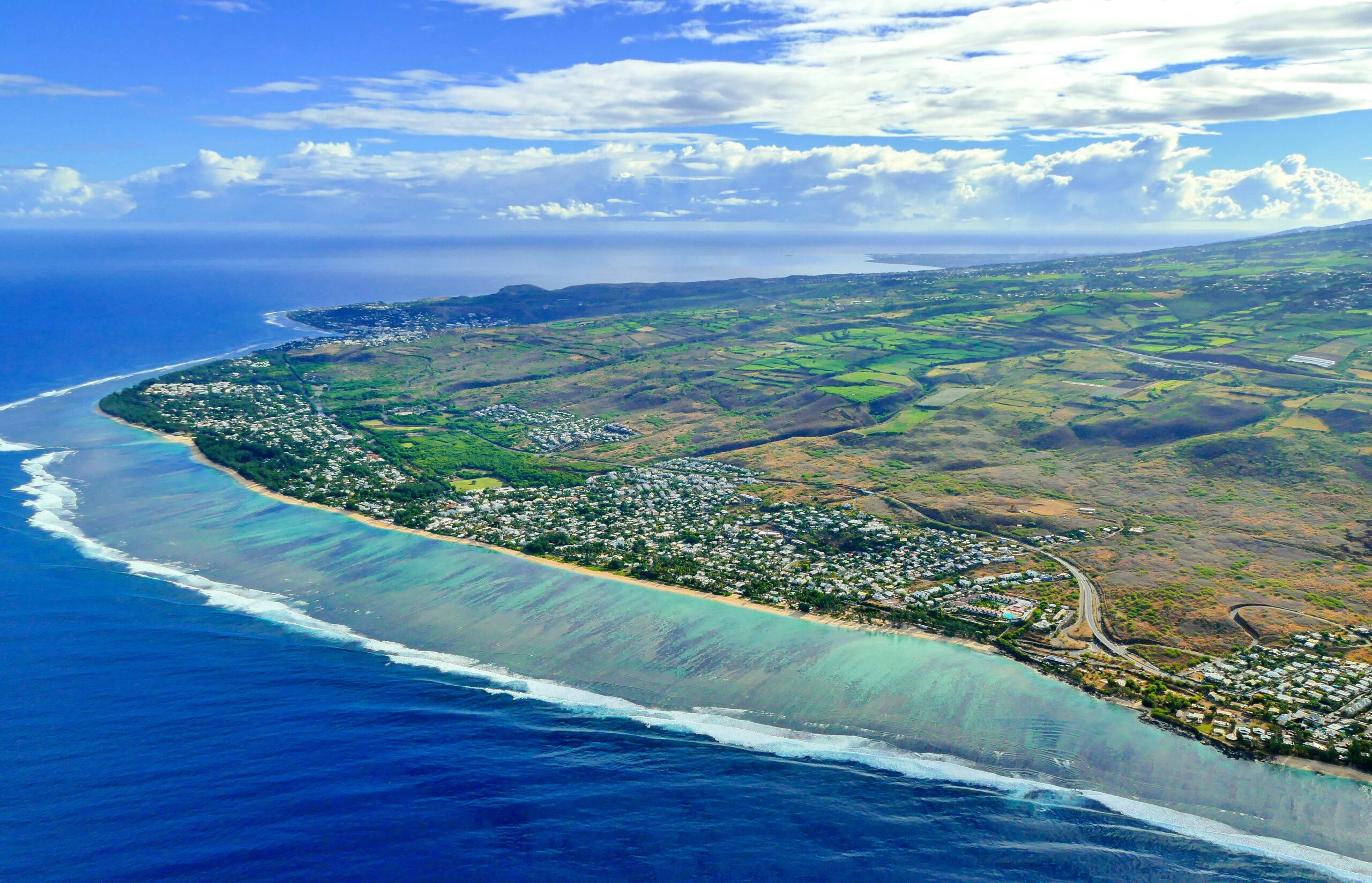
Saint-Gilles-les-Bains sits on Réunion’s western side, away from the direct exposure of the windward coast to the prevailing southeasterly trades. The island rises to 3,069 metres, enough relief to reshape the weather rather than merely interrupt the view. Its high ground can shelter the west from the prevailing wind, but shelter from wind and shelter from swell are different things. Ocean swell generated far away may still reach a coast whose water looks deceptively quiet between sets.
For Discovery, a shore visit cannot begin with the assumption that a western anchorage will be suitable. A small harbour shown on a map is not evidence of access for a yacht of her dimensions. Depth, entrance conditions and permissions have to be established for the actual facility. Outside a harbour, a visible patch of sand does not by itself establish legal anchoring, adequate holding or a safe position clear of protected reef.
Those decisions determine the day ashore. If swell makes the tender landing unreliable, a restaurant reservation cannot make it reliable again. If the forecast requires someone to remain ready aboard, an excursion has to reflect that. Sven, Naora’s founder and captain, plans every weather window and sails every leg himself. The ease of a shore day depends on that work remaining more important than the shore day.
The regional cyclone season is generally November to April, although those months are not a hard boundary beyond which tropical systems become impossible. Outside that season, energetic swell can still complicate a western landfall. Seasonal planning narrows the possibilities; the current forecast decides what is sensible. This is why we do not attach the promise of a particular lunch to the promise of a particular anchorage.
A Morning Below The Volcano
Piton de la Fournaise gives the island another scale. Its eruptions are frequent in geological terms, but frequency is no reason to describe them as harmless local entertainment. Activity can change access to roads, paths and viewpoints. A visit depends on current restrictions and conditions, not on the assumption that an active volcano will provide a spectacle at a convenient distance. Recently formed lava is not an attraction to approach simply because it appears still.
The change from coast to high ground is physical before it becomes scenic. In exposed upland wind, a shirt comfortable beside the sea can begin to feel thin. Damp fabric cools the back; cloud can take away a distant view and then the reassuring outline of the terrain nearby. Dark volcanic ground offers little shelter. A warm layer and rain protection earn their place in the bag through this contrast, not through any expectation of a demanding expedition.
An early start can improve the chance of clearer views before cloud develops, but it cannot guarantee them. Water, protection from the sun and a realistic allowance for the return remain necessary even on a day that begins cool. Walking stays on open, designated paths. The decision to turn back belongs to visibility, weather and access, not to how far someone has travelled to get there. There is no obligation to complete a landscape.
A meal afterwards need not compete with it. After the exposed ground, the appeal of a sheltered table is immediate: shoulders out of the wind, the warmth rising from rice, thyme and cooked tomato arriving before the first mouthful. A roadside kitchen is not automatically better than a restaurant by the coast. What matters is a dish cooked with attention and a welcome that leaves room to sit.
What We Bring Back To Discovery
On Discovery, our 2025 Lagoon Eighty2, the galley belongs to a voyage around the world rather than to one destination. The Naora Global Expedition gives members the choice of when and where to join and how long to remain aboard, while the yacht continues along the route. Someone may share a relatively short chapter; someone else may stay long enough to notice ingredients and habits changing across an ocean. Neither needs a meal turned into a lecture.
What we want to carry from Réunion is the understanding behind the plate. Reduce the base properly. Ask about the sausage before deciding how to cook it. Recognise that grains means pulses. Keep a powerful condiment where people can choose their own measure. These are useful things to learn from a place because they survive the departure, becoming part of how the next meal is made rather than evidence that a destination has been collected.
There are limits to what can travel literally. Fresh produce and animal products have to meet the next destination’s entry rules, and local sourcing does not remove that responsibility. Sometimes the better thing to carry is a technique, or the memory of a flavour that needs further thought. We do not have to reproduce an island’s cooking exactly to have paid attention to it, and we should not claim that our version replaces the one ashore.
At the table, the adjustment remains personal. A little more of the grains, a clean spoon for the rougail, some rice left plain. The small bowl stays within everyone’s reach.