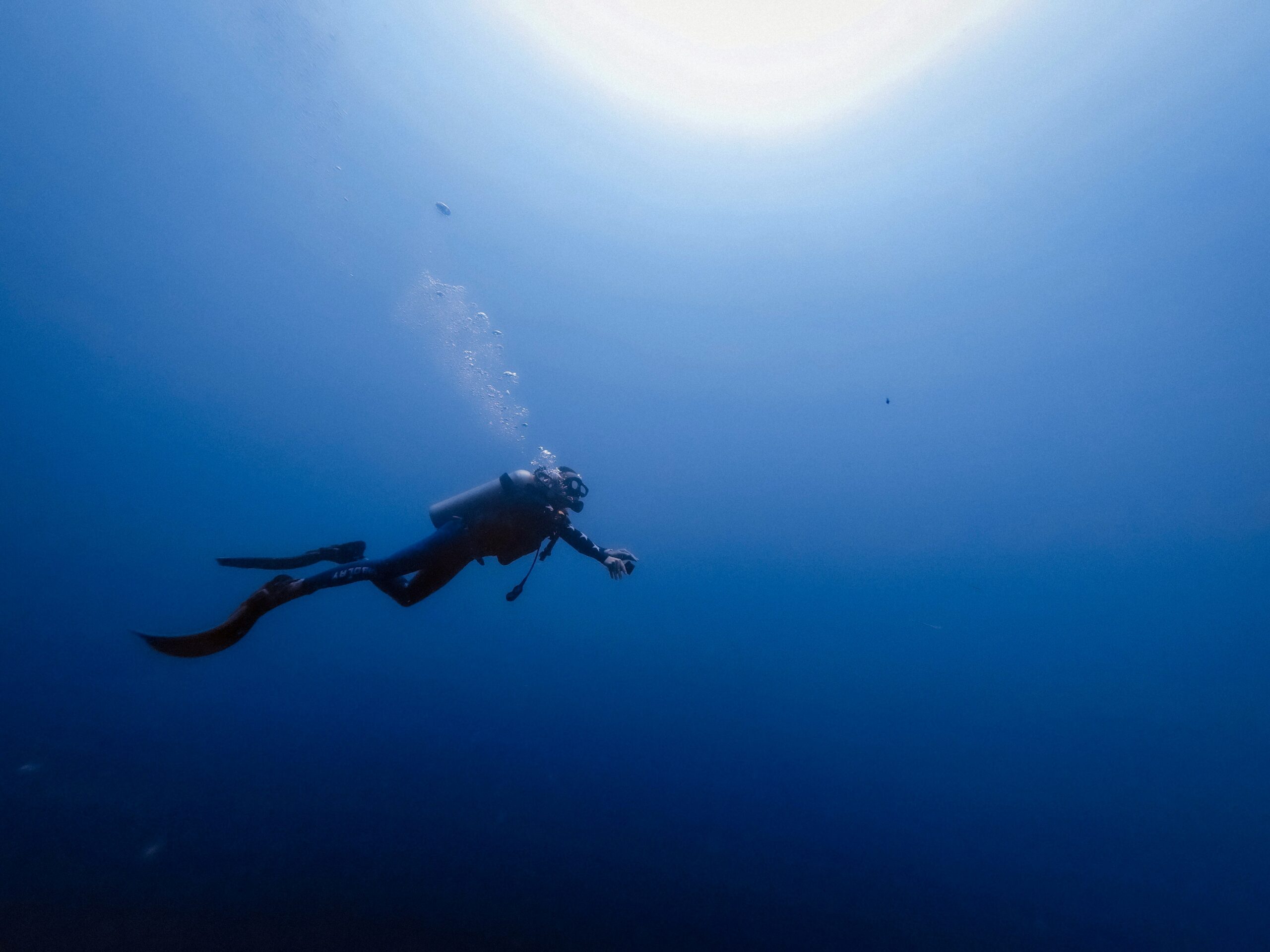
A fin makes a small circle beneath the surface, and a diver who appears to be floating quietly is actually working to stay there. The movement can be almost unconscious. Red Sea salinity is a good reason to reassess the weight we carry, but before the water can tell us anything useful, that small effort has to stop.
For a first Red Sea scuba dive from Discovery, we would make room for a supervised buoyancy check before treating the reef as the destination. The familiar suit, the familiar belt and the remembered number of kilograms are useful starting information. They are not a result. A diver may have used the same arrangement successfully for years and still need to change it because the water, the cylinder or the equipment worn with the suit is different.
This is a practical distinction on Naora’s world route, where familiarity with our own equipment will outlast any particular body of water. The purpose of checking is not to find fault with experience. It is to establish which parts of that experience still apply.
How Red Sea Salinity Changes Buoyancy
The Red Sea loses substantial water through evaporation and receives little freshwater from rivers or rainfall. Salt remains behind as water evaporates, while exchange with the Indian Ocean prevents the basin from simply becoming more concentrated indefinitely. Across the annual cycle, broad surface salinities run from roughly 36 to 38 grams of dissolved salts per kilogram of seawater in southern waters to around 40 to 41 in the north. Season, circulation and the particular location change the value. These are regional ranges, not a measurement beside Discovery.
For comparison, a useful reference for ordinary open-ocean water is about 35 grams per kilogram. More dissolved salt generally means denser water when temperature and pressure are comparable. A submerged diver displaces water, and the upward force is equal to the weight of that displaced water. If the same body and equipment displace denser water, the upward force increases. Nothing about the diver needs to have changed.
The scale matters, because the explanation is often turned into an oversized instruction to add lead. At comparable temperature, moving from salinity near 35 to salinity near 40 would give a diver and equipment displacing about 100 litres roughly the buoyancy equivalent of an additional 0.4 kilograms of upward force. That is an illustrative calculation, not a personal ballast prescription. It explains why an adjustment can be noticeable without supporting the idea that everyone needs several extra kilograms.
Someone arriving from the already saline eastern Mediterranean may notice a smaller difference than someone whose last dives were in less saline ocean water. A freshwater comparison is different again. The relevant question is what has changed since the last reliable check, rather than what divers generally say about the Red Sea.
Why Red Sea Salinity Is Only Part Of The Check
A wetsuit is not a fixed quantity of buoyancy attached to a label. Its lift comes largely from the gas-filled structure of the neoprene, and that structure changes with compression, use and age. A new suit can behave differently from an older suit of the same nominal thickness. Adding a hood or another layer changes the arrangement again. Bringing the suit that fitted comfortably last season does not establish how much ballast the complete equipment requires today.
Nor should we choose inadequate thermal protection simply to carry less lead. The appropriate suit depends on the actual water temperature, the length and repetition of the dives, the diver and the conditions between dives. Being cold can make relaxation and breathing control harder. Correct weighting means balancing suitable equipment, not removing equipment that serves a necessary purpose.
The cylinder deserves particular attention. Two cylinders with the same stated internal capacity can have different empty weights and different buoyancy characteristics. Material, dimensions and construction all matter. Some remain negatively buoyant as their gas supply falls; others become positively buoyant. A change of cylinder can outweigh the relatively modest difference between two saline seas.
Fins, backplates, buoyancy compensators and accessories belong in the same assessment. So does the position of the weight, not merely its total. We need to distinguish a diver who is too buoyant from one who cannot release trapped gas, and an overweighted diver from one whose equipment pulls the feet down. Adding lead to solve every uncomfortable sensation makes several different problems look briefly like one.
Cylinder Gas And The End Of The Dive
The cylinder carries something that weighs less as the dive progresses: its remaining breathing gas. That sounds obvious until the first easy descent is taken as proof of correct weighting. The diver who can sink with a full cylinder may be unable to remain comfortably at a shallow stop when much of that gas has been breathed.
As an illustration, a 12-litre air cylinder falling from 200 bar to 50 bar loses roughly two kilograms of gas mass. The precise amount varies with the gas and physical conditions. Those pressures are an example, not a recommendation for a dive reserve, which must be planned for the actual dive and people involved. The useful point is that the mass change can be considerably larger than the extra buoyancy caused by moving between ordinary seawater and more saline Red Sea water.
We therefore judge weighting against the demanding end of the dive, not only the convenient beginning. The diver needs to remain controlled at the planned shallow stopping depth with the planned remaining gas, without having to kick downwards or keep the lungs unnaturally empty. The buoyancy compensator should not need to conceal a large surplus of ballast either.
This is why a surface check cannot be interpreted without knowing cylinder pressure. The familiar eye-level indication assumes a particular breathing state and gas load. With a full cylinder, the professional supervising the check must account for the gas that will be used. Treating eye level as an absolute target regardless of cylinder contents can leave a diver underweighted later.
A Supervised Buoyancy Check From Discovery
The check begins with the place chosen for it. We need sheltered conditions, clear separation from coral, an uncomplicated recovery and enough control of boat movements and traffic that the diver can pay attention to the exercise. A suitable place for Discovery to lie is not automatically a suitable place for someone to become briefly neutral at the surface. Wind, current and the movement of the yacht still matter.
A qualified dive professional familiar with the equipment and local conditions should supervise, with the buddy involved and surface support briefed. Entry and recovery arrangements, including the status of propulsion, must be understood before anyone enters. The exercise stays within the diver’s training. This is a scuba weighting discussion, not a procedure to transfer to freediving, where the buoyancy requirements and risks are different.
The diver wears the equipment intended for the dive, with the cylinder pressure known. Positive surface buoyancy is established before the assessment begins. There is plenty to notice in that first minute: cooler water entering at a wrist, the mouthpiece against the jaw, the changing waterline across the mask. A hand resting on a ladder can quietly carry part of the diver’s weight. Small fin movements can provide lift. Both can spoil the answer.
Under supervision, gas is properly vented from the buoyancy compensator and the diver becomes still, keeping the regulator in and breathing normally. With the appropriate cylinder gas load, flotation near eye level on an ordinary inhalation and the beginning of a gentle sink on exhalation provide a starting indication. They are not an invitation to hold the breath, force air out of the lungs or continue sinking. Surface buoyancy is restored between adjustments.
Before adding weight, the professional checks that gas really has escaped. Holding an exhaust hose upwards does not empty a buoyancy compensator if the gas has not reached that outlet. The diver’s position and the design of the equipment matter. A persistent deep inhalation can also confuse the assessment. Neither problem is usefully solved by putting more lead on the belt.
Changes should be small enough to interpret. An adjustment of around half a kilogram can be more informative than a large addition made to get the exercise over with, although the available weight system and the diver determine the practical increment. Weights are altered with proper support, then secured and checked, with release arrangements understood by the buddy. The starting result is subsequently confirmed during a suitable dive at the planned shallow stop and remaining gas. Nobody uses up a reserve simply to manufacture a test condition.
Controlling The First Descent
A correctly weighted diver should not need a downward swimming effort to overcome the surface, but neither should descent feel like being released from a support. The useful beginning is slow enough to stop. The buddy remains close, equalisation begins early and a suitable visual reference makes movement easier to judge. If the diver cannot descend comfortably, we resolve the cause rather than treating extra ballast as the inevitable answer.
Once below the surface, the suit begins to lose some of the buoyancy it had above. At about 10 metres, absolute pressure is roughly twice surface pressure, and an unvented, flexible gas space would occupy around half its surface volume. Neoprene does not follow that simple illustration exactly, but the gas-filled cells compress and the suit loses lift. The lead has not become lighter to compensate.
This creates a familiar trap. Extra weight makes the initial descent easy, then makes the continuing descent increasingly difficult to arrest as the suit compresses. More gas must be added to the buoyancy compensator to regain neutrality. On ascent, that gas expands and has to be managed again. Excess ballast introduces a larger volume of changing gas into an exercise that already requires attention.
The response is timely, modest buoyancy adjustment, not waiting for a sinking sensation to become urgent. Equalisation discomfort is a reason to stop the descent and resolve it, never a reason to press down harder. We want enough attention left to notice the buddy, the depth and the direction of travel. If every part of the descent requires effort, the arrangement is asking too much of the diver before the reef has even come into view.
Staying Still Above The Reef
Once depth is stable, weighting and trim become easier to distinguish. Weighting concerns the balance between upward and downward forces. Trim concerns how the equipment and body settle in the water. A diver can have the right total ballast and still hang with the head high and fins low, then scull constantly to stay level. Moving an appropriate portion of the existing weight, or adjusting equipment position within its intended configuration, may help more than adding anything.
That assessment belongs over clear water with room beneath the fins, rather than above coral. There is a particular kind of effort that becomes audible through the regulator: breathing grows louder, the legs keep moving, and each correction seems to require another. When the arrangement settles, normal breathing may still produce a gentle rise and fall. That is different from a persistent climb, a steady sink or the need to swim against one’s own ballast.
Stillness does not mean becoming rigid. It means having sufficient control to look without drifting into what we are looking at. A hose should not hang below the body, a gauge should not trail across the reef, and fins need clearance even when the diver turns to check a buddy. Good weighting makes these things easier, but it does not replace awareness of where the whole equipment sits.
There is also an important limit to the promise of neutral buoyancy: it does not cancel current or surge. A diver can be perfectly balanced vertically and still move sideways towards coral. More lead does nothing useful about that. The answer may be a different position in the water, greater separation from the reef, a changed route or ending the dive if conditions exceed the group’s ability.
A camera makes this distinction particularly clear. Holding a frame can tempt a diver to accept a hand on the bottom or a fin brushing behind them. We would leave photography out of the initial assessment. If a photograph requires contact with the reef, the photograph can wait. The space beneath the diver is part of the dive, not unused space to be closed.
Recording The Configuration For The Next Dive
A useful log entry records more than kilograms. It names the suit and additional layers, the cylinder type and capacity, the buoyancy compensator, the weight carried and where it sat. Cylinder pressure at the check matters, as does how the diver behaved near the end of the dive. A note that the feet remained low or that gas was difficult to vent may be more useful next time than a confidently written total.
We should also distinguish what was known from what was inferred. If salinity was not measured, the log should not turn a regional estimate into an observation. Recording the Red Sea location and the actual equipment is honest and sufficient. The next check can then begin with evidence rather than a number that has gradually acquired the status of a personal constant.
That record travels well across an expedition. The same suit may be older when it next enters the water. A replacement cylinder may look familiar. A quiet check allows those changes to remain ordinary, instead of becoming something the diver has to solve while approaching a reef.
In calm water, there is no particular drama to the result. The fins settle clear of the coral. A breath moves through the regulator. There is room beneath us, and no need to close it.