A fish holding its place above a reef ledge is doing more work than its stillness suggests. Its head faces the flow, its fins make small corrections, and suspended particles travel past while it remains over the same patch of coral. At the Pemba Island dive sites, this is a useful distinction to carry underwater: the reef may appear composed, almost motionless, while a considerable amount of water is moving through it. The fish has found a position it can sustain. A diver needs to do the same.
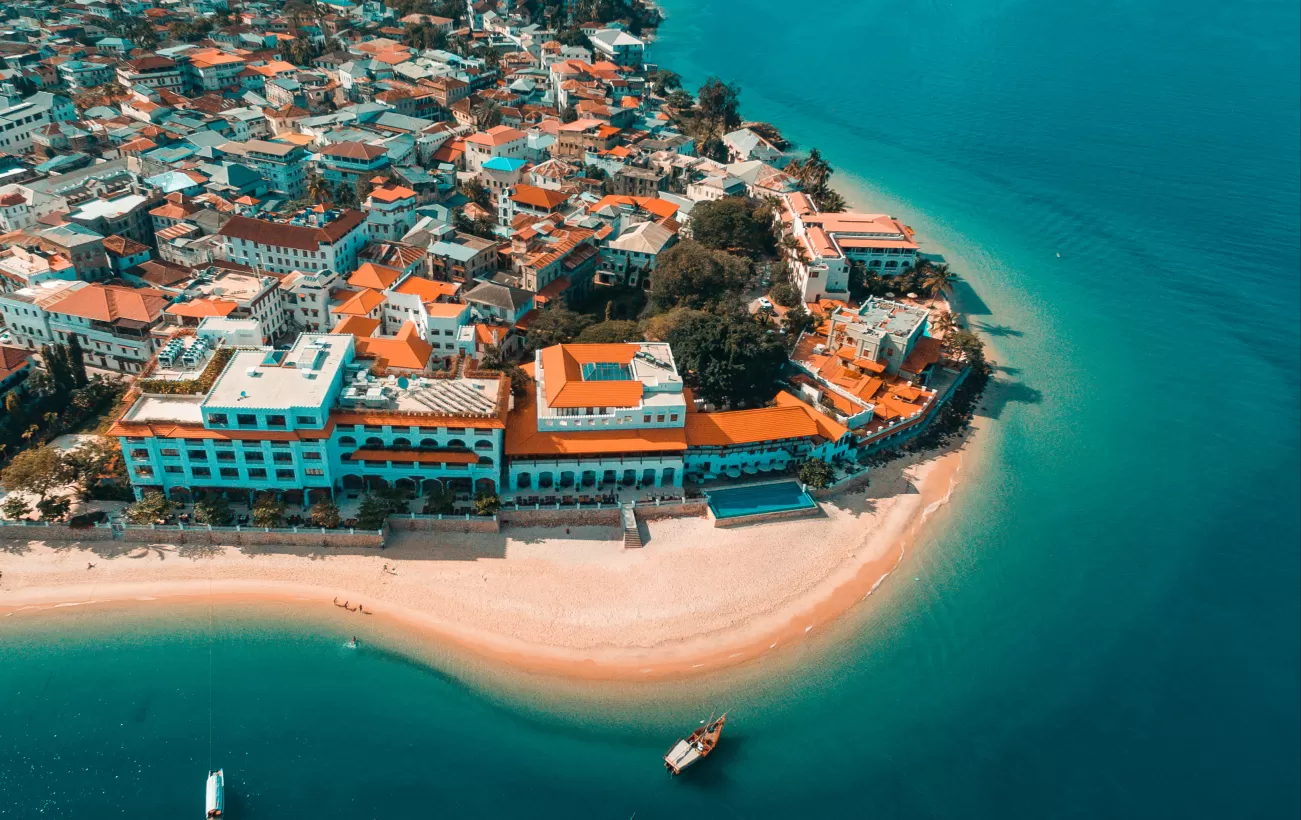
Pemba lies north of the main island of Zanzibar, within the same archipelago, but its western shore faces a deep channel separating it from mainland Tanzania. That geography gives the diving much of its character. Reef slopes and walls meet water moving through a much larger system, bringing food, changing visibility and setting limits on where a dive can comfortably go. It is another part of Tanzania, less familiar to many visitors arriving for wildlife ashore, but no less deserving of time. There is no need to diminish the safari to make the reef matter.
How The Pemba Island Dive Sites Are Shaped
The important feature is the proximity of shallow reef to deep water. Parts of the Pemba Channel are hundreds of metres deep, which puts the seabed far beyond recreational diving, even when the reef beside a diver remains comfortably within range. That depth is a geographical fact, not an invitation. The useful part of a wall dive is the band of living reef within the agreed profile, not the distance still available beneath it.
Nor is the entire western coast one continuous vertical face. Reef tops, slopes, ledges and steeper sections create different exposures to current and light. A description of a wall beginning in shallow water cannot tell us where a particular entry should be made, where the reef offers shelter from the flow, or where divers can finish safely. Those are site decisions, made with current local knowledge rather than the general reputation of Pemba diving.
Water movement helps explain the abundance of attached filter feeders. Sea fans spread branching surfaces into the flow, where small polyps can capture passing food. Sponges draw water through their bodies, extracting suspended material. Many soft corals also benefit from food delivered by moving water. Their apparent stillness conceals a constant exchange.
But stronger current does not automatically mean a healthier reef. Light, temperature, sediment, physical damage and water quality all matter, and different organisms tolerate different conditions. A richly textured wall is worth looking at closely, rather than treating as proof that everything beneath the surface is well. The more interesting question is why particular forms grow where they do: a fan exposed on a ledge, a sponge occupying a recess, fish gathered where the water delivers food without requiring too much effort to remain there.
The Current Has More Than One Clock
The temptation is to reduce a current dive to a tide table. Find the quiet part of the tide, enter, drift, return. Around Pemba that is an incomplete account. Tidal streams interact with the broader circulation of the East African coastal waters, and both are modified by reef shape and channel geometry. Water can accelerate around an edge, form an eddy behind an obstruction or behave differently at depth from the way it behaves at the surface.
High water is therefore not a universal appointment with slack current. The timing of weak flow at a particular reef may differ from the time of high or low water at the reference port. Around new and full moon, larger tidal ranges can bring stronger tidal streams, but the useful prediction still belongs to the individual site. A guide who knows how that reef behaved recently contributes something that a tide prediction alone cannot.
Season adds another layer. Along this coast, the northeast monsoon generally belongs to December through March, while southeasterly winds tend to dominate from May through October. These are broad planning patterns, not promises about a particular morning. The transitions vary, and local wind, rain and sea state can make an otherwise suitable period uncomfortable for a transfer or recovery.
A western anchorage may offer shelter from an easterly component in the wind, but shelter at the yacht does not establish conditions at an exposed reef edge. We separate those decisions. Somewhere can be pleasant for breakfast and unsuitable for putting divers into the water.
The practical consequence is patience before entry. The dive team needs to assess the actual flow and its likely development, not simply confirm that the calendar looks favourable. If conditions differ from the briefing, the briefing changes. Sometimes the site changes. Occasionally the useful decision is to keep the equipment dry, without asking the people aboard to justify their disappointment.
Planning The Water Before Leaving Discovery
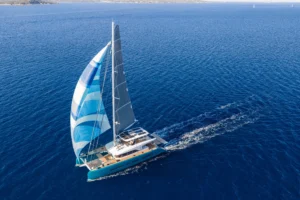
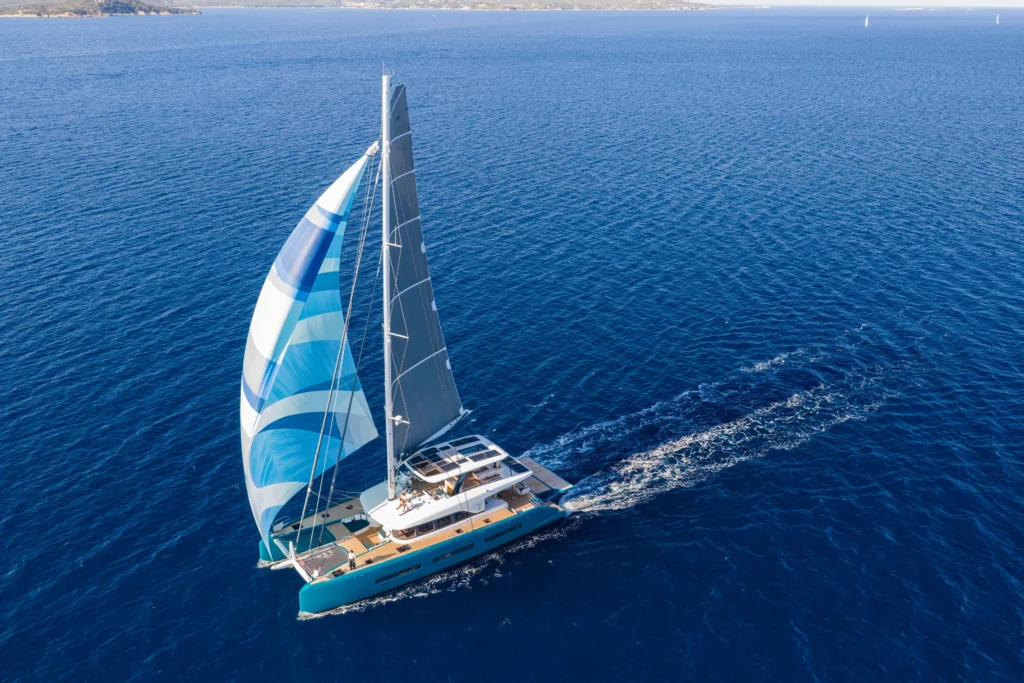
For Discovery, the Lagoon Eighty2 sailing the Naora Global Expedition, a visit to Pemba requires two connected plans: one for the yacht and one for the divers. A good anchorage does not necessarily make a good diving base, and a compelling dive site does not justify a poor anchorage. Holding ground, swinging room, reef clearance, changing wind and any local restrictions all belong in the yacht decision. An anchor belongs in verified suitable ground, not in living coral because the water above it looks sheltered.
Sven, Naora’s founder and captain, plans every weather window and sails every leg himself. That continuity matters on a world route, but offshore seamanship and detailed knowledge of a local dive site are different forms of experience. We want both in the decision. For diving here, that means working with suitably qualified local diving professionals and confirming the permissions, support and conditions appropriate to the chosen site.
The recovery plan deserves as much attention as the descent. Even an illustrative current of 1 knot carries water 1 Nm in an hour. The significance is not that this is a forecast for Pemba. It is that divers can surface well away from their entry point without having swum anywhere deliberately. A tender left waiting beside the original reef position is not a drift-diving plan.
The surface boat needs a dedicated, competent operator, a clear understanding of the dive and an agreed way of maintaining contact with the group’s progress. Diver signalling, separation procedures and recovery arrangements must be settled before entry. Oxygen provision, communications and a realistic medical evacuation plan also need checking, including the actual accessibility of recompression care. Having equipment aboard is only useful if the people responsible know how to use it and what follows.
These preparations are part of the ease a guest should feel. Nobody should have to discover, while climbing a moving ladder in full equipment, that the return to the boat was the least considered part of the morning.
Diving The Pemba Island Dive Sites With A Margin
A wall can quietly distort the sense of depth. On a sloping seabed, the bottom provides a visible reference. Beside a steep face, there may be only coral alongside and blue underneath. The body feels suspended, the reef continues downward, and a fish moving below can draw attention away from the depth display. This is why an agreed limit needs to remain a limit even when nothing in the view appears to have changed.
The gas calculation changes whether the diver notices or not. At 20 metres, ambient pressure is approximately three times that at the surface. An open-circuit diver taking the same number and volume of breaths therefore uses roughly three times as much cylinder gas per minute. Add the effort of swimming against current and consumption rises further. Depth and exertion spend the same finite reserve, which is one reason an unhurried drift can be preferable to an ambitious attempt to reach a particular feature.
Comfort here depends on more than a certification card. Recent experience, controlled buoyancy, familiarity with the equipment and the ability to use a delayed surface marker buoy within one’s training all matter. The dive should fit the least comfortable participant’s actual ability, not the most experienced person’s appetite. A shallower, more sheltered site can give a far better morning than a celebrated wall that leaves someone watching their pressure gauge with growing anxiety.
When the flow is suitable, the physical experience can be remarkably gentle. The reef moves past without much finning. Close details resolve out of the wider scene: the fine branches of a fan, a sponge opening, a fish withdrawing just far enough into cover. Exhalations become the loudest nearby sound. There is space to look because the dive plan has removed the need to hurry.
That ease has boundaries. Unexpected acceleration, difficulty maintaining depth or a flow that separates the group are reasons to follow the agreed abort procedure, not to improvise an endurance exercise. The briefing should make those decisions familiar before anybody needs them.
Reading The Living Wall
Pemba’s attraction is often expressed through large animals, particularly the possibility of encounters along the channel edge. Napoleon wrasse belong in that conversation, but an encounter remains an encounter, not a feature that can be scheduled. Hammerheads are even less suitable as an expectation around which to organise a recreational dive. Neither early light nor deep water makes a shark appointment reliable.
There is a cost to looking only outward. A diver waiting for a silhouette in the blue can pass an entire wall without seeing how it functions. Small fish often gather on the upstream side of a feature, where food arrives first. Others hold close to the reef, using its irregular surface to reduce the work of swimming. A change in their position can be worth noticing, although it is an observation to interpret alongside instruments and the guide’s assessment, not a substitute for either.
Coral condition requires similar restraint. A pale colony deserves attention, but colour alone does not settle its health. Light changes with depth, species differ naturally, and a single visit provides no baseline. Broken branches, fishing line, sediment resting on living tissue and bare areas colonised by algae raise useful questions. They do not authorise a sweeping verdict on an island’s reefs.
Our own part is more straightforward. Buoyancy should keep fins and equipment away from the wall. A photograph is not a reason to grip a coral branch or settle onto the reef. If current makes remaining in position difficult, the answer is usually to let the photograph go. There is something satisfying about leaving with a sharper memory and one less image, particularly when the alternative would have made the reef pay for the picture.
Pemba Beyond The Waterline
Coming out of moving water has its own small sequence of sensations. A cylinder feels heavy again. Wind finds the wet fabric at the shoulders. The broad underwater quiet gives way to an engine, a voice, the practical business of making room for the next person. Recovery is not finished when the first diver reaches the boat. It is finished when everyone is accounted for, equipment is secure and the group is ready to move.
Only then does the island properly return to view. Pemba is a place of clove cultivation, fishing, trade and ordinary working days. Describing it as untouched would erase the people whose knowledge makes a thoughtful visit possible. Its relative distance from the main tourism circuit does not mean that its coast is empty or that a yacht has arrived somewhere without existing claims, customs and responsibilities.
Swahili is the everyday language, and the island’s predominantly Muslim culture deserves consideration ashore. Modest clothing away from swimming areas, permission before photographing people and sensitivity around prayer and Ramadan are ordinary courtesies. They should not require a special performance. A greeting and enough time to listen usually do more than an elaborate declaration of respect.
The same care belongs in buying food. Locally landed fish is not automatically responsibly caught or well handled. Species, capture method and the condition of the fish matter, as does keeping it chilled between purchase and the galley. Sourcing locally is valuable when it supports good work and produces a sound meal, not merely when it gives dinner a story. The place remains real after the diving equipment has been rinsed.
Enough Time To Change The Plan
Pemba makes sense within Naora’s wider way of sailing because the expedition continues beyond any one guest’s stay. Members choose when and where along the worldwide route they join, and how long they remain, within the practical requirements of the passage and its joining points. Discovery keeps sailing. An individual visit does not have to carry the burden of making an entire circumnavigation happen at once.
That freedom still has limits. A guest may have a firm departure date, and weather may remove the preferred diving window. We cannot turn flexibility into a promise that every desired experience will happen. What we can do is avoid treating the most demanding site as the only worthwhile outcome. A sheltered reef, time ashore or an afternoon aboard can belong fully to Pemba rather than feel like substitutes for it.
The best reason to allow time here is that understanding arrives more slowly than a sighting. The current becomes something to read rather than overcome. The wall becomes a collection of living relationships rather than a depth to claim. Later, with salt drying on the back of a hand and the equipment put away, there can be a particular contentment in knowing that some of the blue was left unexplored.