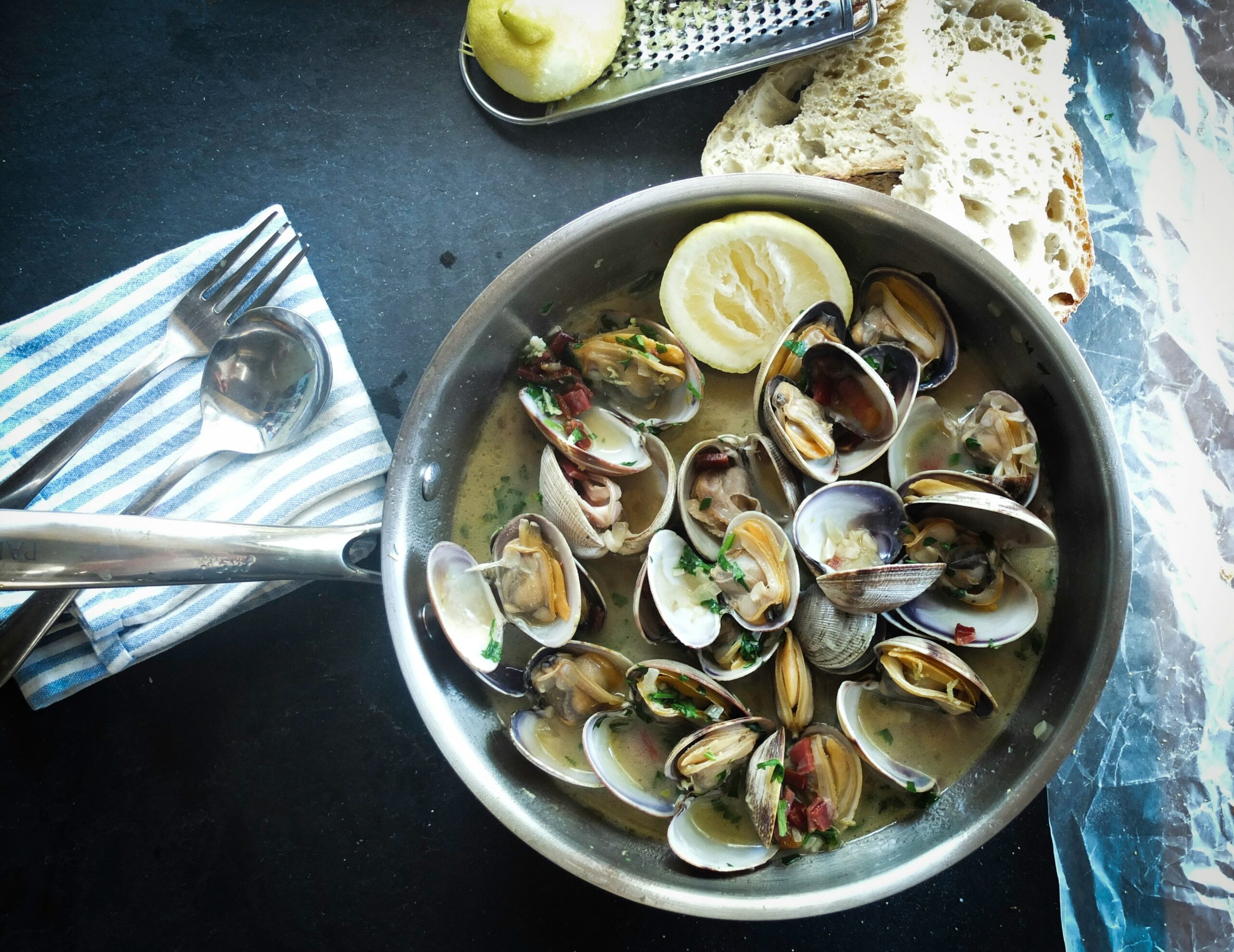
The finest dishes on the Naora voyage are not the dishes that take the longest to prepare. They are the dishes that the offshore context makes available in the specific form that no kitchen with a supply chain can replicate: the ingredient so fresh that the preparation required is inversely proportional to the quality of the result. The pasta alle vongole is the clearest expression of this principle available in the Mediterranean chapter of the circumnavigation. Five ingredients. Ten minutes.
The best plate of the day, consistently, on every occasion the vongole are collected and the white wine is open and the pasta water is boiling and the galley is doing the minimum necessary to connect the four.
The Vongole
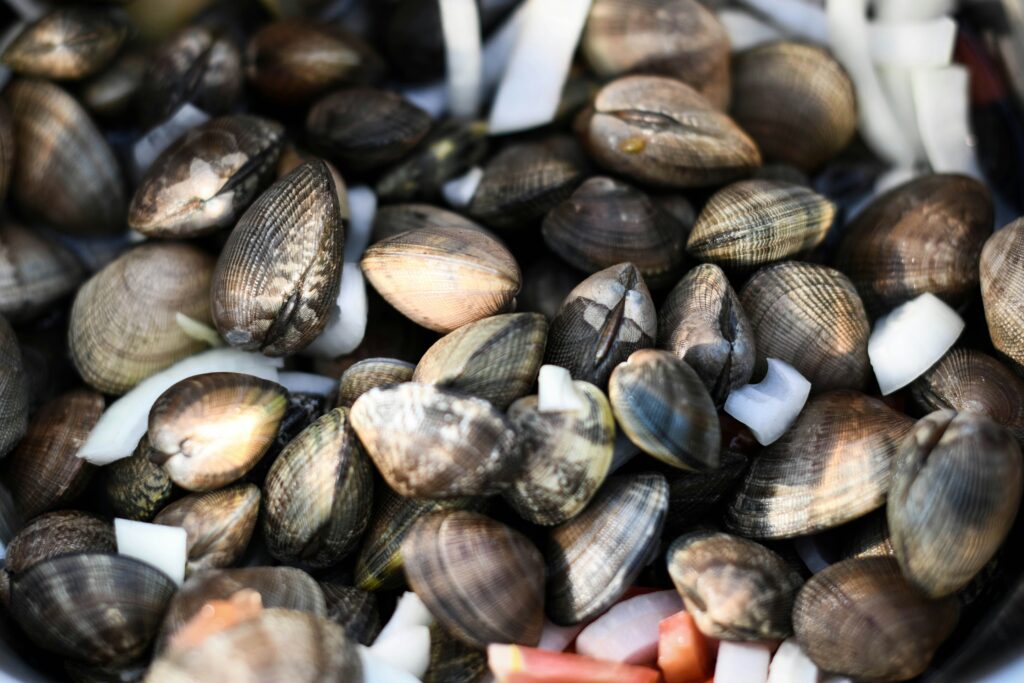
Sven collects the vongole. Not because the clam collection is the captain’s specific responsibility — it is not — but because the low water on the Aegean sand flats before the anchorage is the specific hour of the morning when the captain is often the first person awake and the sand flat is visible from the boat and the mesh bag is in the dive locker and the collection requires twenty minutes of wading rather than any specific skill beyond the willingness to be in ankle-deep water at seven in the morning before anyone else has had coffee.
The vongole come aboard in the mesh bag, purged of their sand in the bucket of fresh seawater that the saltwater deck wash provides, and they are on the counter of the galley by eight ready for the preparation that the lunch will require.
The specific quality of the Aegean vongole is the quality of the clam that has been living in the sand of the Aegean since the Minoan fishermen were collecting them from the same flats: the brine that the Aegean’s specific salinity produces, the sweetness that the clam accumulates from the specific phytoplankton of the Aegean’s clear shallow water, the size that the absence of commercial pressure on the anchorage’s sand flat allows. They are small and sweet and intensely flavoured with the sea they came from.
The Preparation and the Taste
The pasta water goes on first: salted to the sea, boiling hard. The spaghetti goes in when the water boils. Eight minutes for the pasta means eight minutes for the sauce, and the sauce is the five minutes of the olive oil from the market above the bay and the three cloves of garlic sliced thin and the vongole in the pan on high heat with the white wine from the bottle that the provisioning morning bought from the fisherman who makes it on the hillside above the port.
The vongole open in the steam of the wine, each opening releasing the juice that is the sauce: the brine of the Aegean clam and the wine from the Aegean hillside meeting in the pan in the three minutes it takes for all of them to open. The pasta goes in from the pot with the pasta water that the sauce needs to loosen it. The flat-leaf parsley from the deck herb pot. The lemon zest from the lemon that the same market provided alongside the wine. Two minutes. Done.
The taste is the taste of the Aegean in concentrated form: the brine of the clam and the sweetness of the wine and the grassy pepper of the olive oil and the brightness of the lemon zest, all arriving simultaneously in the bowl on the afterdeck table with the bay that the vongole came from visible thirty metres away. The anchorage is the provenance of the dish and the dish is the compressed version of the anchorage. This is the specific pleasure of the offshore galley that the restaurant kitchen, which buys its vongole from a supplier, cannot provide: the knowledge of exactly where the ingredient came from, visible from the table where the dish is being eaten.