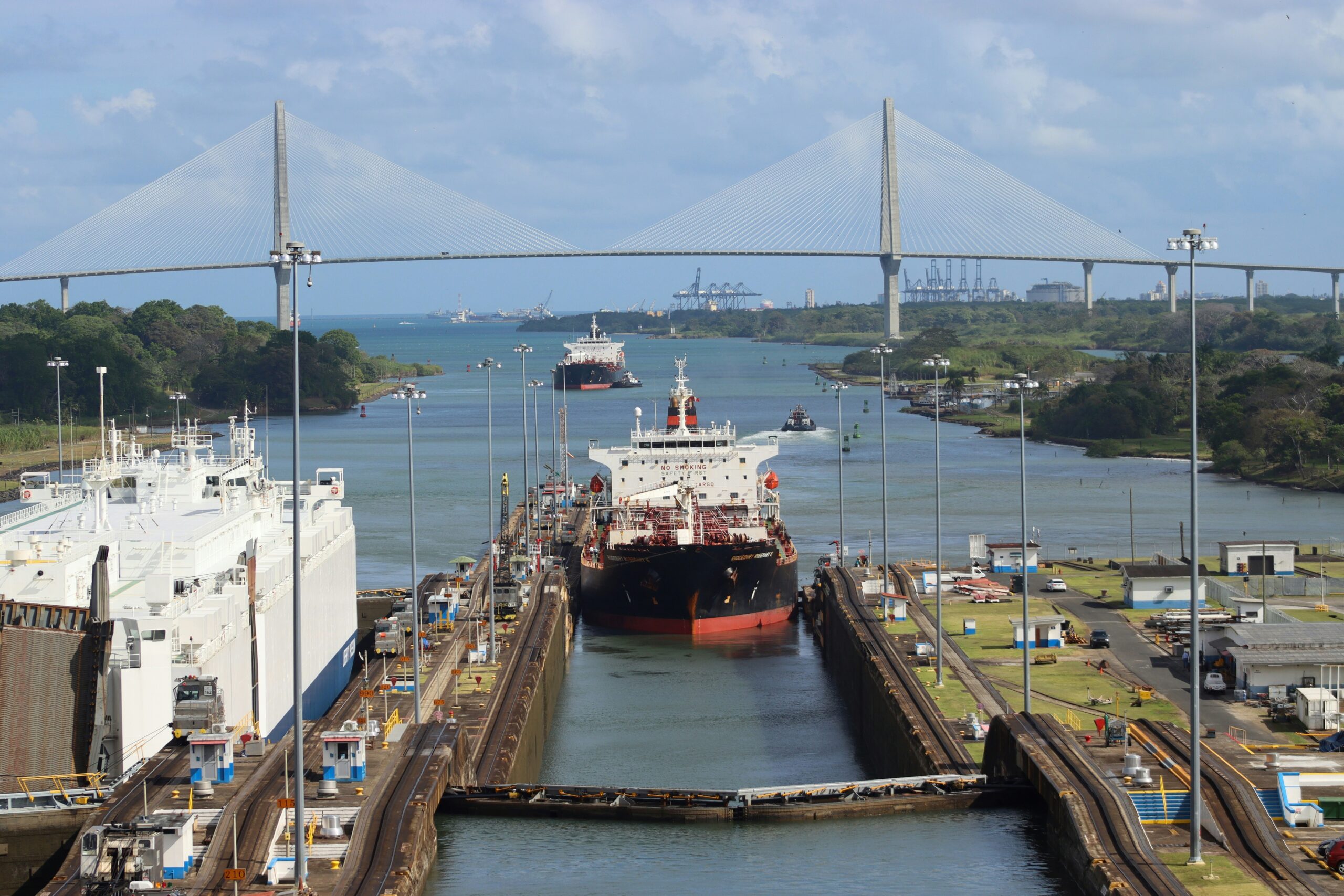
The Panama Canal transit is the single most logistically complex day of the Naora circumnavigation. The transit requires advance arrangements with the Panama Canal Authority, the assigned transit slot, the four line handlers required by the Canal regulations in addition to the regular crew, and the canal advisor, who boards the vessel to guide the passage while Sven remains in command. It also requires the careful preparation of the lines that the handlers use to hold the vessel in the centre of the lock chamber while the water rises or falls roughly eight metres during a lock cycle of about fifteen minutes.
Antony handles the permit and the paperwork. Sven, Naora’s founder and captain, plans every weather window and sails every leg himself, including this one. The canal advisor handles the radio communications with the lock authority. The four Panamanian line handlers handle the lines. Twelve members handle the cameras and the particular disbelief that the spectacle produces.
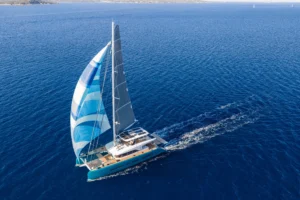
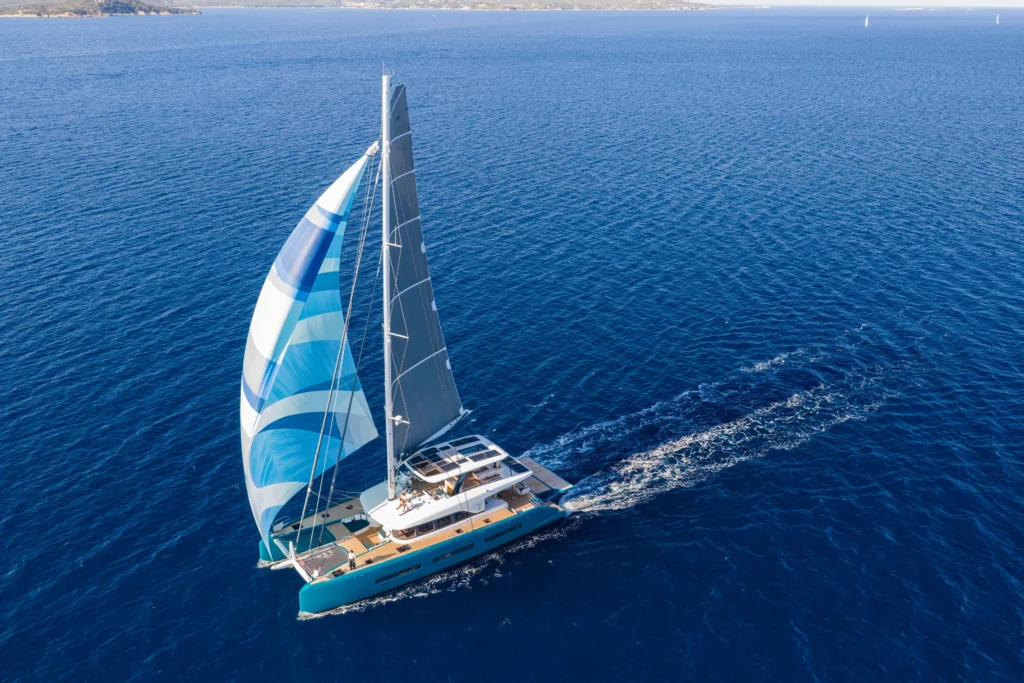
The Miraflores locks are the Pacific-side locks, the two lock chambers that raise the incoming vessel from Pacific sea level to the Miraflores Lake level before the Pedro Miguel lock raises it to the Gatun Lake level. Discovery, our 2025 Lagoon Eighty2, enters the Miraflores locks with the vessel that the transit schedule assigned to the same lockage, typically a container ship or a bulk carrier of the Panamax class, the maximum size that the original canal locks can accommodate.
Discovery at nearly 25 metres sharing a lock chamber with a 294-metre Panamax container ship is the particular scale comparison that the canal produces and that no other experience replicates: the offshore sailing catamaran and the vessel carrying four thousand containers held in the chamber where the rising water treats both with the same indifference to the scale difference between them.
The Engineering
The Panama Canal was completed in 1914 after ten years of American construction that followed the French failure of the 1880s. Across both efforts, an estimated twenty-seven thousand workers died, many from malaria and yellow fever, others in the dangerous work of excavation. The landslides of the Culebra Cut were among the obstacles to moving vessels from one ocean to the other through the Continental Divide without excavating a sea-level canal through the terrain.
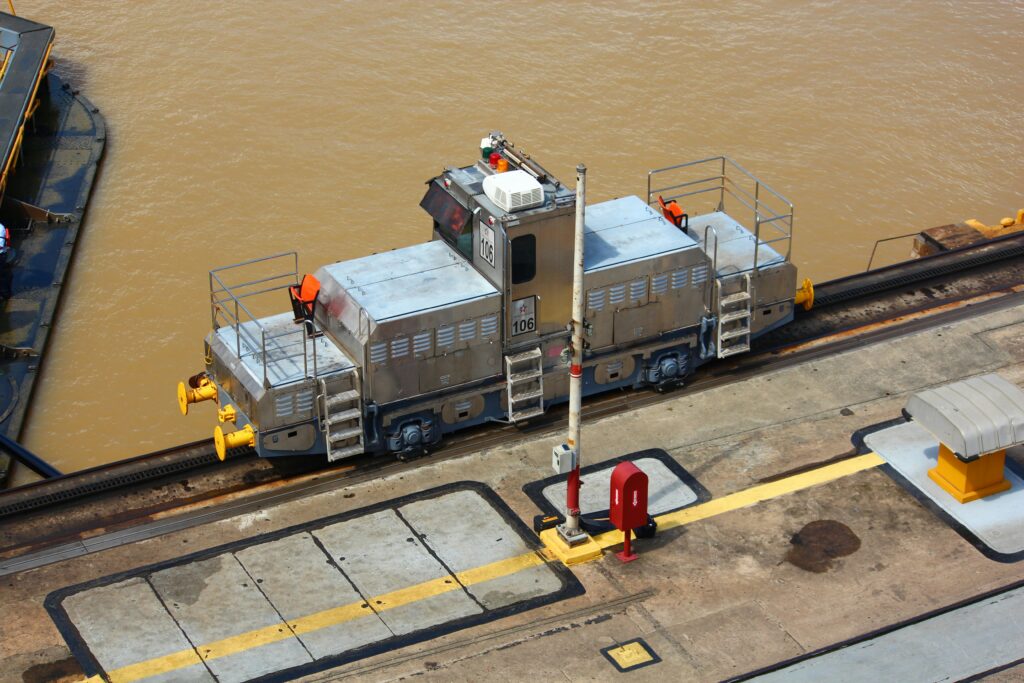
The solution was the lock system: the three sets of locks that raise the vessel 26 metres above sea level to the Gatun Lake level and lower it on the other side. The water that fills the locks comes from Gatun Lake by gravity, no pumps needed to lift it, gravity alone moving the water that moves the ship. The engineering is the engineering of 1914 operating in 2031 when Discovery passes through it. The basic mechanism has not changed. The continent is still divided. The water still rises by gravity. The ships still pass from one ocean to the other in eight to twelve hours.