The octopus has three hearts, blue blood, and a brain that wraps around its oesophagus in the architecture of an animal whose nervous system evolved entirely independently from the vertebrate nervous system and arrived at a form of intelligence that the research literature now classifies as genuinely complex: the octopus that solves puzzles, uses tools, recognises individual human faces, and plans for the future by collecting shells to construct a den that it will occupy later.
The octopus has no skeleton and no exoskeleton: the soft body that can fit through any opening large enough for its beak, the only rigid structure in its entire body, to pass through. This makes the octopus the most physically flexible hunter in the reef and the most architecturally invisible animal in the underwater world when it chooses to be both.
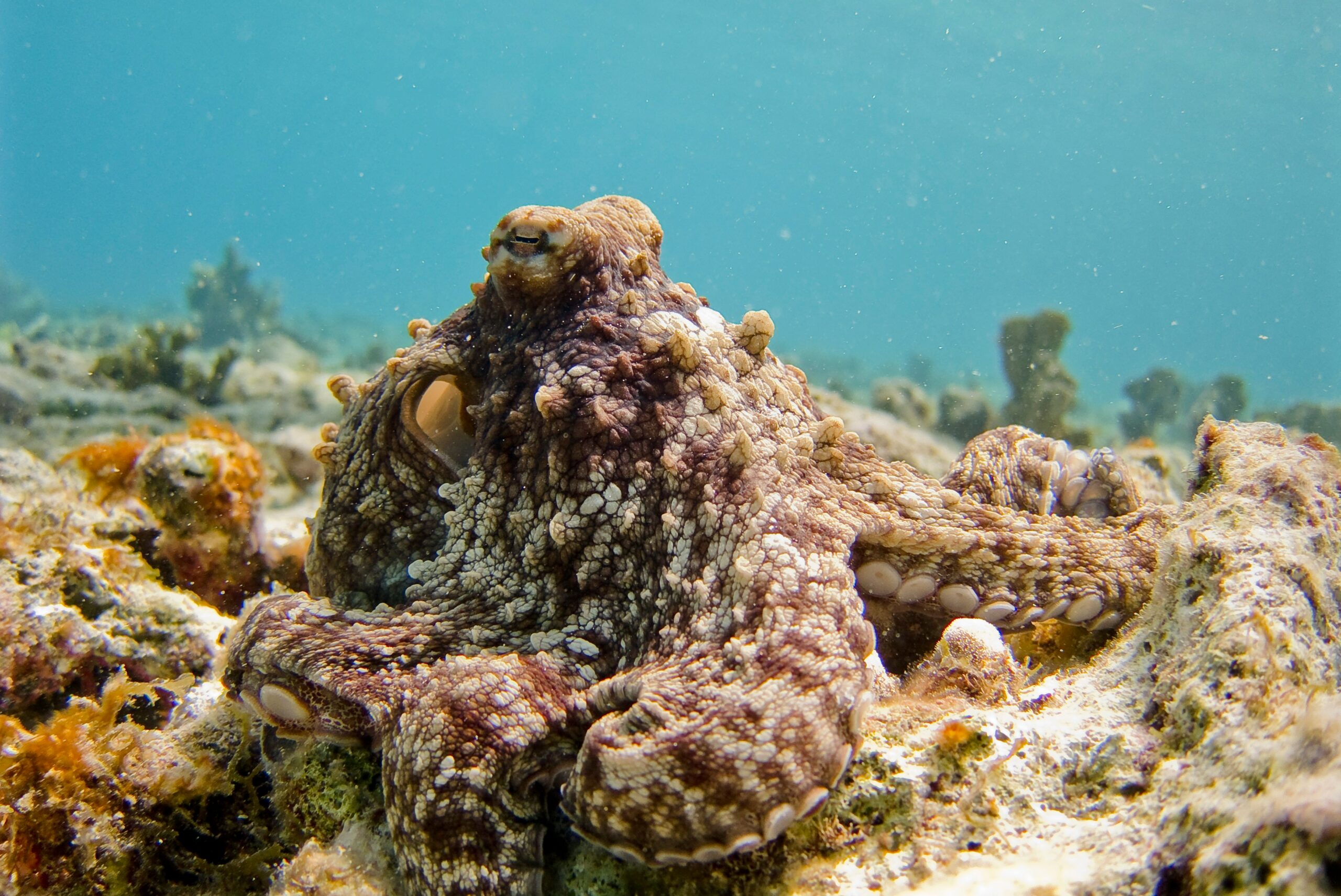
The camouflage that the octopus produces is the most sophisticated in the animal kingdom: the chromatophores, the pigment cells in the skin that the nervous system controls directly, change colour in milliseconds. The iridophores produce the structural colour, the reflection and the iridescence that the chromatophores’ pigment alone cannot produce.
The papillae, the skin projections that the octopus raises and lowers by muscular control, change the skin’s texture to match the rock or the coral or the sand that the octopus is pressed against. The colour and the texture change simultaneously in the less than one second that the octopus requires to become invisible against the background it has moved to. The diver who was looking directly at the octopus two seconds ago and who moved their attention away for one second will not find it when they look back.
The Naora Approach to the Octopus
The octopus encountered on the reef during the Naora diving programme is the octopus in its den or on its hunting ground, and the encounter is the encounter on its terms. We do not poke the octopus out of its den with a stick, which is the behaviour of the diver who wants to see the camouflage demonstration that the disturbed octopus produces when it jets away from the disturbance.
The disturbed octopus does not demonstrate its camouflage in the jet-away response: it demonstrates its escape response, which is the ink cloud and the high-speed retreat to the nearest cover, and the encounter is over. The undisturbed octopus demonstrates everything the octopus is: the slow hunting movement, the colour pattern that the hunting context produces rather than the alarm response, the specific intelligence of the animal that is assessing the diver who is watching it with the same assessment that the diver is making of the octopus.