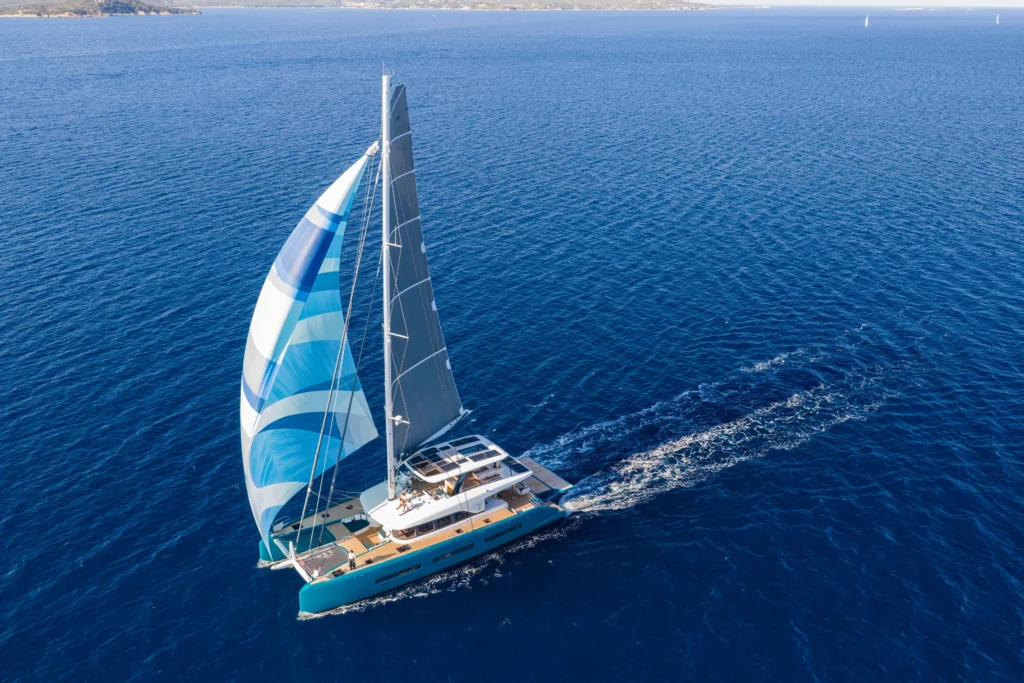
The watch system starts the moment we leave the dock on a passage. Three hours on, three hours off, rotating through the crew and the members who want to be part of it. During the day the watches are pleasant. The sun is up, there is usually something to look at, the wind is doing something interesting and everyone is broadly awake and social. The day watch is sailing.
The night watch is something else entirely.
It begins properly around midnight, when the boat has settled into its passage rhythm and the last of the day-people have gone below. The person coming on watch climbs into the flybridge with a thermos of something warm and takes the helm or the seat beside it from whoever has been out since eight. There is a brief exchange, the course, the wind angle, anything worth noting, and then the outgoing watch goes below and the night belongs to whoever is left in the cockpit.
What happens in the next three hours is difficult to describe to someone who has not done it, and immediately recognisable to anyone who has.
The Quality of the Dark
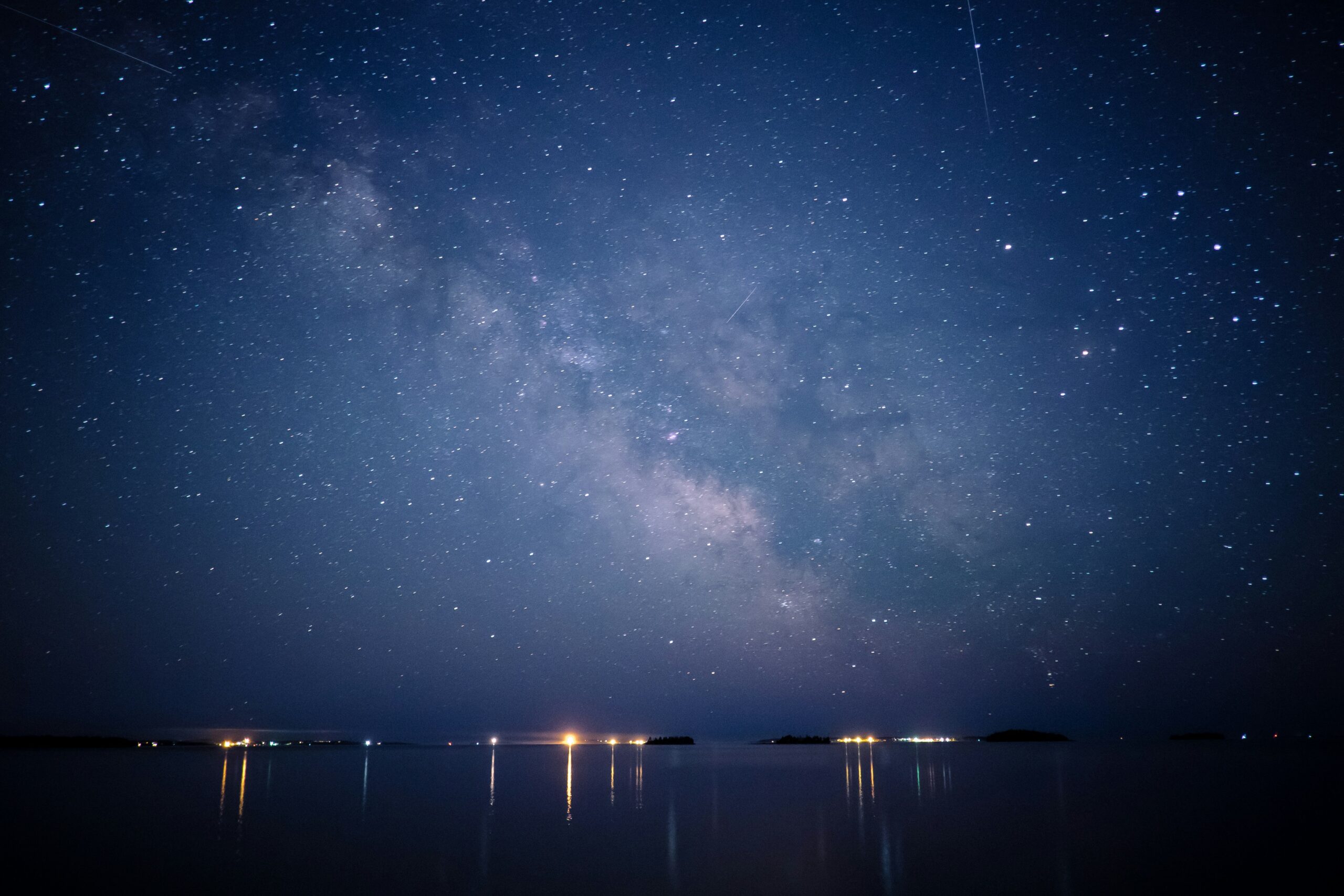
Offshore darkness is a different quality to any darkness available on land. There are no light sources visible in any direction. The horizon, on a clear night, is defined by the edge of the star field rather than by anything on the water below it. On a night with no moon, the Milky Way is not a faint smear but a structure, with depth and texture and a brightness that makes it feel close enough to be part of the boat’s immediate environment rather than something happening far above it.
The first time a person sits a night watch in open ocean, the sky is usually the first thing they comment on when they come below at dawn. Not the sailing, not the conditions, not how the boat felt. The sky. Because nothing else in most people’s lives has prepared them for that quality of darkness and that quantity of stars, and the effect is immediate and difficult to shake.
At Naora, we tend to time our offshore passages so that the longer night watches happen in the phases of the moon that produce the best sky. A full moon night watch has its own quality, the silver path on the water, the way the boat’s wake glows, the sense of being illuminated from above in the middle of nowhere. But the dark of the moon, when the sky is fully open, is the watch that most people remember longest.
What the Mind Does with Three Hours of Dark and Water
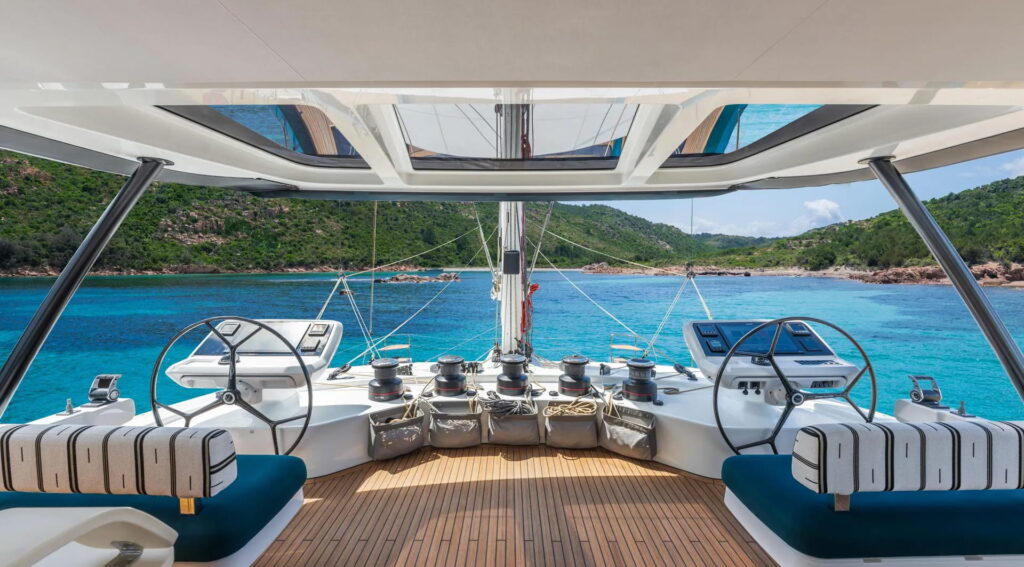
The watch demands a specific quality of attention. You are responsible for the boat. You check the horizon regularly for lights, the compass for course, the sails for trim, the instruments for anything worth noting. These checks take perhaps thirty seconds every few minutes. In between them, there is nothing required of you except to be present and alert.
What happens in those gaps is what the night watch is actually about.
The mind, deprived of the usual inputs and freed from the usual demands, goes somewhere different. Not nowhere. Somewhere specific. People on night watch think about things they have not thought about in years. Problems that have been sitting unresolved for months find their way into the foreground and, sometimes, resolve themselves without any particular effort. Decisions that felt impossible on land feel navigable in the dark over the water. The quality of thinking that four hours in a night cockpit produces is unlike anything available in a normal week.
It is also, sometimes, simply quiet. Not every night watch produces revelation. Some of them are just four hours of dark water and wind and stars and a thermos that goes cold faster than expected. Those watches are also valuable. The capacity to sit quietly with nothing to manage except the boat and the night is a skill that most people in modern life have almost entirely lost, and the night watch gives it back, one passage at a time.
The Watch Rotation Aboard Naora
On Naora, the watch system on offshore passages is managed by our professional crew, which means members are never obligated to stand a night watch. The boat is always in the hands of someone qualified and awake. But many members choose to be part of the rotation, and the ones who do tend to describe it as one of the most significant parts of the journey.
The system is flexible. Some members take the evening watches from nine to midnight, comfortable hours with the possibility of seeing a sunset and the early stars. Others specifically request the two to six shift, the deepest part of the night and the one that ends with the dawn arriving over the horizon ahead. Our captain builds the watch schedule around both the needs of the passage and the preferences of whoever is aboard and willing to be part of it.
The handover between watches is one of the small rituals of passage life that accumulates into something significant over a long crossing. A few minutes on the afterdeck between the incoming and outgoing watch, a brief account of the night, what the wind did, what was seen, how the boat felt. Sometimes that conversation runs longer than it needs to.
The incoming watch is not yet in the boat’s rhythm and the outgoing watch is reluctant to leave the night behind. Those conversations, conducted quietly in the dark while the boat moves and the crew below is asleep, are a specific kind of exchange. They do not happen anywhere else.
| Watch | Hours | Character |
|---|---|---|
| First evening watch | 21:00 to 00:00 | Sunset, first stars, the boat settling into night rhythm. The most social watch. |
| Middle watch | 00:00 to 03:00 | The deepest dark, the fullest sky. The watch most people remember longest. |
| Morning watch | 03:00 to 06:00 | Begins in dark, ends in full daylight. The dawn arrives on this watch. One of the finest experiences offshore. |
The Dawn at the End of the Watch
The morning watch runs from four until eight. It begins in full darkness and ends in full daylight. At some point in the middle of it, depending on the season and the latitude, a faint lightening appears on the eastern horizon. Not a colour yet. Just a quality of lesser dark. And then, over the next thirty to forty-five minutes, the sky runs through every shade from deep indigo to pink to gold to the particular pale blue of early morning at sea, and the horizon resolves itself from a guessed line into a clear one, and the ocean comes back into view around the boat, and the world is new again.
A dawn watched from an offshore watch position, having been in the dark for four hours, is not the same as a dawn watched from a hotel balcony with a coffee already in hand. It has been earned. It arrives at the end of something. The person who watches it from the flybridge of a moving boat in the middle of an ocean crossing has been keeping the boat since before anyone else was awake, and the dawn is the end of that responsibility and the beginning of something entirely different.
We have never had a member stand the morning watch and come below at eight without saying something about the dawn. Not always a lot. Sometimes just a look. But it is consistent. The night watch, and the dawn that ends it, is one of the experiences that the Naora journey does not need to arrange or curate. It simply happens, every passage, for whoever is awake to receive it.
- The watch system runs on all offshore passages, managed by our professional crew with members joining as they choose
- Four watches of three hours each rotate through the night, each with a different character and quality
- Offshore darkness and the open sky are available on no other passage type and in almost no other context in modern life
- The middle watch, midnight to three, produces the fullest sky and the deepest quiet
- The morning watch ends with a dawn that, from an offshore position after four hours in the dark, is unlike any other sunrise