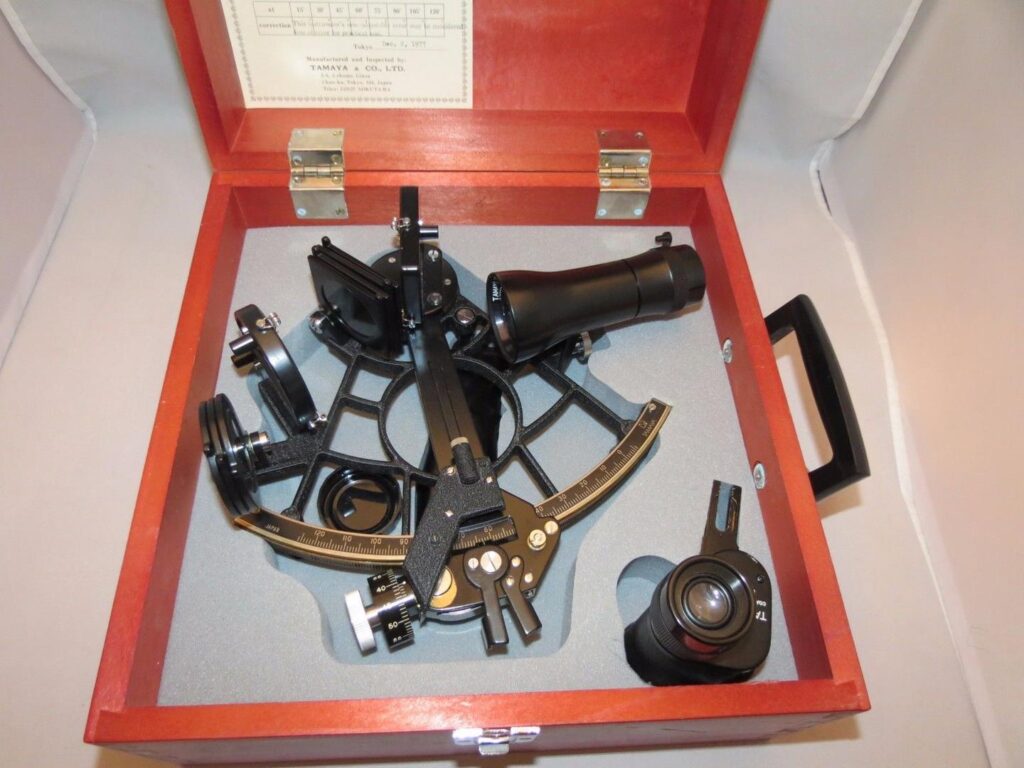
I carry a sextant. It is a Tamaya Jupiter, made in Japan, thirty years old, calibrated regularly and in working condition on every passage the boat makes. It lives in its box in the navigation station next to the almanac and the sight reduction tables, and I use it on ocean crossings when the sky is clear and the horizon is visible at the right times of day. Not because the GPS has failed, which it has not failed on a passage in many years. Because the skill of celestial navigation requires practice to maintain, and because a skill that exists only in a manual is not a skill at all.
This article is about celestial navigation as a working practice rather than a historical curiosity, and about what the night sky looks like when you have learned to read it as an instrument rather than as decoration
The Noon Sight
The noon sight is the simplest and most reliable celestial observation available to an offshore navigator. At local apparent noon, the sun reaches its highest point in the sky: the meridian transit. A sextant measurement of the sun’s altitude at this moment, combined with the sun’s declination from the almanac for that date, gives the observer’s latitude directly and without calculation beyond simple arithmetic. The result is accurate to within a few miles with a well-maintained instrument and a practiced observer, which is adequate for most offshore passage navigation.
I take the noon sight on every ocean passage when conditions allow. Not because it gives me anything the GPS does not give me more precisely. Because taking it keeps the skill current, because the process of planning the sight, preparing the instrument, timing the observation, and working the calculation is a different kind of engagement with the passage than reading a number off a screen, and because the result, the pencilled latitude line on the paper chart that represents a physical measurement of the angle between my eye and the sun, connects the passage to the history of every navigator who made the same observation on the same ocean before the electronic systems existed to make it redundant
The Star Fix at Twilight
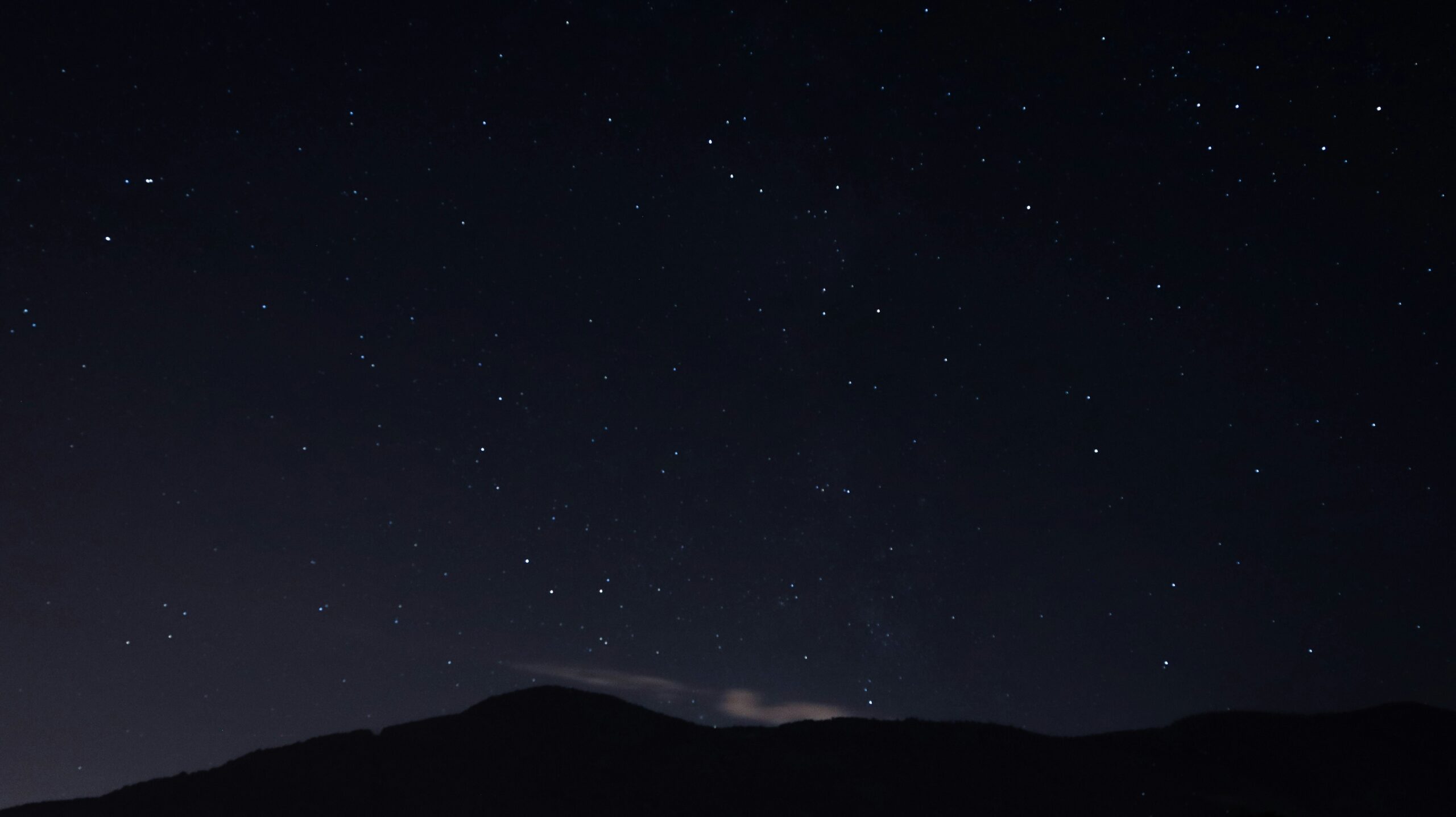
The star fix is more demanding than the noon sight and more complete: observations of three or more stars give both latitude and longitude simultaneously, producing a position fix that is independent of all electronic systems. The window for star sights is brief: the period of nautical twilight, when the horizon is still visible but the stars are bright enough to measure. Morning twilight and evening twilight each provide perhaps twenty minutes of usable conditions. In that window, the navigator identifies the target stars, measures their altitudes in sequence, and combines the observations to produce the fix.
The stars I use most consistently for evening fixes in the tropics are Sirius, Canopus, Vega, and Arcturus in the northern hemisphere leg, and Achernar, Alpha Centauri, and Acrux when we are south of the equator. Each of these has a specific appearance, a specific brightness, and a specific position in the sky at a given time and latitude that, once learned, is identifiable instantly. The navigator who knows these stars does not look at the night sky and see an undifferentiated field of light. They see specific named points at known positions, each one a potential measurement, the sky organised into a coordinate system that the body navigates by feel after enough practice.
This knowledge changes what the night sky is. Not from beautiful to useful, because the beauty is undiminished and in some ways increased by the understanding. From decorative to legible: a text that carries information as well as wonder, that can be read as well as admired. The sailor who understands the stars is in a different relationship with the night ocean than the sailor who does not, and the difference is the specific quality of belonging that comes from knowing where you are by your own measurement rather than by a number on a display
What Light Tells You About Distance
The light from Sirius, the brightest star in the night sky, left its source 8.6 years ago. The light from Canopus left 310 years ago, in the early 18th century, when the first systematic charts of the southern hemisphere were being produced. The light from some of the stars in the Milky Way that I use as a backdrop when I am taking evening sights left its source thousands of years ago, before any of the civilisations that produced the navigation traditions I am working within had begun.
I do not find this abstraction. I find it specifically and practically orienting. The scale that looking at the night sky from the middle of the Pacific Ocean produces is not the scale of human concern: the passage, the weather, the destination, the members aboard. It is the scale of existence itself, and the specific smallness it produces in the person doing the looking is not diminishing. It is clarifying.
The concerns that felt large on land, and that the passage has already reduced somewhat, reduce further still under a sky that contains light that has been travelling since before any of those concerns existed. The boat is very small. The ocean is very large. The sky is incomprehensibly larger. And the position line on the chart, produced by measuring the angle between my eye and a light that left its source before Shakespeare was born, is one of the finest things I know how to do.