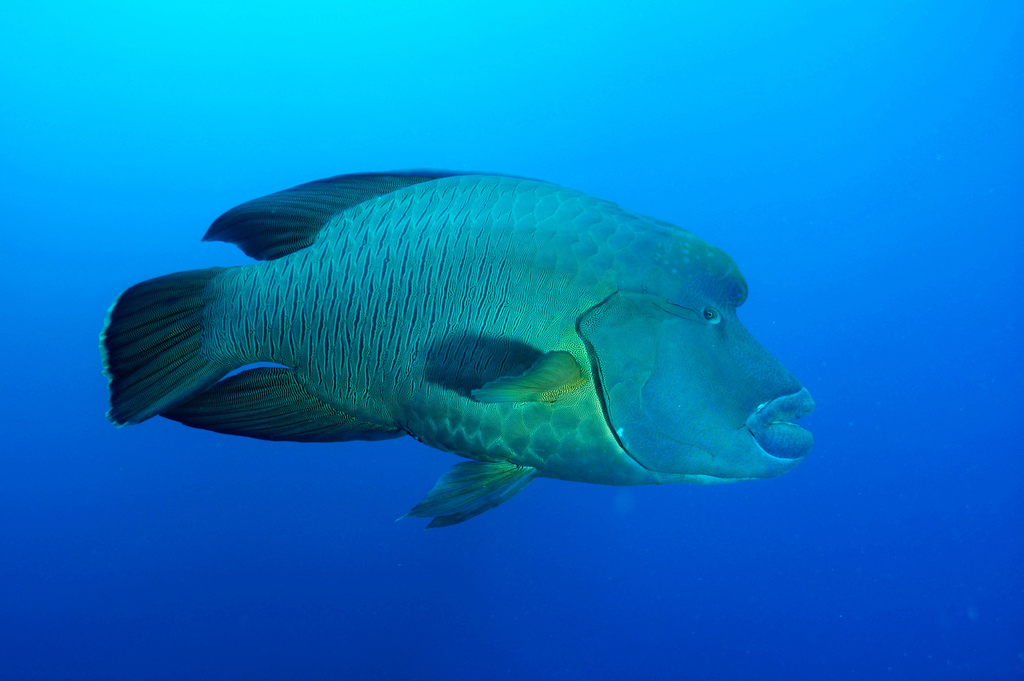
The Napoleon wrasse or Cheilinus undulatus, known also as the humphead wrasse for the prominent hump that develops above the eyes of the mature adult, is the largest wrasse in the ocean, reaching two metres in length and 190 kilograms in body weight. It is also one of the most unusual fish in the Naora route’s diving programme for the reason that most members initially find difficult to assimilate: the Napoleon wrasse starts its life as a female and changes to male as it matures.
The sex change, protogynous hermaphroditism, in the biological terminology, is completed over several years as the fish grows, and the mature male with the characteristic hump and the vivid electric blue and green colouration of the largest fish in the reef is the fish that was a smaller, less colourful female earlier in its own life.
The Napoleon wrasse lives for up to thirty years and reaches sexual maturity at five to seven years. It feeds on the hard-shelled prey that the powerful beak-like mouth produces the crushing force to open: molluscs, echinoderms, crustaceans, and particularly the crown-of-thorns starfish that most reef fish avoid because of the toxic spines and that the Napoleon wrasse consumes with apparent indifference to the toxicity.
The Napoleon’s role in managing the crown-of-thorns starfish population makes it a species of specific ecological importance on the reefs where it is present: the crown-of-thorns outbreak that devastates the coral in the absence of its natural predators is the outbreak that the Napoleon wrasse population partially constrains when the population is healthy.
Vulnerable and Familiar
The Napoleon wrasse is listed as vulnerable by the IUCN, threatened primarily by the live reef fish trade that the luxury restaurant market in Southeast Asia and southern China has generated a specific demand for: the Napoleon wrasse is the species most directly affected by the cyanide fishing practice that the live fish trade’s demand for undamaged live specimens created in the coral reefs of the Indo-Pacific.
The Napoleon wrasse at the Naora dive sites is the Napoleon that the absence of fishing pressure has allowed to reach the size and the age that makes it what it is: the two-metre unhurried presence in the reef that approaches the diver with the specific curiosity of an animal that has not been taught to fear the human silhouette.
The Napoleon wrasse at the cleaning station on the Komodo wall or the Banda Sea seamount that allows the diver to approach to within a metre is the ambassador of the reef that has been protected from the specific pressure that removed it from the accessible reefs. We treat it accordingly.