A hand holding a cup against the table can tell you something that a wide photograph of the same deck cannot. There is movement, and someone is quietly accommodating it. Naora press coverage becomes interesting at that distance: close enough to notice the small adjustment, and patient enough to explain what it means for the people living aboard.
The sailing press and the travel press approach a yacht through different doors. One may begin with the rig, the passage plan and the person responsible for both. The other may begin with the morning, the shared table and the feeling of arriving somewhere by water. We do not see these as competing accounts. The morning depends on the passage plan. A good account follows that connection rather than separating the experience from the work that makes it possible.
Two Readings Of The Same Deck
A sailor looking at an anchorage photograph may notice the direction in which the boats are lying, the distance from the shore and the room available to swing. Someone considering a week aboard may notice where the shade falls and whether there is somewhere to read without joining every conversation. Both are looking at the same deck. Both are asking sensible questions about living there.
The distinction becomes less useful when we assign those questions to separate kinds of people. A person can understand sail trim and still care deeply about dinner. Someone without offshore experience can ask the most important operational question of the day: what happens if the weather changes? Familiarity with sailing vocabulary is not a measure of how carefully someone thinks about their family, their time or the people responsible for them.
On a moving deck, comfort is physical before it becomes descriptive. Your feet find a slightly wider stance. You move a glass away from the table edge without interrupting a conversation. In shade, the air can feel cool against skin still warm from the sun, while the sound of water rises and falls along the hull. These ordinary adjustments belong in the travel story because they tell the reader what being aboard involves. They belong in the sailing story because motion, shelter and fatigue are practical matters. Neither account is complete without the other.
What Naora Press Coverage Needs To Establish
The first obligation is to describe the undertaking accurately. The Naora Global Expedition is a private sailing expedition around the world, planned for five years from 2027 to 2031, covering roughly 49,000 Nm. Those figures describe a continuous undertaking, not a collection of unrelated holidays. The yacht has to remain in good order between the moments anyone might choose to photograph, and a decision made during one passage can affect maintenance, provisioning and rest before the next.
The dates matter for another reason. A planned voyage must be written about as a planned voyage. An intended landfall is not an arrival already made, and a description of life we are preparing for is not a remembered evening. That distinction may seem modest, but it is fundamental. A reader should never have to untangle aspiration from a logbook entry.
Responsibility also needs a name. Sven is Naora’s founder and captain. He plans every weather window and sails every leg himself. Antony is the co-founder. Sven’s role connects the long view of the expedition with the immediate decision to leave, wait or change the approach. The person shaping the undertaking is also the person who must answer for its movement through actual conditions.
A thoughtful account should therefore make room for decisions that produce no spectacle. Waiting for a more suitable window may mean losing time somewhere else. Choosing a more sheltered anchorage may mean giving up a prettier outlook. Neither decision becomes good merely because it is cautious. The judgement lies in understanding the alternatives, the margin available and the consequences of being wrong.
The Weather Outside The Frame
The Indian Ocean makes the connection between sailing and travel particularly clear. In its northern reaches, monsoon circulation brings broad seasonal changes in prevailing wind direction. Elsewhere across the ocean, different wind regimes and cyclone considerations shape planning. Writing about the Indian Ocean as though it offers one consistent sailing condition removes the very thing that gives a passage its character: where the yacht is, and when.
The world route follows the tradewinds and parts of the Coconut Milk Run, but a favourable seasonal pattern is not a departure forecast. Climate helps determine which region belongs in which part of a long plan. The weather window concerns the days immediately ahead. Between those scales sit developing systems, local effects and the possibility that the forecast will change. A recognisable route does not remove the need to read it again before leaving.
Wind speed alone is an incomplete description of comfort. Wave direction and period matter, as does their relationship to the yacht’s heading. A short, steep sea can make ordinary movement tiring even when the wind sounds unremarkable. A longer swell may allow an easier rhythm, depending on its direction. The useful account explains the combination rather than attaching a reassuring adjective to a single forecast number.
The same care continues at anchor. Shelter must be considered against the wind expected later, not only the wind on arrival. Holding depends on the seabed and how the anchor sets. The depth relevant to anchor scope includes the vertical distance to the bow, with allowance for changing water level, rather than simply the number displayed by the depth instrument. Swinging room matters because the yacht will not necessarily remain where the photograph places it.
Across ten regions, from the Mediterranean through the oceans and back towards Africa and the Red Sea, these decisions take different local forms. The underlying habit remains the same: examine what can change before becoming comfortable with what is happening now. That is the part of an apparently unhurried day that deserves to be made visible.
The Yacht Behind The Ease
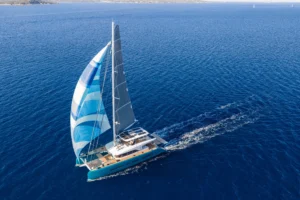
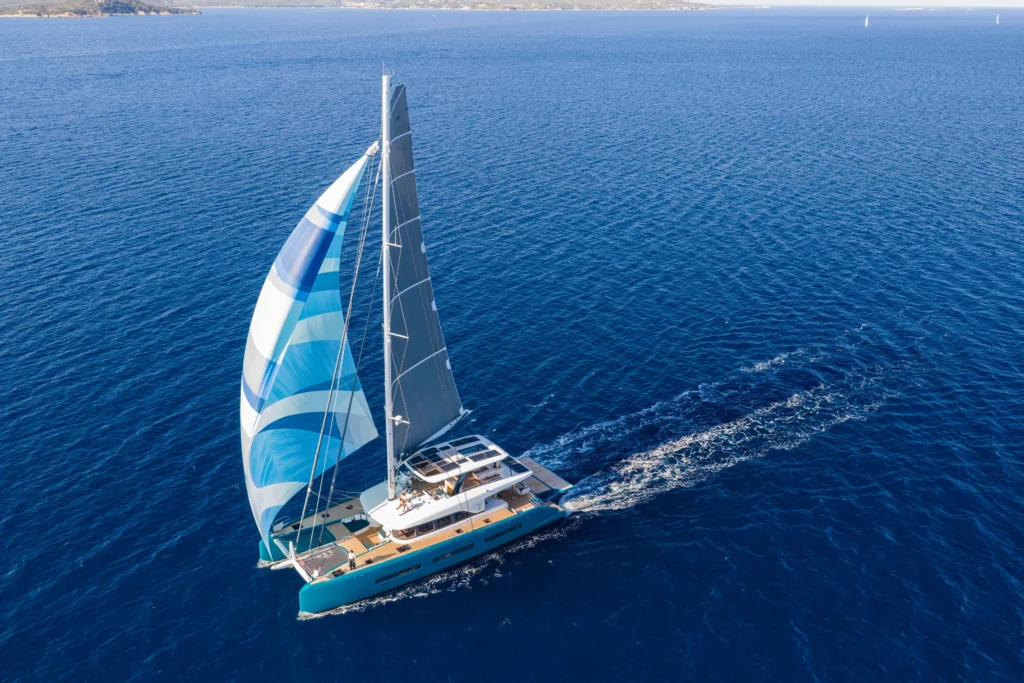
Discovery is a 2025 Lagoon Eighty2 sailing catamaran. Lagoon is an established builder of cruising catamarans, and the yacht’s identity matters more than a string of descriptive claims. It gives the reader something definite to understand. Yet a model name cannot explain the condition of a vessel, the way it is operated or the judgement of the people aboard. Those remain working responsibilities.
A catamaran offers useful living space and generally less heel than a sailing monohull, but a level deck should not be mistaken for low rig loads. On a multihull, increasing heel is a less obvious warning than it can be on a monohull. Sail reduction therefore follows the vessel’s operating guidance and the developing conditions, not the impression that everyone still feels comfortable. Reefing early can preserve both a sensible load margin and an easier motion.
There is a similar distinction between carrying useful equipment and having unlimited independence. Onboard water production allows Discovery to spend longer away from shore supply, but making water requires power and functioning machinery. Filters, servicing, stored reserves and consumption still matter. Independent energy systems also have capacities and maintenance requirements. Self-reliance is the ability to understand and manage those dependencies, rather than pretend they have disappeared.
This is where an equipment description can become a worthwhile human story. Water management concerns the shower after a swim as well as the machinery that supports it. An electrical fault can affect more than one convenience. Maintenance time is time that cannot also be spent sailing or ashore. The ease a guest experiences is partly the result of work being done before its absence would become noticeable.
Reading Naora Press Coverage Alongside Film
The movement from an editorial account to moving images is understandable. A reader wants to hear the water, see the spaces in use and discover whether the language corresponds to something recognisable. But film does not prove an entire undertaking. It records what was in front of the camera during a particular interval, from a particular position, with everything outside the frame still outside it.
A calm sequence at anchor says little about the passage that preceded it. A distant view of a yacht under sail cannot show the condition of a fitting or the care taken during a watch handover. Camera stabilisation and the absence of a visible horizon can also make motion difficult to judge. These are reasons to read images attentively, not reasons to dismiss them. Film can be wonderfully revealing when we understand what it can and cannot carry.
The most useful record includes enough context to locate the moment. Was the yacht underway or anchored? Was the sequence recorded recently or during an earlier stage? Was the wind expected to remain steady? If a plan changed, what changed with it? A brief explanation can turn a beautiful image into something more durable: an account of a decision another person can understand.
An independently reported account and our own material have different roles. A reporter can test a claim, pursue an awkward detail or notice something we have stopped seeing. Our own record can follow the continuity of the voyage more closely, but it remains our selection. We should be clear about that. The strongest relationship between the two is neither repetition nor endorsement. It is the opportunity for a reader to compare descriptions, context and visible practice over time.
There is also no reason to confuse a voyage record with uninterrupted live access. Offshore communications depend on service, conditions and working priorities. Material recorded at sea may be shared later. A delayed account can still be accurate, intimate and valuable. The watch comes before the audience.
The Freedom To Join A Moving Voyage
The route plan spans 166 legs and more than 187 destinations. These numbers are useful because they describe different things. A leg is a section of the voyage between joining and leaving points; it may contain more than one destination. Neither figure guarantees a succession of daily landfalls. Some sections are passages, and the experience of crossing open water is fundamentally different from moving between nearby anchorages.
Naora’s freedom of choice lies in joining that continuous movement where it fits a life. Through the private circle, guests decide when they join, where along the route they step aboard and how long they stay, one week or many. Discovery can also be privately hired for a carefully designed voyage. In either case, the yacht remains part of the larger expedition rather than returning to a fixed starting point after every stay.
That freedom needs an honest explanation of its limits. Choosing a section of the route does not give anyone control of the sea. A Bodrum loop and an Atlantic crossing ask different things of the people aboard. For someone with a fixed onward commitment, the margin around a passage deserves attention before the appealing details of the destination. The most useful distinction is between time spent in a region and time that must be spent making distance.
This is also where the sailing story becomes personal without becoming intrusive. A family may need to understand movement, sleep and the practical rhythm of meals. Someone continuing to work may need to distinguish an ordinary connected day from a passage during which communication could be interrupted. Someone seeking quiet may care less about the number of activities than about being able to decline them without explanation. These questions help determine which part of the voyage makes sense.
No editorial description can settle those matters for every reader. What it can do is give them enough detail to recognise their own priorities, including the possibility that a different region, a shorter stay or a less demanding section would suit them better.
What A Faithful Account Leaves Intact
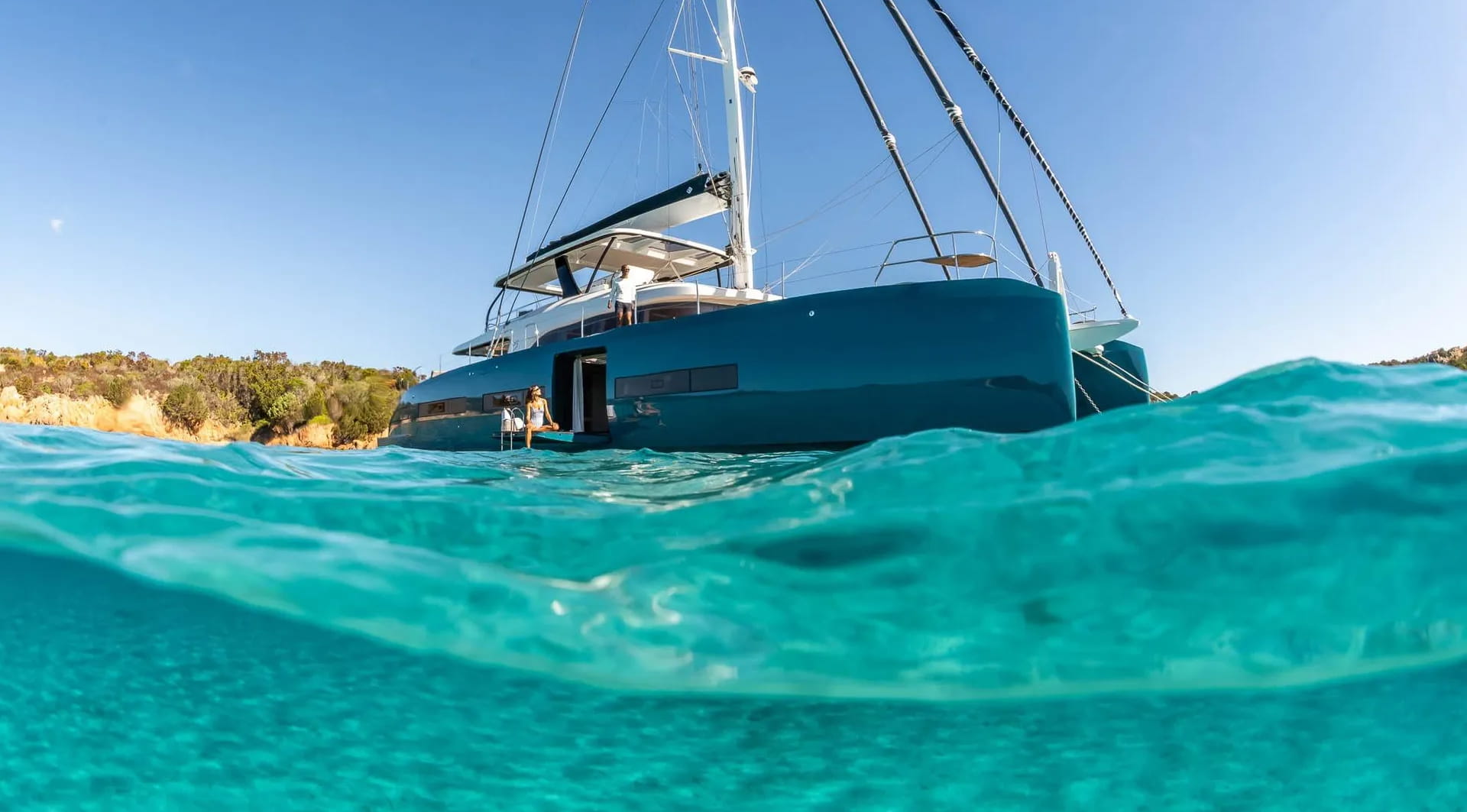
At a sheltered anchorage, there is a particular relief in setting a glass down and leaving it there. The body stops making its small corrections. As the light softens, the sound of water against the hull becomes easier to notice beneath a conversation, and the smell of something cooking can reach the deck before anyone thinks about dinner. Such a scene is possible because the yacht has stopped somewhere appropriate. The practical decision remains present inside the pleasure.
It is worth describing that pleasure without making it perform a transformation. Time at sea can be absorbing, restful, tiring or all of those within the same passage. People do not owe a writer a revelation because they have travelled a long way. A quiet afternoon is allowed to remain a quiet afternoon. Its value does not depend on what someone might later claim it changed.
The same restraint belongs to the places along the route. An anchorage that looks empty from the water may have fishing grounds, customary uses or protected habitats that are not visible in the image. Local permissions and marine protection rules shape what can be done. Sourcing provisions locally can connect a meal with a place, but it does not make the whole voyage environmentally neutral. Our intention to move carefully has to remain a practice whose limits we acknowledge, not a conclusion supplied by attractive scenery.
Privacy places a further boundary around the account. A shared table need not become a set of named profiles. A conversation can matter greatly to those present without becoming material for anyone else. The record can follow the weather, the work, the food and the changing coast while leaving the people aboard room to have a life beyond the frame.
The sailing story and the travel story finally meet there, in the relationship between careful work and time that does not need to justify itself. Enough has been considered for someone to put down a glass, look towards the shore and leave it untouched for a while.