Before putting a cup of coffee down at sea, you look for somewhere it will stay. Your hand makes a small correction as the table moves beneath it. The luxury train vs sailing comparison begins, for us, with details this ordinary: how the body settles into motion, how a meal is served, how much of the world outside is allowed to shape the day.
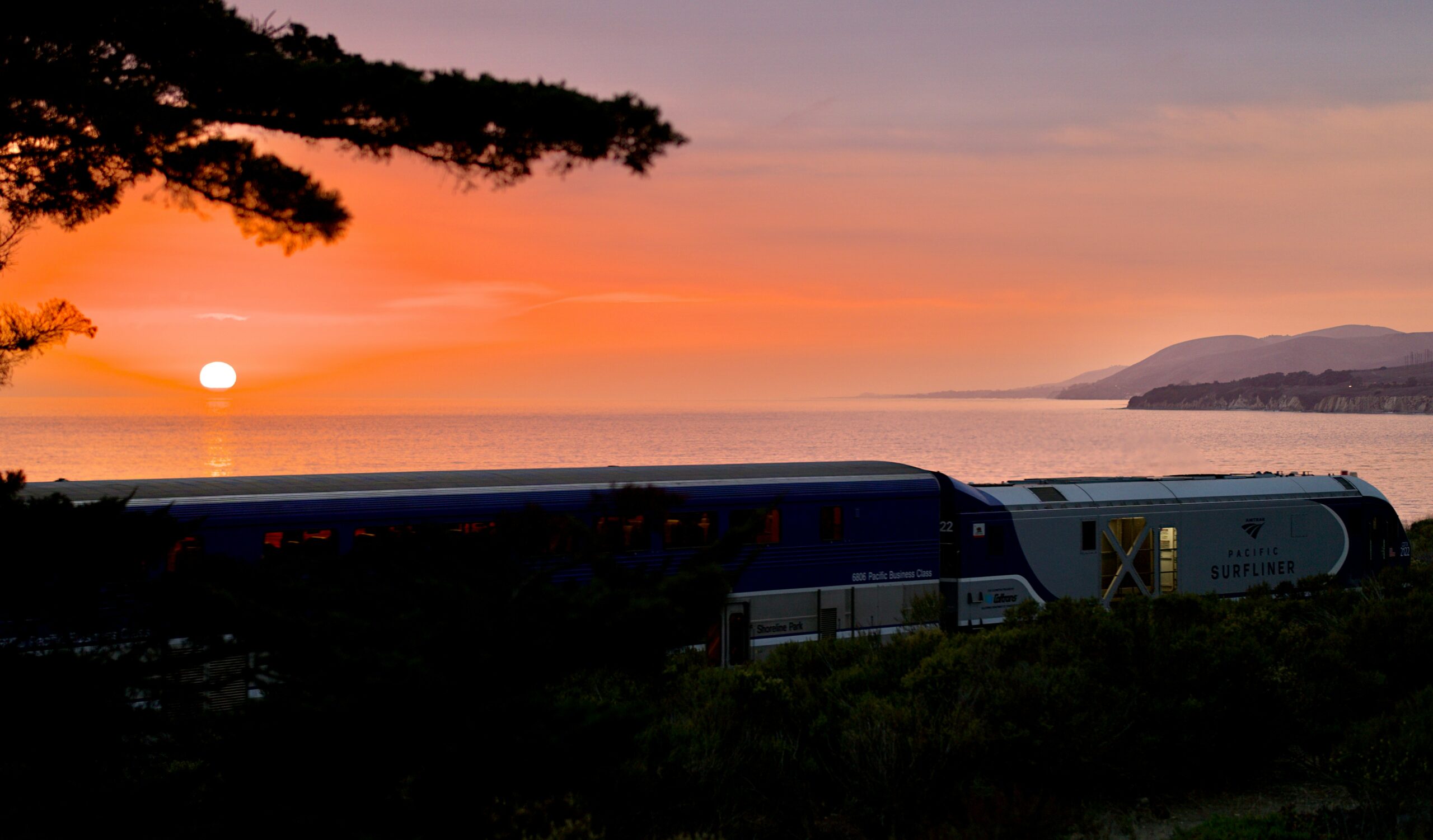
The Venice Simplon-Orient-Express, Rovos Rail and the Royal Scotsman give travel back some of the time that aviation removes from it. There is pleasure in finishing lunch while the landscape continues, in having an evening between departure and arrival rather than a transfer to endure. An offshore passage shares that willingness to spend time on the way. But it makes a different agreement with the traveller. The difference deserves something more careful than saying that a train watches the world while a yacht lives in it. A railway belongs to its landscape, too.
Luxury Train Vs Sailing Begins With The Route
A railway journey has a physical continuity that is part of its appeal. The track connects one place to another through terrain that required surveying, excavation, bridges and generations of maintenance. On Rovos Rail between Cape Town and Dar es Salaam, or aboard the Royal Scotsman through the Scottish Highlands, the route is also a record of how people have moved through the land. Looking through the window need not be a passive act. Understanding why the line follows a valley can change what you see.
At sea, our route has continuity without a line laid beneath it. The Naora Global Expedition follows the tradewinds and parts of the Coconut Milk Run, but a prevailing wind is a seasonal tendency, not an appointment. The useful question is never simply whether the wind is blowing towards the destination. Its strength, the direction and period of the waves, the current and the conditions expected on arrival all belong in the same decision.
Across the Pacific, a favourable wind does not remove the need to examine the swell. In the Indian Ocean, seasonal monsoon changes affect the logic of passages in the areas they influence. A route that makes sense in one part of the year may ask too much of the yacht and the people aboard in another.
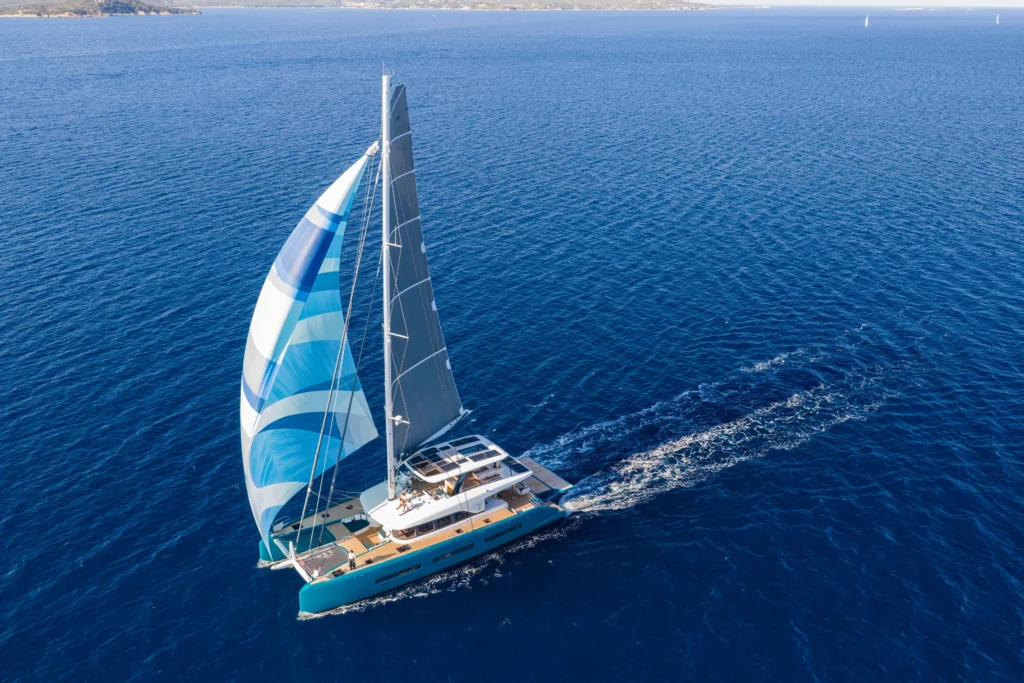
This is where slow travel becomes more than a preference for taking longer. On Discovery, our 2025 Lagoon Eighty2, we have to give conditions a meaningful say. Sometimes that means sailing steadily onwards. Sometimes the more deliberate choice is to remain where we are.
The Distance Between You And The Next Stop
The most useful comparison is often the interval between sensible opportunities to step off. A rail itinerary has established stopping places, even though passengers cannot necessarily change their arrangements at any station. A long ocean passage has stretches where there is no practical intermediate landing at all. That is a different commitment from several coastal passages linked by nights at anchor.
Before choosing an offshore leg, we would want someone to understand the longest continuous period at sea, not merely the total length of the voyage. Time aboard and time without a shore option are different measures. A person can love living on a yacht and still prefer a route with frequent landfalls. There is nothing lesser about that preference.
Arrival estimates also deserve their proper name. A difference of 1 knot sustained for 24 hours changes progress by 24 Nm. That is simple arithmetic, not a prediction of Discovery’s speed, but it explains why a modest change in conditions can matter over an ocean passage. Current, sail choices and a course adjusted for comfort can all change progress over the ground.
A railway timetable can be disrupted by weather and infrastructure problems. At sea, the uncertainty is more directly part of planning the passage itself. An onward flight booked close to the expected landfall can turn a reasonable adjustment into pressure that has no place in a navigation decision.
For someone with an immovable commitment ashore, the answer may be a coastal part of the route rather than a crossing. The freedom is in choosing the right commitment before departure, not in expecting an ocean to shorten itself afterwards.
What A Comfortable Passage Actually Requires
Sven, Naora’s founder and captain, plans every weather window and sails every leg himself. The weather window includes more than the moment of departure. It has to account for the likely development of conditions along the passage and for the coast at the other end. Leaving a comfortable berth is easy to picture. Arriving off an unfamiliar entrance in poor light deserves equal attention.
Wind speed alone is a poor description of comfort. A short, steep sea can produce a more tiring motion than a longer swell of greater height. Waves arriving from different directions can make the movement less predictable. The period, meaning the time between successive wave crests, helps explain why two forecasts with similar wave heights may describe very different days aboard.
A catamaran does not remove motion. Its wide platform behaves differently from a monohull, but pitching, acceleration and impacts from waves still matter. Depending on the conditions, changing course or reducing speed can make life easier than insisting on the shortest line. Reefing before the load becomes difficult to manage is another ordinary decision with consequences far beyond the sail plan.
The galley feels those consequences. A pot needs securing, a knife needs a place where it cannot slide, and a meal that is easy to serve may be wiser than one requiring several hot pans at once. The comfortable dinner begins in the passage plan, not when the table is laid.
Water production and independent energy systems extend the yacht’s ability to remain away from shore. They do not remove the need to monitor consumption, maintain equipment or carry reserves. The difference between ease and carelessness is often invisible to a guest: a locker properly latched, a developing fault noticed early, a decision to reduce sail while the work is still straightforward.
Luxury Train Vs Sailing Changes The Day
A dining carriage can give the day a welcome structure. Breakfast arrives within an understood rhythm; a stop or an evening meal provides the next point of orientation. The pleasure is partly that someone else has considered the sequence, allowing the passenger to settle into it.
Offshore, meals remain important, but the yacht also has a continuous working rhythm. Someone must maintain the lookout and monitor navigation while others sleep. A watch handover needs to pass on the traffic picture, the sail configuration, changes in the weather and anything that requires attention. It is a transfer of responsibility, not simply a change of person at the helm.
At night, the physical world contracts and expands at the same time. The illuminated instruments occupy a small part of your vision; beyond them, the water is mostly sound. Air feels cooler against skin that has spent the day in sunlight. A bright phone screen can briefly erase the faint distinctions your eyes have learned to make, which is why unnecessary light matters. The darkness can be beautiful without making it any less necessary to keep looking.
Being present for that hour does not require a guest to become responsible for the yacht. Participation has to fit experience, conditions and the captain’s judgement. Curiosity is welcome. An unfamiliar person should not have to carry an unfamiliar responsibility to justify being aboard.
Nor does everyone immediately sleep well at sea. Motion, noise and seasickness can make the adjustment tiring. We would rather discuss that possibility plainly than promise that distance from land produces instant rest. Suitable clothing, secure footing, sensible rest and a conversation about seasickness before departure are more useful than an expectation of transformation. Sometimes the first pleasure of a passage is simply waking hungry again.
Time In The Water Has Its Own Conditions
The original appeal of this comparison is easy to understand: a train carries you beside a landscape, while a yacht can become the place from which you enter the water. In the Indian Ocean, that possibility is part of what draws people towards sailing. But a photograph of a swim platform leaves out the decision that makes using it sensible.
An offshore passage is not a succession of swimming stops. Wind, sea state, current, visibility, available daylight and the ability to recover a person all matter. A stopped engine alone does not make the situation safe. Propulsion must be secured against accidental use, and the arrangements for observation and getting back aboard need to be clear before anyone enters.
At anchor, shelter from the wind does not necessarily mean freedom from current. Clear water can make movement difficult to judge until a swimmer notices how quickly the yacht is receding. For diving, a calm surface does not establish the conditions below it. Local knowledge, an appropriate assessment and a conservative decision are more useful than the colour of the water.
The anchorage itself needs care. Suitable holding ground, sufficient room to swing, the expected wind change and the effect of tide on depth all belong in the choice. Living coral is not a convenient place to put an anchor. Reaching somewhere beautiful does not give us permission to damage what brought us there.
When conditions are suitable, entering the water changes the scale of the yacht. From the surface, the hulls rise beside you; voices from the deck become smaller, and the salt reaches your lips before you have taken a stroke. There is a directness to that experience which matters. It does not make a walk from a railway stop less real. It makes this particular form of contact possible.
Privacy Without The Pressure To Participate
There are people for whom the social life of a train is part of the attraction. A conversation in a dining carriage can carry on precisely because nobody needs to arrange another meeting. There are also travellers who value a private compartment and the ability to withdraw. Neither preference says anything important about how adventurous someone is.
On a yacht, the social scale is smaller and the shared space more immediate. Good company includes knowing when to leave someone alone. A quiet morning should not require an explanation, and an afternoon reading should not be treated as a missed opportunity to get in the water. Privacy is partly a matter of space, but it is also a habit of consideration.
Guests can join through Naora’s private circle or arrange the private hire of Discovery for their own family or party. Having the yacht to one group allows the daily rhythm to be considered around those people: when they like to eat, how much time they want ashore, who enjoys an early start and who needs a slower morning. It does not put the weather under their control.
For a family, differing appetites for motion and activity deserve attention before choosing the leg. For people who need to remain connected to work, the same is true of communication requirements. Connectivity at sea should never be treated as a guarantee around which an essential obligation is built.
A useful conversation therefore concerns ordinary needs as much as destinations. Sleep, mobility, dietary requirements, comfort in the water and the need for quiet all influence whether a particular stretch of the route is a good fit. Getting those things right is more valuable than making every day sound extraordinary.
A Leg Ends But The Expedition Continues
The Naora Global Expedition is planned over five years, from 2027 to 2031, covering roughly 49,000 Nm. Those figures describe the continuing life of the yacht. They are not a measure of how much time a guest needs to give it.
The route comprises 166 legs and more than 187 destinations, which makes another distinction worth understanding: a leg is a section of the expedition, not necessarily a single uninterrupted passage between two places. Its character matters more than its position on a map. Days around islands and days crossing open ocean can occupy similar space in a calendar while asking very different things of the people aboard.
Members choose when they join, where along the worldwide route they step aboard and how long they stay, one week or many. Joining and leaving still need suitable ports, practical access and the necessary formalities. Freedom of choice works because those realities are taken seriously. Discovery keeps sailing around the world as people step into and out of its life.
That continuity is the distinction we would keep from the comparison. A fine train journey can be complete in itself, with the pleasure of a considered beginning and end. A Naora leg belongs to something that was moving before the guest arrived and will continue after they leave. For the time aboard, their meals, sleep and conversations take place within that larger undertaking.
Neither way of travelling guarantees a revelation. Both can offer something simpler and more dependable: enough unclaimed time to notice what movement usually conceals. At sea, there are hours when the course is settled, the necessary work is in hand and the next landfall is still beyond sight. Light moves slowly across the table. The coffee is warm between your hands.