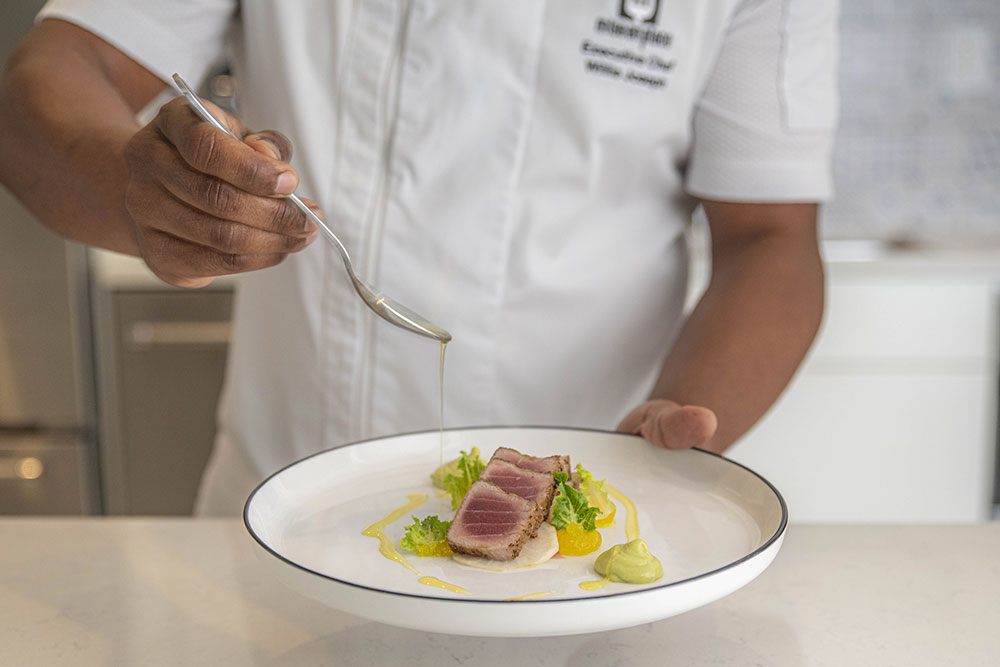
Richard is awake before the boat is. Not metaphorically, he is physically awake in the galley at five in the morning when the anchor watch is still on deck and the rest of the boat is sleeping, because the five o’clock galley is where the day’s cooking begins in the specific form of the offshore chef who is not cooking from a restaurant prep list but from the inventory of what remains from the provisioning and what the day may add to it.
The mise en place that the culinary school teaches as the preparation discipline that separates the professional kitchen from the amateur one is, in the offshore galley at five in the morning, the discipline that determines whether twelve people eat well today or whether they eat what was possible without the preparation.
I watched him do it once, the morning in the Banda Sea when I came on deck at five-fifteen for the early watch handover and found the galley already lit and Richard standing at the counter with the inventory of the cold storage open in his mind rather than on a clipboard.
He was counting. Not out loud, not with a pen with the specific knowledge of the person who loaded the stores in Ambon and who knows, without checking, that the fresh fish from yesterday’s market is in the bottom of the refrigerator and that there are eleven eggs remaining and that the last of the fresh tomatoes is one day from the point where using them is better than losing them. The inventory was already done. The mise en place was beginning.

The Offshore Kitchen as Discipline
The offshore kitchen imposes the constraints that produce the discipline that the restaurant kitchen maintains through the supply chain and the prep schedule and the brigade system that the professional kitchen uses to produce consistency at volume.
The offshore kitchen has none of these. It has what was bought at the last market, what the fishing line produced, and the specific intelligence of the person who can look at these two things and produce three meals a day that twelve people eat and remember. The mise en place at five in the morning is Richard’s specific response to the constraint: the organisation that converts the available into the possible before the day’s cooking has technically begun.
By seven the breakfast is on the table. By nine Richard has decided what the lunch will be and what the evening meal will require from the morning’s resources. By ten, if the trolling line has produced anything, the evening meal has changed.
The change is not a problem. The change is the point: the offshore kitchen that responds to the day rather than the plan is the offshore kitchen that produces the meal that belongs to this day rather than the meal that was planned for a day that turned out differently. Richard’s five o’clock mise en place is the preparation that makes the response possible.
The twelve people who eat what it produces at seven and thirteen and twenty hours have no idea it happened. They only know that the food is exceptional. Which it is.