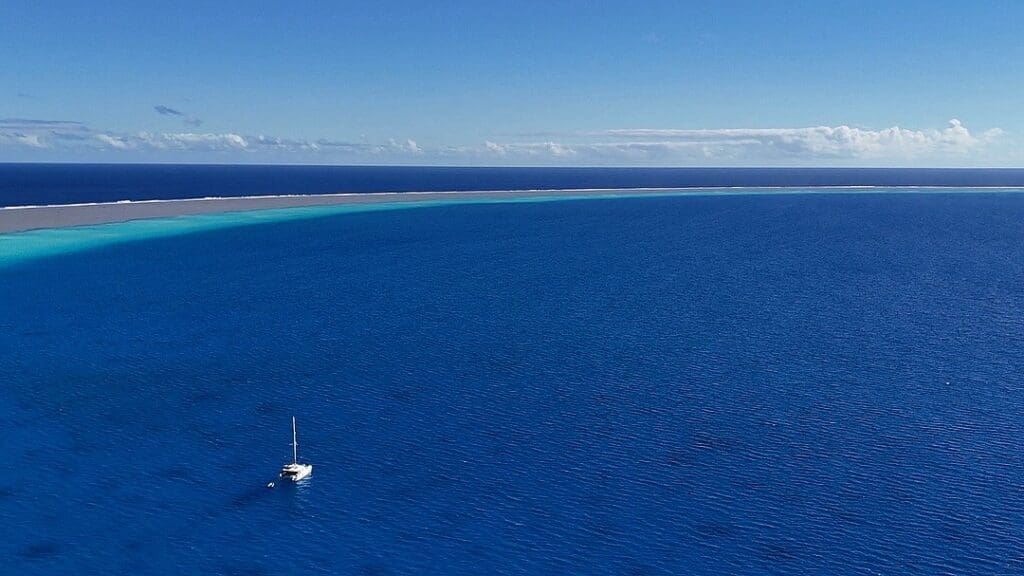
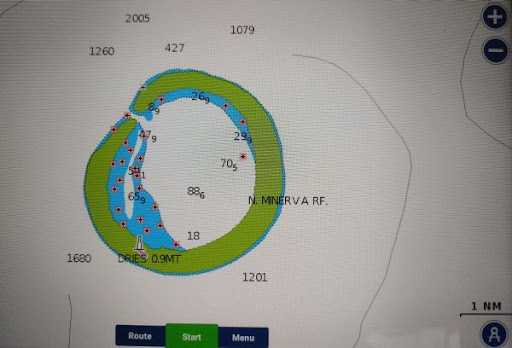
The Minerva Reef does not appear on most maps. Not because it has been omitted, it appears on the nautical charts in the form that matters for the vessel that needs to know it is there. But on the world map that the travel industry uses to describe destinations, the Minerva Reef is invisible because it is not a destination in the conventional sense.
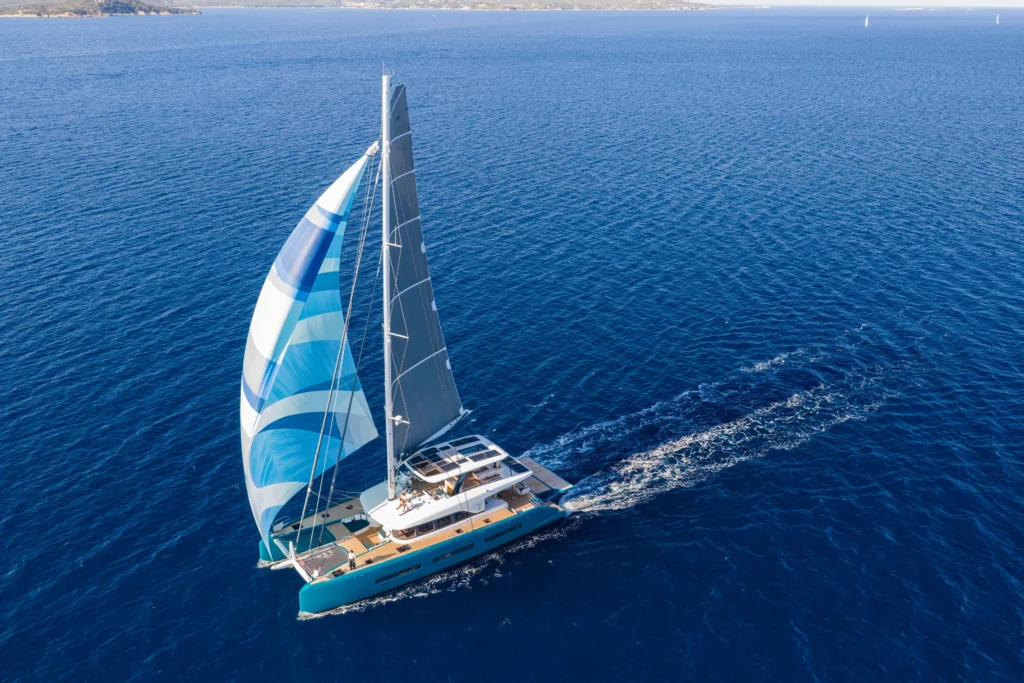
It is two patches of gravel above the waterline at low tide in the middle of the South Pacific, approximately 350 nautical miles southwest of Tonga and 250 miles north of New Zealand. At high tide, the gravel disappears. The reef is submerged. The Eighty2 sits at anchor in the lagoon inside the reef ring, the ocean in every direction to the horizon, no land visible anywhere, and the two patches of gravel at low tide as the only evidence that the place exists in the form it is charted to exist in.
The Naora route stops at the Minerva Reef on the passage between the Pacific island chains and the approach to the Solomon Islands and Australasia. It is a waypoint and it is more than a waypoint: it is the specific experience of the offshore solitude at its most absolute, the open ocean anchorage with no shore within practical reach in any direction, the reef as the only land available, the sky in the diameter that the atoll lagoon and the absence of any horizon obstruction provides.
The night sky at the Minerva Reef is the night sky with no light pollution in any direction from any coast within two hundred miles. The stars in that condition are the stars that the human eye was calibrated to read before the civilisation that produces the light pollution that obscures them was built.
What Is There
The Minerva Reef has the diving of the pristine offshore atoll: the reef wall that drops from the surface to the depth below the sport diving range, the coral coverage that the absence of human settlement and commercial fishing pressure has maintained at the density that the accessible reefs of the Pacific have lost, the pelagic species that the offshore location attracts in the specific abundance of the site that the food chain has not been disrupted by the fishing that the accessible sites support.
The pass through the reef on the dinghy from the Eighty2 at anchor inside. The specific quality of the reef at the place that exists only for the vessel that carries everything it needs to be there.
There is no village, no mooring infrastructure, no VHF station, no service of any kind. The Eighty2 carries what it needs. The reef provides what the reef provides. The encounter is the offshore sailing life at the scale that the fully self-sufficient vessel makes possible and that the day boat and the weekly charter and the resort transfer cannot reach.
The Minerva Reef is on the Naora route because it is one of the few places left on the planet where the condition of being entirely offshore and entirely self-sufficient is not the emergency. It is the destination.