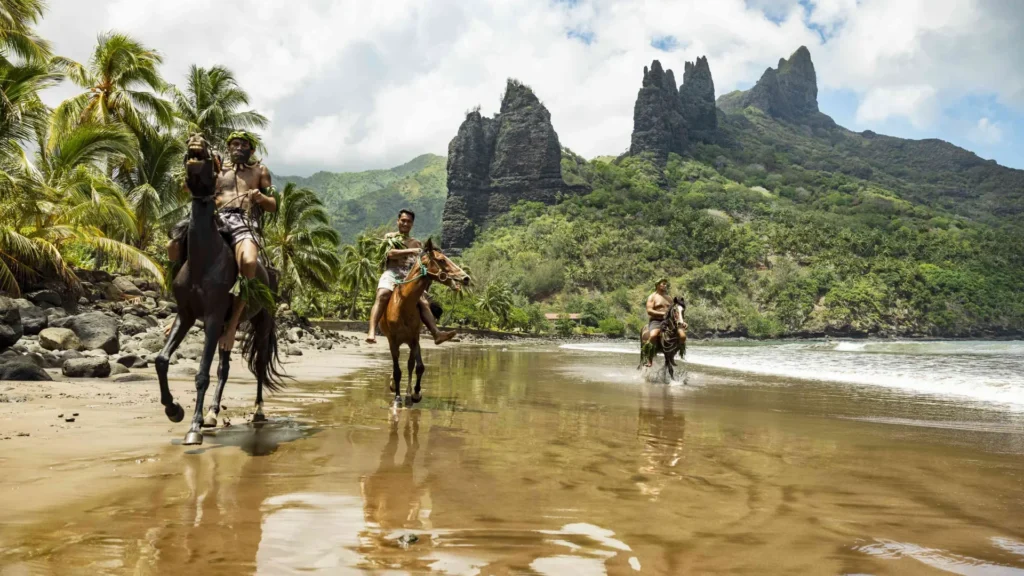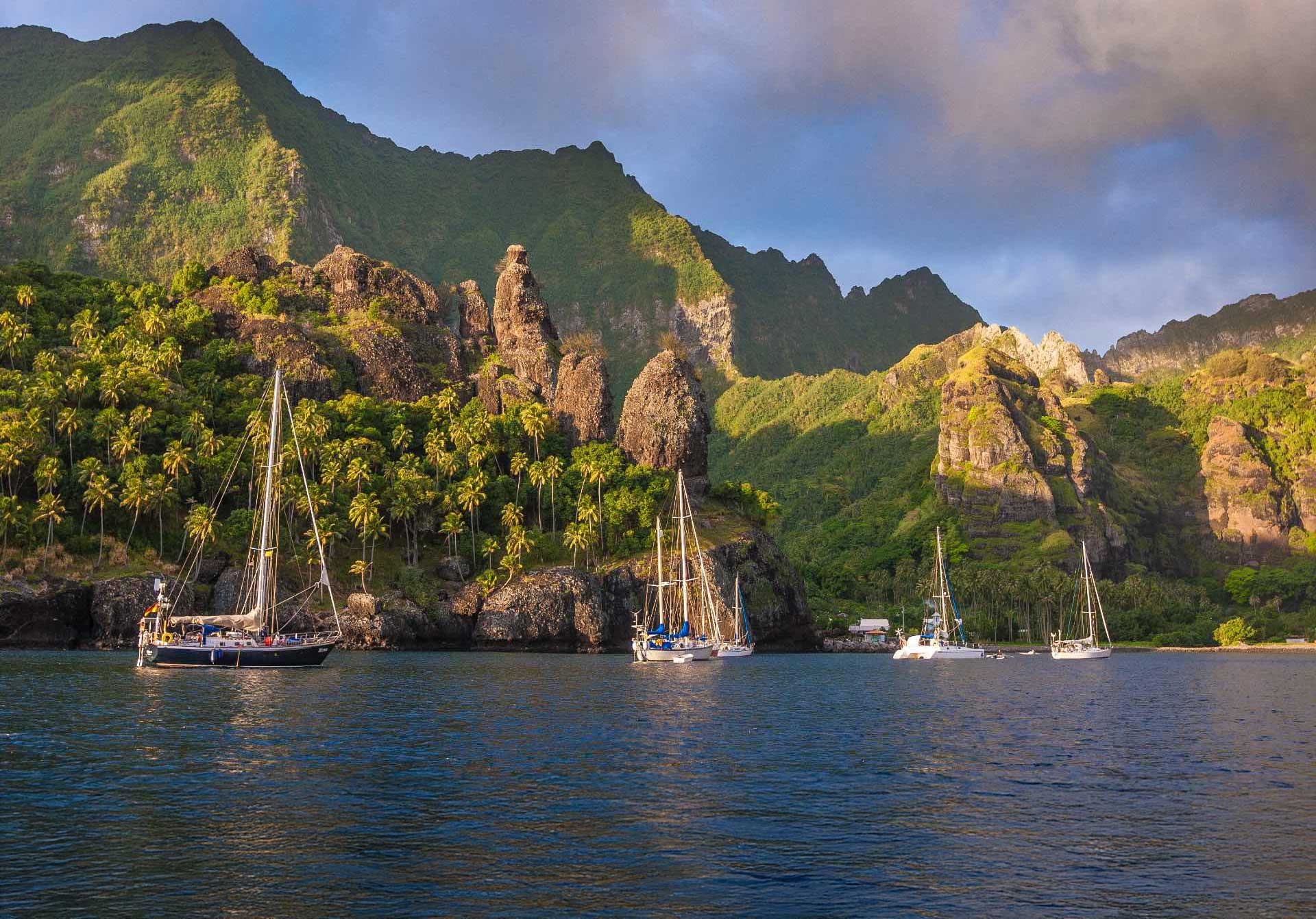
The Marquesas rise from the ocean. The volcanic peaks, some of them over a thousand metres, are visible from sixty miles at sea on the approach and they dominate the landscape for the full week or ten days that the Naora route spends in the archipelago.
They are the Pacific of the dramatic scale: the deep valleys carved by the rivers, the waterfalls visible from the anchorage, the cliffs that drop directly into the sea along the northern coasts. The Marquesas are overwhelming in the specific sense of the landscape that is larger than the frame the eye puts around it. You look up here. You cannot help it.
Then the two-day passage. Southeast, with the trade wind, the ocean building slightly as the fetch increases on the open water between the archipelagos.
The passage is not the long offshore crossing, it is four hundred to five hundred miles depending on the specific atoll of destination, two days of the trade wind Pacific, and then the chartplotter depth reading that begins to change as the boat approaches the Tuamotu platform and the bottom that was three thousand metres deep is suddenly thirty metres and then ten and then the specific turquoise of the atoll lagoon visible on the horizon as the low line of palm trees that marks the atoll rim before the atoll itself is visible.
The Atoll World
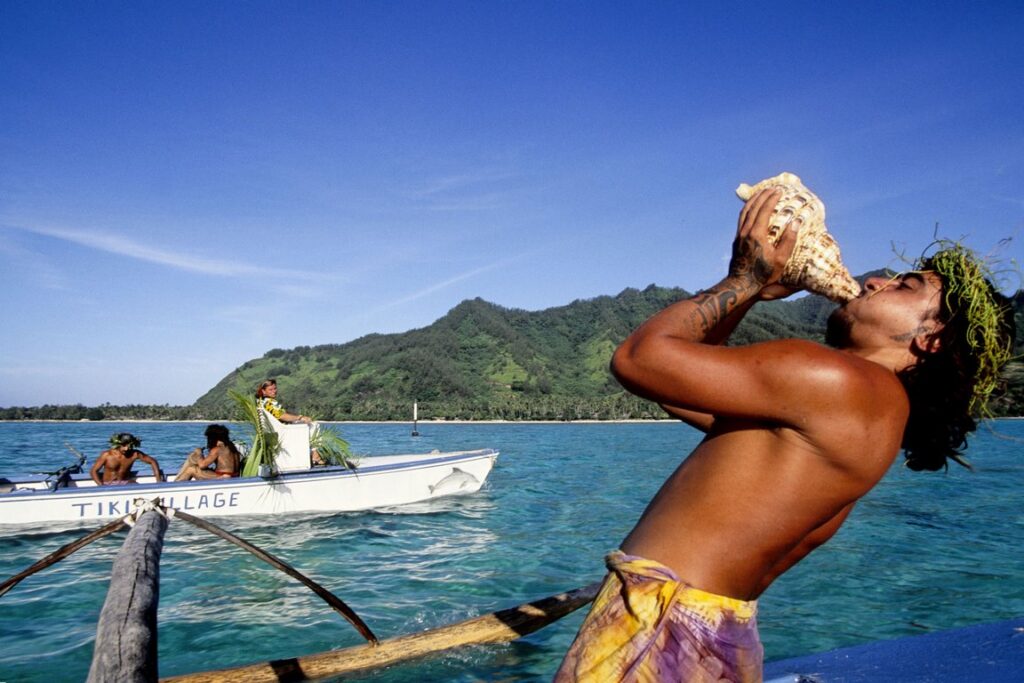
The Tuamotu atoll is the Marquesas inverted. Where the Marquesas rise, the atoll is flat, the coral ring that barely clears the water, the lagoon inside it in the turquoise of the water that is ten metres deep over white sand rather than three thousand metres deep over the ocean floor.
The scale that was vertical in the Marquesas is horizontal in the Tuamotu: the lagoon that extends to the horizon inside the atoll ring, the sky that the absence of the volcanic topography opens to a full circle rather than the partial sky that the Marquesas valleys frame between their peaks. After the Marquesas, the Tuamotu feels like the breath after the held breath, the opening of the landscape into the specific spaciousness that the coral atoll produces.
The two-day passage between them is the passage that makes the difference available. The offshore sailing life does not deliver the Tuamotu as a destination that follows the Marquesas on the itinerary. It delivers it as the arrival after the ocean passage that separated them, the arrival of the person who left the volcanic landscape and crossed two days of the open Pacific and found the coral landscape on the other side.
The difference is felt in the body rather than understood in the mind. This is the specific quality of the offshore transit that the flight cannot produce: the physical understanding of the distance between the two worlds and the specific shift in the register of the Pacific experience that the distance – crossed rather than flown – makes real.