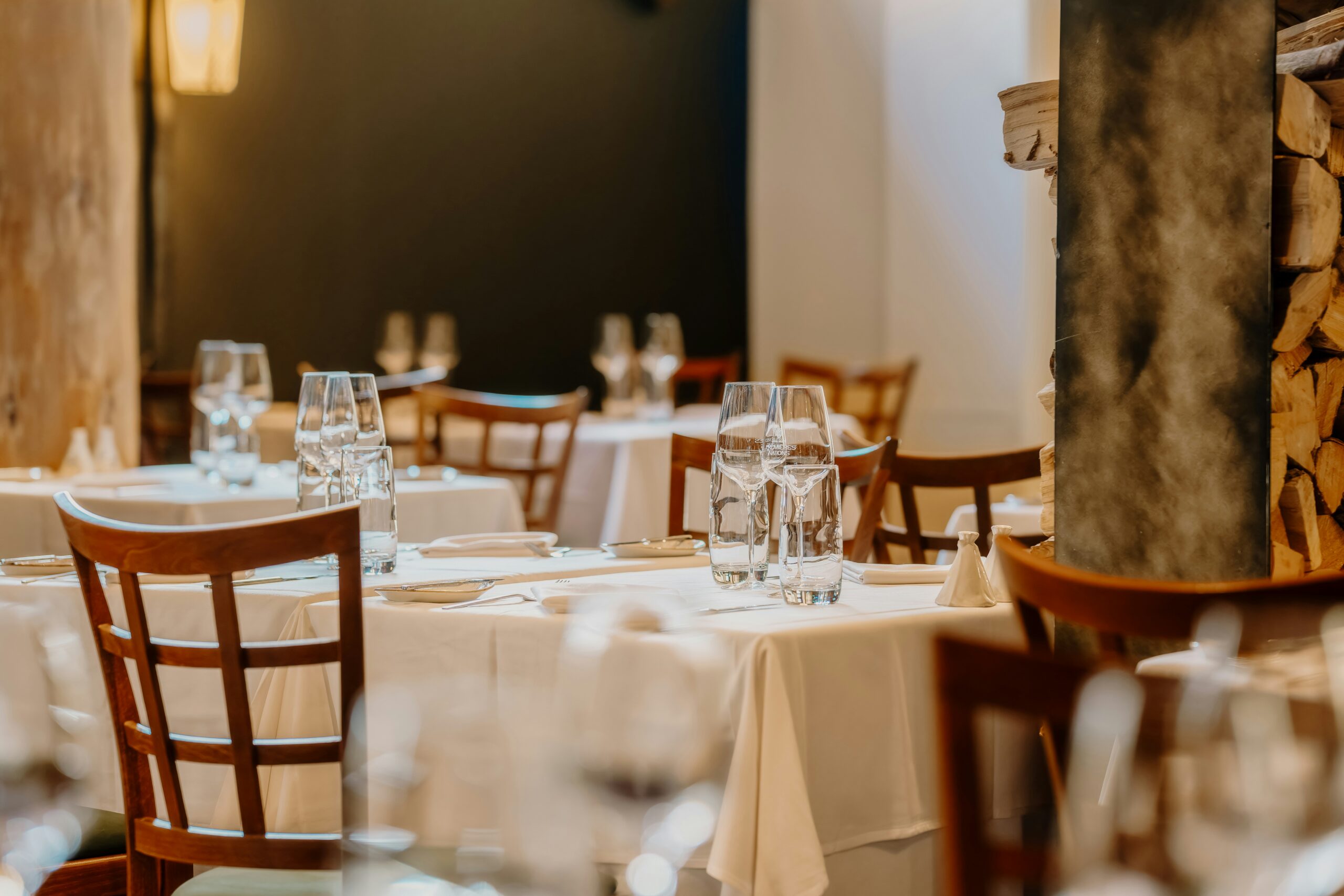
A plate offshore needs a non-slip mat more than a place card. Friendship at sea has room to begin among such small adjustments: making space for someone to sit securely, keeping a passageway clear, recognising that the person arriving late may have been doing something more important than coming to dinner. Before the table becomes a place for conversation, it has to work as a table on a moving boat.
That practical beginning matters to us. The long table aboard Discovery belongs to the passage, rather than sitting apart from it. What happens there is connected to the hours before everyone sits down, including the uneventful hours when nobody has been particularly interesting. Especially those.
Day nine is not a deadline for friendship. Some people become close quickly; others remain agreeable companions and go ashore without exchanging anything beyond good wishes. But nine days allow a different kind of acquaintance from a three-hour dinner. There has been time to meet the same person in more than one mood, and time for a first impression to be corrected.
The Conditions For Friendship At Sea
A networking dinner has a legitimate purpose. It brings people together who might otherwise never meet, provides a reason to introduce themselves and makes a limited evening useful. A professional biography is a sensible beginning in that setting. It gives the other person something to work with, and there is nothing inherently shallow about discussing work that occupies much of a life.
The constraint is that everyone knows the encounter will soon end. Conversation therefore carries a small pressure to establish relevance before dessert. Even generous attention can acquire a direction: finding the shared interest, identifying the useful introduction, remembering enough to justify another meeting. There may be genuine affection in the room, but little opportunity to discover what it feels like without the occasion holding it up.
Offshore, another encounter does not need arranging. You can leave a conversation unfinished and return to it after breakfast. You can discover that someone whose first account of themselves sounded polished is much easier company when there is no introduction left to deliver. Repetition gives both people permission to be less representative of their professional lives.
We value that permission more than any claim about the calibre of a group. The useful distinction is between being interesting once and being considerate repeatedly. One can be achieved through preparation. The other becomes visible through ordinary proximity, including the small inconvenience of living alongside someone whose habits differ from your own. Dinner provides a place to notice what the day has already allowed you to learn.
The Passage Still Has Priority
Discovery is a Lagoon Eighty2 sailing catamaran. Her two hulls do not make her independent of the sea state, and the comfort of a meal still depends on decisions made before it is served. Loose objects need securing. Hot dishes need a safe route from the galley. A clear walkway matters more than an attractive arrangement that makes someone step around a chair while carrying a bowl.
Sven, Naora’s founder and captain, plans every weather window and sails every leg himself. That responsibility does not pause when conversation becomes good. Offshore watchkeeping continues through all 24 hours, so dinner cannot require every person aboard to be seated simultaneously. An empty place can be evidence that the boat is being properly attended to, not that the evening has failed.
A watch handover also needs more than a friendly reassurance that everything is fine. Course and sail configuration, nearby traffic, changes in the weather, equipment limitations and the circumstances requiring the captain to be called all belong in the exchange. The person taking over needs to understand what is developing, not merely what is visible at that instant. Guests can participate within their experience and the captain’s direction; companionship must never become a reason to transfer responsibility casually.
After sunset, the table occupies a small pool of light while the water beyond it loses detail. A bowl makes a faint sound against its mat. The pressure of the seat changes beneath you as the boat moves, and the person speaking may pause to steady a glass without interrupting the thought. These are comfortable things when the arrangements around them are sound.
Light itself needs managing. Eyes take roughly 20 to 30 minutes to make much of their adjustment to darkness, sometimes longer to reach full sensitivity. A bright screen in a watchkeeper’s field of view can set that adjustment back. Keeping dinner light away from the helm is therefore a navigational consideration as well as an agreeable atmosphere. The warmth of one part of the boat must not make another part harder to operate.
What A Small Mistake Reveals
The persuasive version of offshore friendship is often built around hardship: difficult weather, exhaustion, some testing moment that supposedly reveals everyone as they really are. We are cautious about that story. An uncomfortable passage can make people irritable, withdrawn or unwell. It does not reliably reveal a truer self, and there is no reason to manufacture strain when sensible preparation can reduce it.
Ordinary mistakes tell us enough. If you put something in the wrong place, does the correction leave you knowing where it belongs, or merely feeling foolish? If someone misunderstands an instruction, can they ask for it again without having to defend their intelligence? A boat needs people to admit uncertainty promptly. Making it embarrassing to do so is poor seamanship as well as poor company.
There is a boundary here. During a manoeuvre, an instruction may need to be brief and immediate. That is not the moment to debate the wording or explain a professional preference for doing things differently. The explanation can follow once the load is off the line and everyone is clear of the working area. Respect includes understanding when attention has to narrow.
At the table, a different pace becomes possible. A sharp reply can be acknowledged without becoming the evening’s subject. A recurring irritation can be addressed privately and specifically, before it gathers a history. Saying that a door is waking you when it closes is more useful than deciding its owner is inconsiderate. Over several days, people have opportunities to make these modest repairs. Friendship can grow from discovering that a disagreement does not have to become a verdict.
Friendship At Sea Needs Room For Quiet
Proximity is valuable only while people retain some choice within it. A small circle can become tiring if every shared meal requires full participation and every quiet afternoon invites a concerned enquiry. Some people think aloud. Others arrive at what they want to say only after being left alone for a while. Neither temperament is a problem to solve.
There is a particular kind of quiet available before dawn on an offshore passage. Without moonlight, the boundary between sea and sky can be difficult to find. Air touches skin still warm from a bunk; salt on a rail feels faintly rough beneath the hand. Water moves along the hull where it cannot yet be seen clearly. An exchange in that setting need not become intimate to matter. Simply speaking softly acknowledges that someone else is asleep.
Quiet, however, should not be romanticised at the expense of care. Someone who has withdrawn may want solitude, or may be tired, anxious or feeling ill. A discreet offer of practical help leaves room for either answer. It is quite different from asking someone to explain their mood to the group. The useful question is what they need, not what their silence means about the voyage.
This is where the long table has to remain a place rather than a programme. Nobody owes it a story, an insight or an account of how the sea is changing them. A person can listen through most of dinner and still belong to it. The ability to sit together without continually supplying conversation is one of the quieter forms of ease that repeated days can make possible.
Privacy Survives A Shared Table
Time together does not confer ownership of another person’s story. Offshore conversation may become personal because there is time to listen properly, but a confidence offered over dinner remains a confidence. It does not become material for a message to friends ashore, a public account of the passage or a photograph caption that identifies more than its subject intended.
The same care applies to images. Agreement to appear in a photograph is not necessarily agreement to have it published, tagged or sent to a wider group. Asking about the intended use is a small courtesy that prevents an awkward correction later. Genuine privacy is often made of these undramatic distinctions. It does not need an atmosphere of secrecy.
When colleagues travel together, there is another distinction to preserve. A founder, a senior leader and someone who reports to them do not stop carrying those relationships simply because they are wearing the same sort of deck shoes. An apparently optional conversation can still feel compulsory to the person with less authority. The host’s responsibility includes making it easy to leave the table, decline a topic or spend time elsewhere without being interpreted.
For a family or a private company gathering aboard Discovery, shared time can be valuable without being assigned a result. No difficult disclosure has to happen. No disagreement has to be resolved before landfall. There can be room to understand someone better without asking them to become more available than they wish. That restraint is often what allows a conversation to deepen voluntarily, rather than closing as soon as it approaches something important.
Different Stays On One Continuing Route
The table belongs to a much larger undertaking. The Naora Global Expedition is a private sailing expedition around the world, planned for five years from 2027 to 2031 and roughly 49,000 Nm. Those figures describe the continuity of the yacht’s voyage, not a commitment required of any one guest. Discovery keeps sailing while people step into and out of the route where it fits their lives.
Through Naora’s private circle, people choose when they join, where along the worldwide route they come aboard and how long they stay. Discovery can also be privately hired for a family, friends or a discreet company gathering on a carefully designed part of that route. The social starting point differs: some people arrive knowing nobody well, while others bring relationships that have already lasted decades.
Freedom of choice still needs an honest maritime frame. Joining and leaving must work through suitable landfalls, entry formalities and the actual passage plan. An ocean crossing cannot provide an improvised departure point because someone discovers halfway through that they would prefer a shorter stay. Before choosing it, people need to understand the likely duration, the uncertainty around arrival and their own tolerance for being under way. Weather-dependent sailing and inflexible onward arrangements are an uneasy combination.
Nor is a longer stay morally better than a shorter one. A week may be the right amount of time for a family; a longer passage may suit someone else. Day nine is useful here because it describes accumulated familiarity, not an admission requirement for meaningful company. The important choice is a stretch of sailing someone genuinely wants to live through, rather than a duration selected in pursuit of an expected emotional result.
The Conversation Can Remain Unfinished
By a ninth evening, there may be fewer introductions and more continuations. A subject can return without its background being explained again. Someone may remember that you were waiting for news and ask about it quietly, rather than opening the matter to the whole table. This is a possibility created by time, not a scene we can promise for every passage.
It also explains why the meal alone cannot produce what people value about it. A restaurant can offer better shelter from the wind and a table that stays still. A well-hosted professional dinner can begin a friendship that lasts for years. The difference offshore is the surrounding life: repeated encounters without repeated arrangements, and enough ordinary hours for people to become more than their opening account of themselves.
The long table should ask very little in return. Nobody needs to convert the evening into an introduction, record it as evidence of a remarkable experience or decide what the relationship will become ashore. Friendship, if it comes, will need a life beyond the boat. Dinner does not have to settle that either.
For now, there is the slight movement beneath the chair, the cooler air reaching across the table and the person opposite taking time to finish a thought. There is no need to find another subject yet.