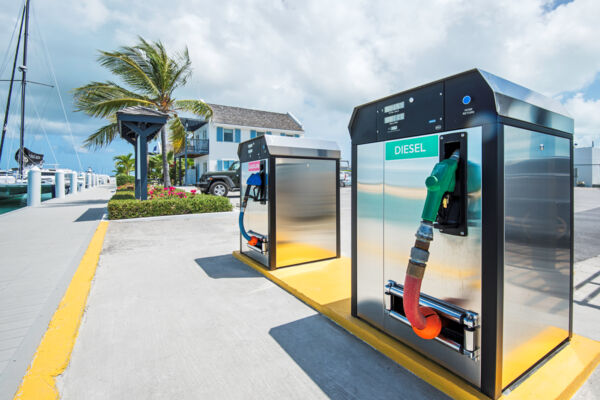
Years of offshore sailing and several thousand hours of engine management across the world’s oceans have produced the specific fuel management protocol that the Eighty2 operates on. The protocol is not complicated. It does not require specialised equipment beyond the filtration and separation system that any serious offshore boat should carry.
It requires the discipline of applying it consistently, at every fuel dock, in every country, regardless of whether the fuel dock looks reliable or looks suspect, because the fuel dock that looks reliable is sometimes the fuel dock that produces the contamination problem and the drum on the jetty that looks suspect is sometimes the cleanest diesel available in the region because it was delivered yesterday and has not had time to develop the problem.
Choosing the Right Fuel Dock
The first line of fuel quality management is the fuel source selection. In the ports where a choice exists, the fuel dock with the highest turnover is the preferred fuel dock. The high-turnover marina fuel station, the facility that refuels the charter fleet and the ferry traffic and the fishing boats and the passage makers through the season, has the fuel tank that empties and refills on a regular cycle. The regular cycle prevents the long-term storage that allows the water accumulation and the bacterial growth to develop in the tank.
The fuel in the high-turnover tank is the freshest fuel available in the port. Identifying the high-turnover dock requires the local knowledge, the marina office, the harbour master, the other offshore boats that have been using the port and the willingness to motor the extra distance to the dock with the better turnover rather than taking the nearest available option because it is convenient.
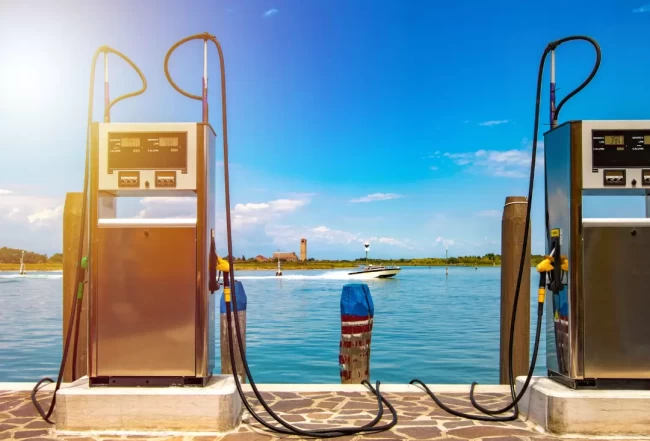
In the ports where no choice exists, the Pacific island with the single fuel source, the Indonesian anchorage with the drum delivery, the Red Sea port with the government fuel dock, the fuel source selection is not available. The fuel management protocol that follows the fuelling is the only mitigation available, and it must be applied without exception regardless of what the fuel looks like in the drum or the delivery hose.
The Tights on the Filler
The nylon stocking, the pantyhose, the tights, the specific fine-mesh textile that every offshore sailor’s grandmother could explain the provenance of is the first filtration stage at the fuel filler. Before the fuel hose goes into the deck filler, the nylon is stretched across the filler opening and secured. The fuel passes through the nylon mesh on its way into the tank. The nylon catches the gross contamination, the rust particles from the delivery hose, the sediment from the bottom of the dock tank, the visible debris that the fuel dock’s own filtration system missed or that the delivery hose picked up from the floor of the tank truck.
The nylon does not stop the water. It does not stop the fine bacterial sludge. It stops the particles that would otherwise enter the tank directly and accelerate the contamination of the fuel that follows them in.
The nylon stocking is the lowest-tech component of the fuel management system. It is also frequently the component that produces the most visible result, the rust-brown staining and the sediment on the nylon after a fuelling at a questionable dock that makes the specific argument for its own continued use more effectively than any technical explanation.
When the nylon comes off the filler dark with contamination after the fuelling, the contamination that the nylon caught is the contamination that did not enter the tank. The argument is made.
The Double Water Separators
The Eighty2 runs dual water separators on each engine, two water separator-filter units in series on the fuel feed to each engine rather than the single unit that the standard marine installation provides. The water separator does what the name describes: it removes the water from the fuel before the fuel reaches the primary fuel filter and the secondary filter and the injector pump.
The water settles in the clear bowl at the bottom of the separator, which is inspected daily in passage and drained when the water level reaches the drain point. The clear bowl is the specific design feature that the responsible offshore installation requires, the opaque bowl that does not allow visual inspection of the water accumulation is the bowl that produces the surprise when the water reaches the filter rather than the early warning that the clear bowl provides.
The dual installation (two separators in series) provides the redundancy that the offshore passage requires. The first separator catches the majority of the water. The second separator catches what the first missed. If the first separator’s bowl fills faster than expected, the sign that the fuel quality from the last fuelling was worse than anticipated, the second separator maintains the clean fuel supply to the primary filter while the first is serviced.
On the offshore passage where stopping the engine is not a trivial inconvenience but the specific operational risk that the passage conditions may not allow the repair time to resolve safely, the dual separator system is the system that the reliability of the offshore life depends on.
The Double Primary Fuel Filters
The Eighty2 runs dual primary fuel filters on each engine, two filter housings plumbed in parallel with a changeover valve that allows the switch from one filter to the other without stopping the engine. The dual filter arrangement is the specific offshore installation that the extended passage demands: the primary fuel filter is the filter that the diesel bug and the fine sediment blocks, and the filter that blocks on the offshore passage is the filter that requires the engine stop and the filter change that the sea state may not permit without the risk to the person performing the maintenance.
The dual filter with the changeover valve allows the switch to the clean filter at sea without the engine stop, the blocked filter is then changed at the anchorage when the boat is stationary and the conditions for the maintenance are safe.
The filter change interval on the Eighty2 is the interval that the filter condition dictates rather than the calendar interval that the engine service schedule specifies. In clean fuel conditions , the high-turnover marina diesel of the Mediterranean summer, the filter interval is long. In poor fuel conditions, the drum delivery in the remote anchorage, the poorly maintained shore tank, the filter condition is checked more frequently and the filter is changed when the condition requires it rather than when the calendar says so.
This requires the spare filter inventory that the offshore passage demands: enough primary filter elements for the full passage duration at the worst-case change interval, with the margin for the unexpected.
The Fuel Tank Management
The fuel tank management on a long offshore passage addresses the specific problem that the partially full tank creates: the air space above the fuel that the temperature cycle, the hot day and the cool night — cycles through the condensation process that introduces water directly into the tank from the humid air rather than from the contaminated fuel supply.
The Eighty2 keeps the fuel tanks as full as the passage plan allows, topping up at every available fuel point rather than running to a low level before the next fuelling. The full tank minimises the air space and therefore minimises the condensation cycle. The full tank is also the safety margin: the passage that encounters the extended calm that requires more motoring than planned has the fuel reserve that the topped-up tank provides.
The deck fill caps are inspected and sealed at every departure. The O-ring that seals the fill cap against the deck fitting is the specific component whose failure allows the sea spray and the rainwater to enter the tank on the passage.
The failed O-ring is the cheapest and most common source of water contamination on the offshore boat, and the O-ring inspection before departure is the specific maintenance task that the offshore skipper performs as the routine that prevents the expensive downstream consequence. Barry checks the deck fill caps before every departure. Not because he was asked. Because he checked them before and he will check them again because this is what the correct pre-departure preparation looks like.
The fuel management protocol is the unglamorous work of the offshore sailing life, the maintenance that the member never sees and that produces the passage reliability that the member experiences as the passage that ran without incident.
The Dodecanese leg where the fuel filters were inspected and found clean and the passage continued without the engine problem that the contaminated fuel dock would have produced if the nylon had not caught it at the filler. The Indonesian passage where the water separator bowl was drained twice in four days because the drum delivery had water in it and the dual separator system caught every drop before it reached the injectors.
The member on the offshore passage experiences the offshore sailing life. The fuel management system is the reason the offshore sailing life is available to experience.