The professional life is organised around the next thing. The meeting that follows the meeting, the project that follows the project, the week that is already full before it begins and that produces the specific relationship with the present moment as the brief gap between the last thing and the next thing rather than the thing itself.
Most of the people who come aboard the Naora voyage have been living in this relationship with time for long enough that the alternative, the present moment as the full extent of what is available rather than the transition between the past obligation and the future one, is available to them only as a concept rather than as an experience.
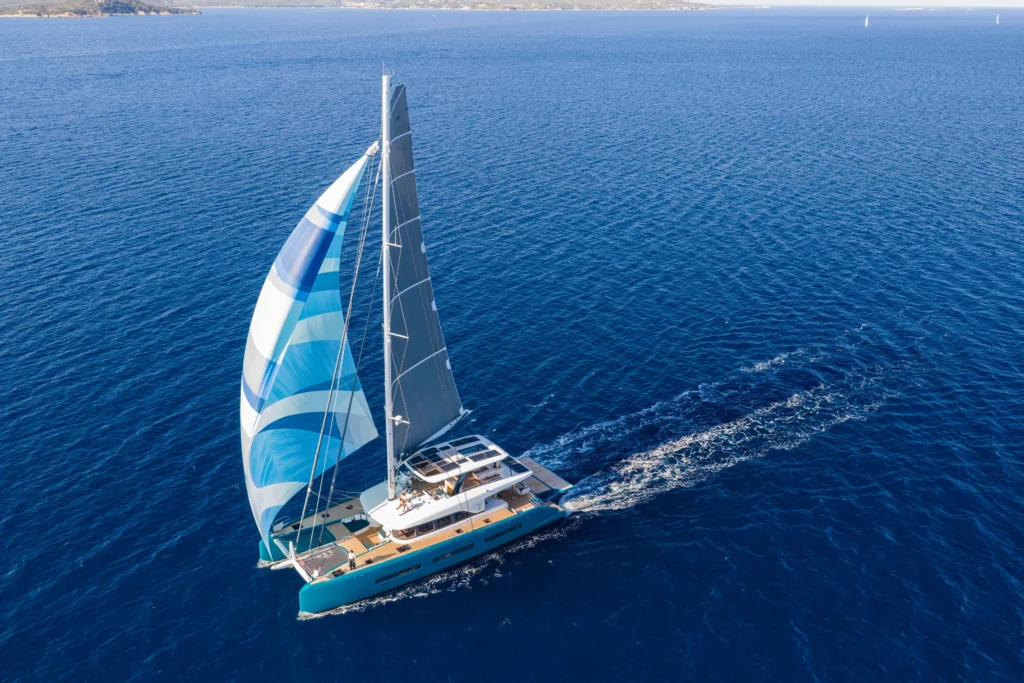
The Atlantic crossing changes this, and it changes it not through any programme or intervention but through the simple arithmetic of the passage: twenty-two days with no fixed schedule that the external world is imposing, no meeting that cannot be rescheduled because the meeting does not exist, no deliverable that the morning requires except the passage itself.
The time that the professional life fills from the outside with the obligations it generates is filled on the crossing from the inside with the experience that the passage provides: the watch, the weather, the fishing, the horizon, the community of the twelve people who are also in the same relationship with the available time and who fill it in the same organic way that the offshore life organises it.
What Changes
By day five the change is observable in the body before it is articulable in the mind. The reach for the phone to check what is next stops being reflexive and starts being deliberate, the person consciously deciding to check rather than unconsciously doing it. By day ten the deliberate decision is rarely made, not because the discipline of the digital detox is being applied but because the passage has provided enough of itself that the phone’s offer is no longer competitive with what is immediately available without it.
The members who describe this change in the conversations afterward use different language for the same thing: the quality of the hour. The professional hour is the hour that contains the management of the hour, the attention divided between the current activity and the monitoring of what the current activity is displacing and what it needs to produce.
The offshore hour on the crossing is the hour that contains only itself. Not more interesting, necessarily, than the professional hour. But present in a way that the professional hour, which is always partly in the next hour, consistently is not. The crossing does not teach this. It provides it as the condition of being on a boat in the middle of the Atlantic for twenty-two days with nothing requiring the next hour to be anything except the next hour of the passage.