Nobody likes talking about this and we are going to talk about it anyway because the way a boat handles its waste is one of the most direct expressions of the relationship between the vessel and the marine environment it visits.
The sailing industry as a whole has a complicated history with waste management: the old convention was simple and wrong, deep water, overboard. The modern convention is better and not always followed. The Naora approach is the one that we would be comfortable describing to a marine biologist standing on the reef below the boat while we are anchored above it, which is the standard we apply to all of the decisions about what the boat does to the water around it.
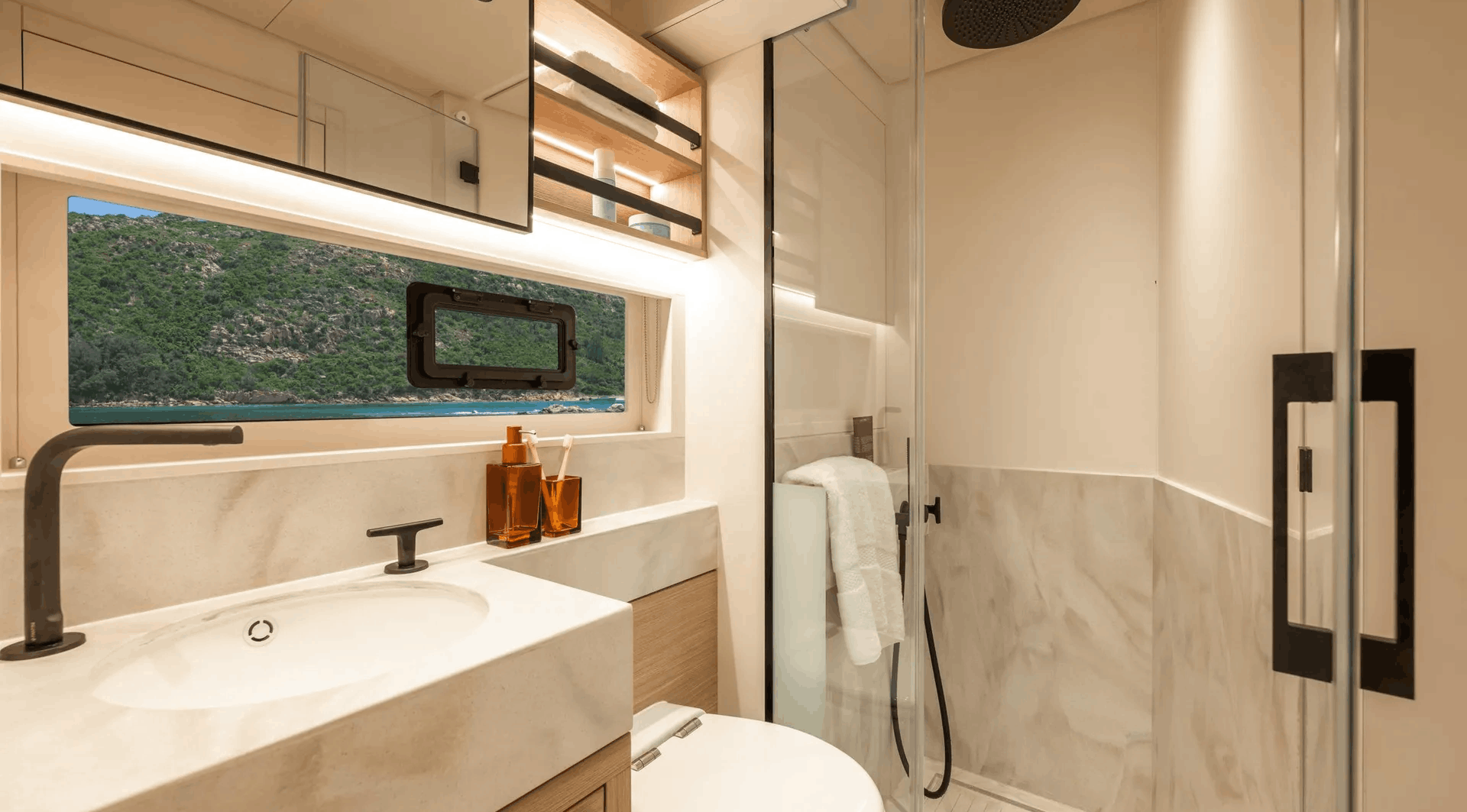
The marine toilet uses seawater for flushing, drawn from the hull intake rather than from the fresh water tanks, which preserves the fresh water for the uses that salt water cannot serve. The flush water and biological waste from the toilet go to one of two places depending on where the boat is and what the conditions require: the holding tank or the treatment system.
The holding tank is exactly what it sounds like, a tank that stores the waste for discharge at sea in open water, in the conditions where the ocean can manage it appropriately. In marinas, in sheltered anchorages, in marine protected areas, in any location where the discharge of even treated waste is not appropriate, the holding tank holds.
The Treatment System and the Grey Water
For the offshore passages and the open water conditions where discharge is permitted, the Eighty2’s marine sanitation device treats the waste before it leaves the boat. The treatment reduces the biological oxygen demand of the effluent, the measure of the organic matter content that the receiving water body has to process, to the level that the maritime safety regulations require for treated discharge.
The treatment is not the same as the sophisticated biological processing of a shore-based sewage treatment plant. It is the best available marine technology applied in the space and power budget available on a sailing boat. It is not perfect. It is the standard the regulation requires and the standard the Naora boat applies in every ocean it visits, regardless of whether the local enforcement makes the standard obligatory.
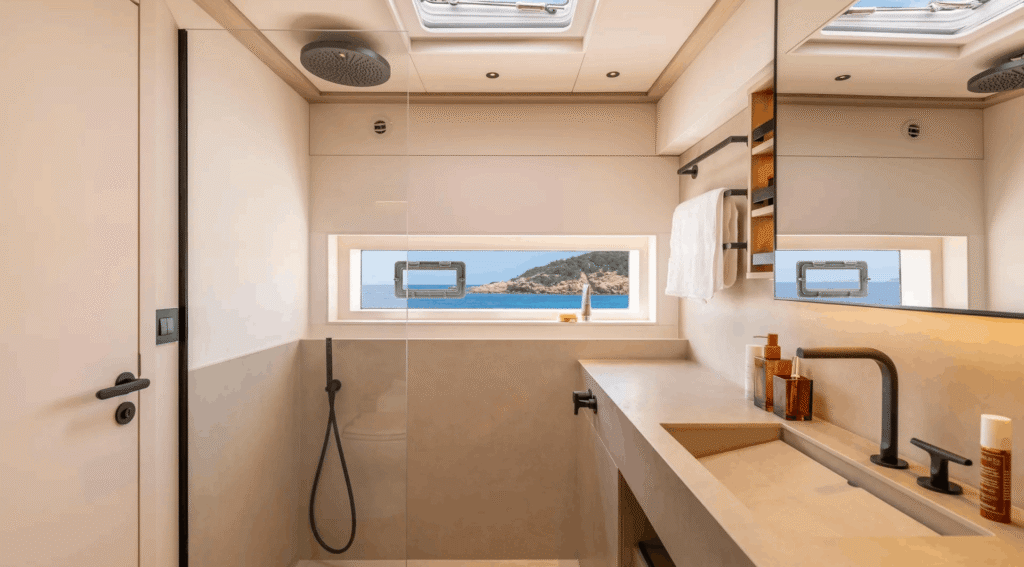
The grey water system handles the water from the sinks, the showers, and the galley separately from the biological waste. Grey water, water that has been used for washing rather than biological processes, contains soap, food particles, cosmetics, sunscreen, and the organic compounds that twelve people’s daily lives produce.
In the most sensitive environments the Naora route visits, this water is collected in a separate grey water holding tank and discharged on passage in open water rather than at the anchorage over the reef. In the Tuamotu lagoon, the Banda Sea anchorage, the coral reef sites of the Red Sea: the grey water tank holds until the boat is offshore and the ocean can manage the output in the dilution and circulation of the open sea. The reef below the boat does not receive what the boat produces above it.
This is the specific form of the respect the Naora voyage owes the environments it is present in.